CMP Review 2025-05-04
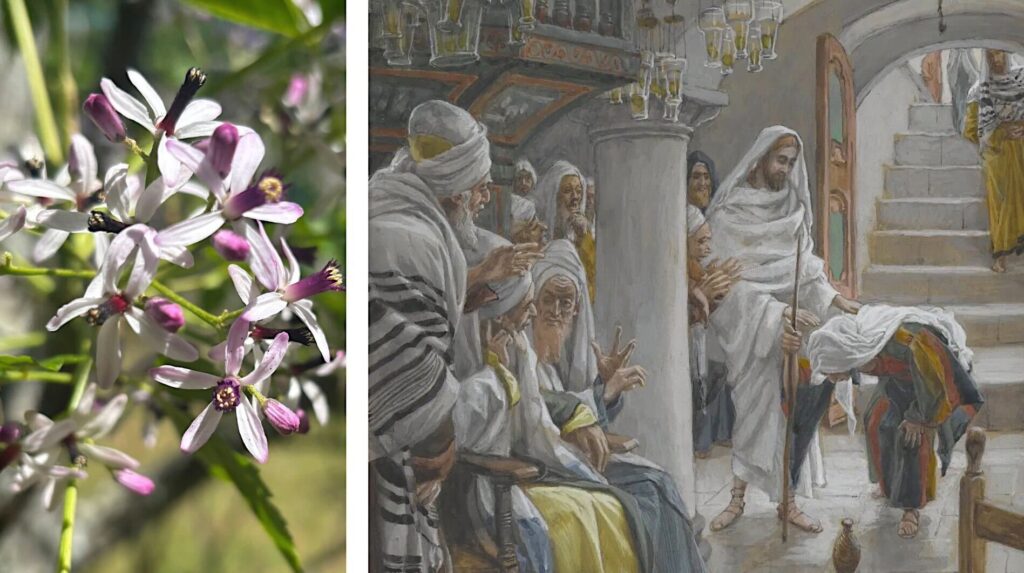
“Imagine that you are on the edge of the crowd that has followed Jesus so far,” suggests N. T. Wright. “You haven’t heard everything and haven’t understood all you’ve heard, but you think you’ve got the general drift of it all and find it both compelling and alarming. In you go with Jesus to the synagogue on this sabbath. What do you see, and what sense does it make to you?”
“You see—everybody sees—this poor woman. She was probably a well-known local character. In a village where everyone’s life was public, people would know who she was and how long she’d been like this. Luke says she had ‘a spirit of weakness’, which probably means simply that nobody could explain medically why she had become bent double. Some today think that her disability had psychological causes; some people probably thought so then as well, though they might have said it differently. Maybe somebody had persistently abused her, verbally or physically, when she was smaller, until her twisted-up emotions communicated themselves to her body, and she found she couldn’t get straight. Even after all the medical advances of the last few hundred years, we are very much aware that such things happen without any other apparent cause.”
More than one hundred years ago, Charlotte Mason imagined it too. She imagined what she would have seen, heard, and felt. And she imagined what would happen when, in the words of Stephanie Buckhanon Crowder, “Jesus restore[d] [the woman’s] humanity by calling her to him and by touching her, thereby symbolically drawing an ‘untouchable’ once again into community.”
Let Charlotte Mason draw you into the scene in her unforgettable poem “A spirit of infirmity.” Find it here.
@artmiddlekauff
🖼️: The Woman with an Infirmity of Eighteen Years by James Tissot