The CMP Review — Week of November 24
November 24, 2025
“From the parent’s point of view, in teaching one’s own children there is much to be gained—more time spent in company with the children, an extraordinarily interesting occupation, a widening of one’s own intellectual outlook as one is kept in constant contact with all the best thought of all time, and, in short, a thoroughly happy existence.” (Mrs. Brown, The Parents’ Review, Vol. 41, p. 291)
@tessakeath
November 25, 2025

Several years during a discussion on poetry in the Charlotte Mason method, my friend Benjamin Bernier wrote:
In fact Mason incorporated poetry writing on occasion as an option for narration in some assignments and examinations in various subjects.
This sparked some interesting responses, and Bernier added:
Notice that Mason encouraged all children to draw, so that they would develop an attentive eye. Even though she knew that they were not all called to be a Rembrandt. She also required all the HOE training teachers to learn to play the piano, even though they were not all called to be a Mozart.
The implication was that all children should be encouraged to write poetry, even though not every child will be a poet. “Different persons will react differently to each discipline,” he explained, “but it is worth opening the door of each to everyone.”
This is a wonderful idea, but how can we put it into practice?
In 1920, a conference was held for professional teachers who were adopting the Charlotte Mason method in their schools. Most, if not all, were electrified by the new principles and practices. One teacher spoke on how the Mason method was helping children to write better.
This teacher’s paper was published in the Parents’ Review and we’ve transcribed it for you. It not only explains the Charlotte Mason approach to composition. It also gives a practical, step-by-step approach to teaching your children to write verse. After all that is a door worth opening for everyone. Read or hear it here.
@artmiddlekauff
November 26, 2025
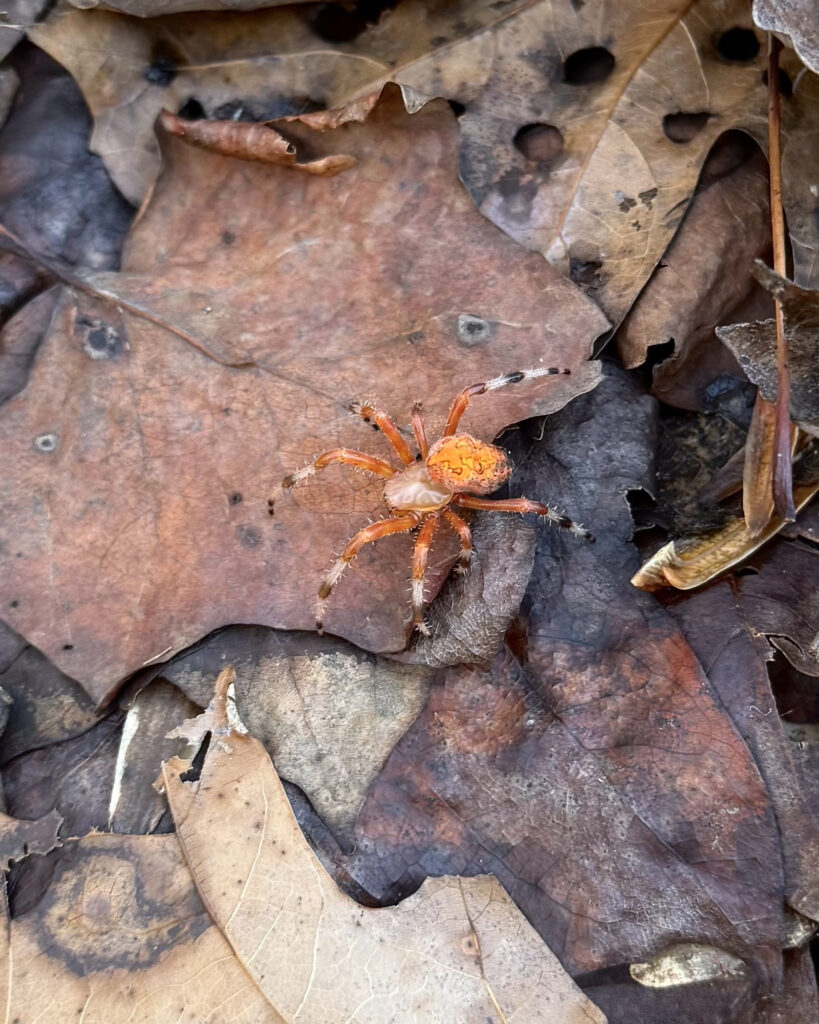
Came across this beauty on a recent nature walk—the marbled orb weaver. The bright coloring, pattern, and propensity to be seen in the fall has earned it the nicknames “pumpkin spider” and “halloween spider.”
@rbaburina
November 27, 2025
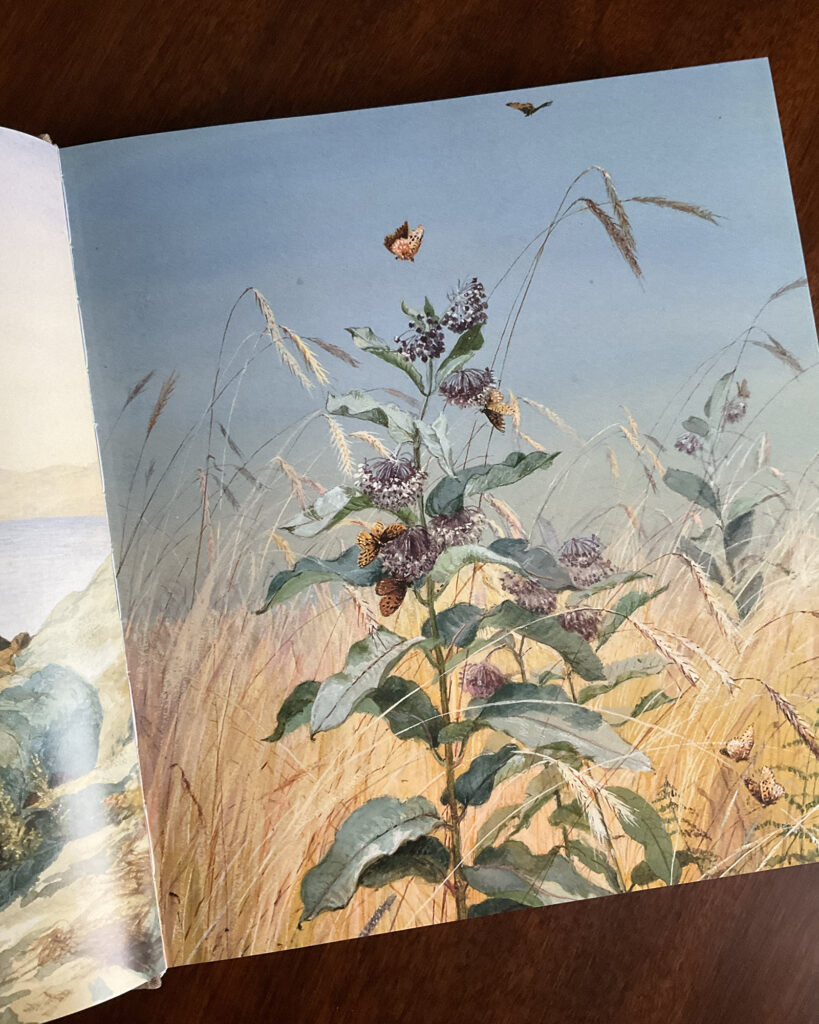
“‘Whoso offereth Me thanks and praise, he honoureth Me,’ saith our God; and we are abashed when we realise that it rests with us to add honour to the Highest, and that we refrain our lips… How impossible it seems that we should add anything to God, much less that we should add to His honour! Here is our great opportunity: let us give thanks.”
— Charlotte Mason, Ourselves, Book II, pp. 191–193
Here is a great opportunity! Let us give thanks!
Happy Thanksgiving from the Charlotte Mason Poetry Team.
November 28, 2025
Breakfast time!
After a long and hungry night, the birds come fast and furious to find their food at our window feeder.
Watching them is such a pleasant way for us to start our day. Those chipper faces bring a smile to ours.
(And to our friends, both Canadian and American, who got walloped with snow this week: southeastern Manitoba somehow managed to escape it! Very strange. The neighbourhood children are starting to panic about the possibility of not having a white Christmas. I keep telling them not to worry, this is Manitoba, a white Christmas is guaranteed. But now I am starting to get worried!)
@antonella.f.greco
November 29, 2025
Inspired by delia_of_the_greenwood bark snowflakes last year, my kids and I tried making straw snowflake ornaments yesterday. It was a fun craft for all ages. Everyone made something different, and not a single snowflake looked like another, just like the real ones. I’d never seen this technique before, and the instructions were all in German, but we figured it out and loved the result. Anyone else familiar with this craft?
@tessakeath
November 30, 2025
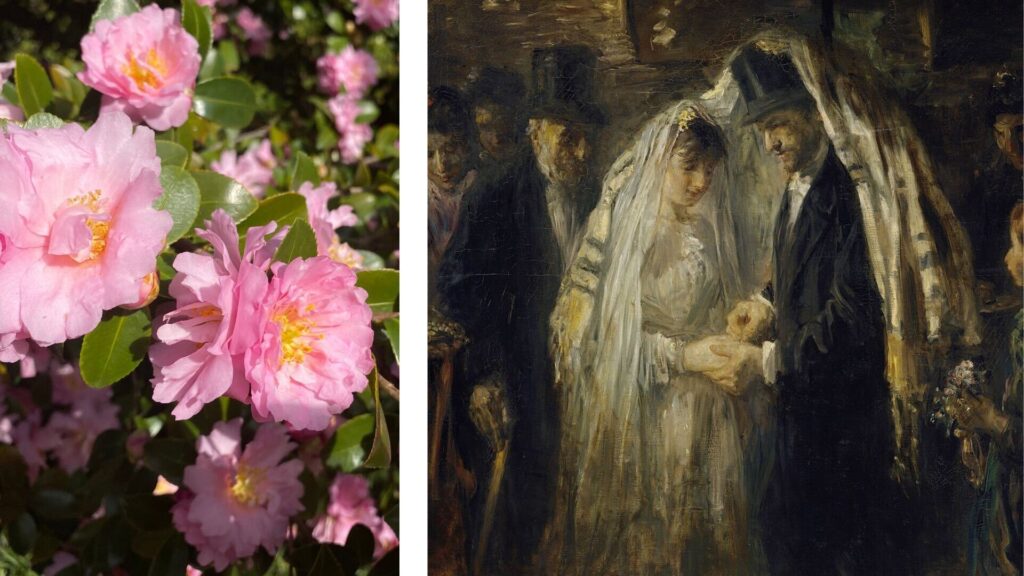
“‘Behold, I make all new,’ saith Christ, the Lord,” writes Charlotte Mason. And she understands this to include a restoration to “primal law.” And what law is more primal than that of Genesis 2:24: “Therefore a man shall leave his father and mother and be joined to his wife, and they shall become one flesh”?
In her poem “Of Marriage and Divorce,” Mason contemplates what it means for this law to be restored and made new. Read or hear it here.
@artmiddlekauff
🖼️: A Jewish Wedding by Jozef Israëls