The CMP Review — Week of January 5
January 5, 2026
“…We have recommenced our night school and have a few fresh pupils. I have as usual been making wonderful resolutions as to what I shall do when we begin school again. I mean to be so firm, so kind, so loving, so altogether admirable; I really feel half inclined to fall down at the feet of what I mean to be and say to it: ‘Stand there and be my admiration and my praise.’ Alas, I may do so, but what I mean to be is the only part of myself that I shall ever be able to admire.” —Charlotte Mason (The Story of Charlotte Mason, p. 7)
@tessakeath
January 6, 2026
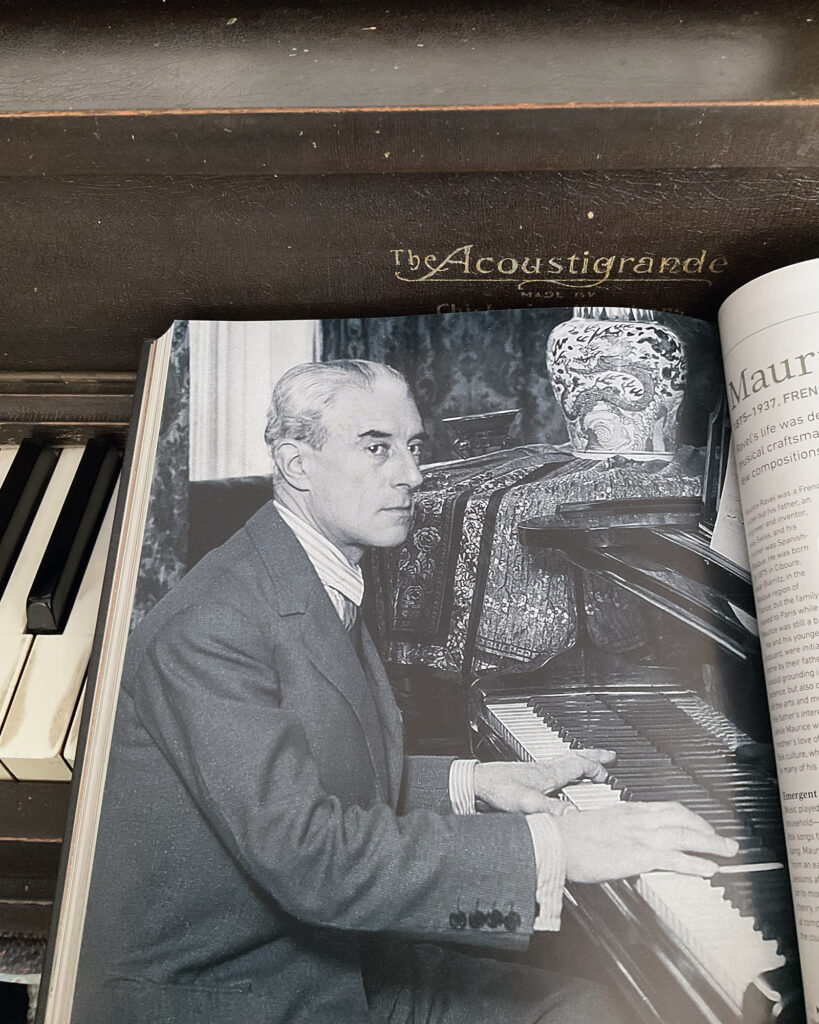
No composer’s music has played a greater role in my life story than that of Maurice Ravel. For thirty years his music has resurfaced again and again as my life has taken its many twists and turns. Yet despite the power of his music, I thought he had been passed over by Charlotte Mason’s PNEU.
For many years I searched for some recognition of his music by the Parents’ Union School. Some term set apart with his name for composer study. I found Debussy. I found Ralph Vaughan Williams. I found Holst. But not Ravel.
Until one afternoon when I was sitting in the quiet expanse of the Thomas Jefferson Reading Room of the Library of Congress. Paging through volumes of the PNEU Journal, in the volume for 1975 I finally found what I was looking for.
I have read many articles and books about this elusive and unique composer. But I think the piece in the PNEU Journal by Dorothea Bostock is the best single introduction I’ve ever come across. If you are new to the composer or an avid fan, you will find something in Bostock’s thoughtful comments to intrigue and inspire you.
To celebrate the distinctively French character of this artist, we are honored to have a special guest reader for the podcast. The voice of Maeva Dauplay, créatrice de Charlotte Mason France, takes us to the heart of Paris where, if we just close our eyes, we can almost hear the piano sing. Find the article and recording here.
@artmiddlekauff
January 7, 2026
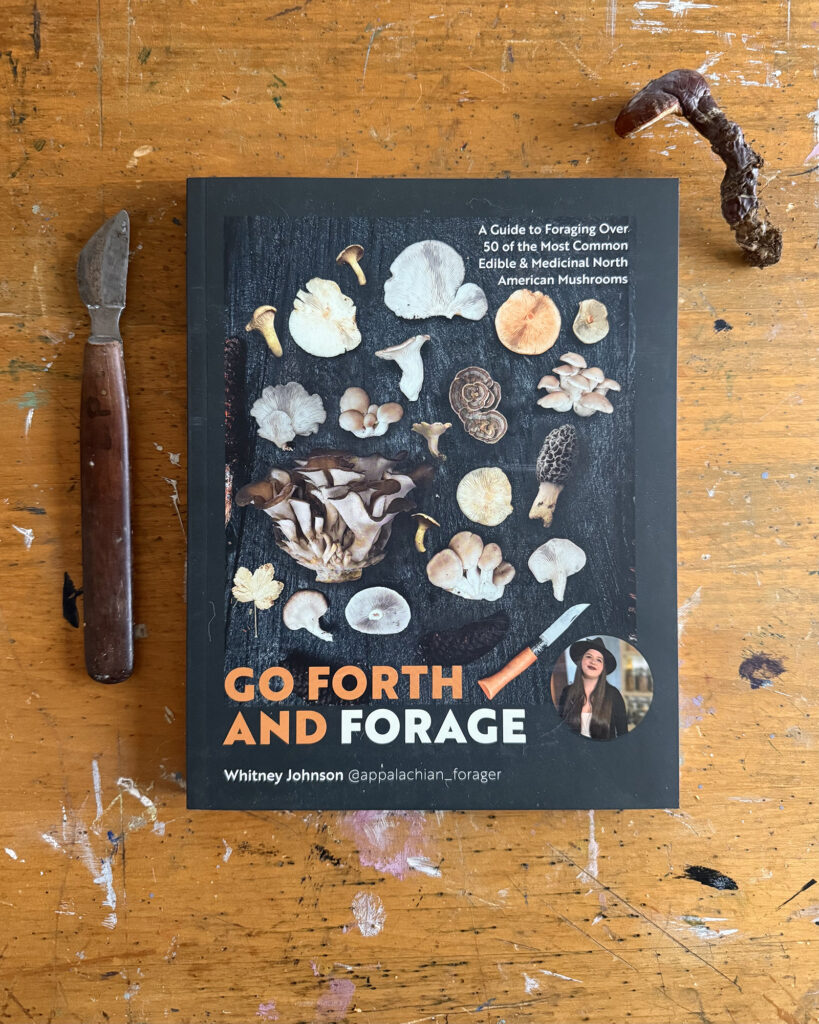
Share any bookish gifts you gave or received!
This is what I gifted my youngest son for Christmas.
Having moved from the northern to the southern Appalachians, this book from @appalachian_forager has already expanded my usual fab four to 17 varieties of mushrooms this year. My 21-year-old loves mushroom hunting, so I knew he’d love a copy.
@rbaburina
January 8, 2026
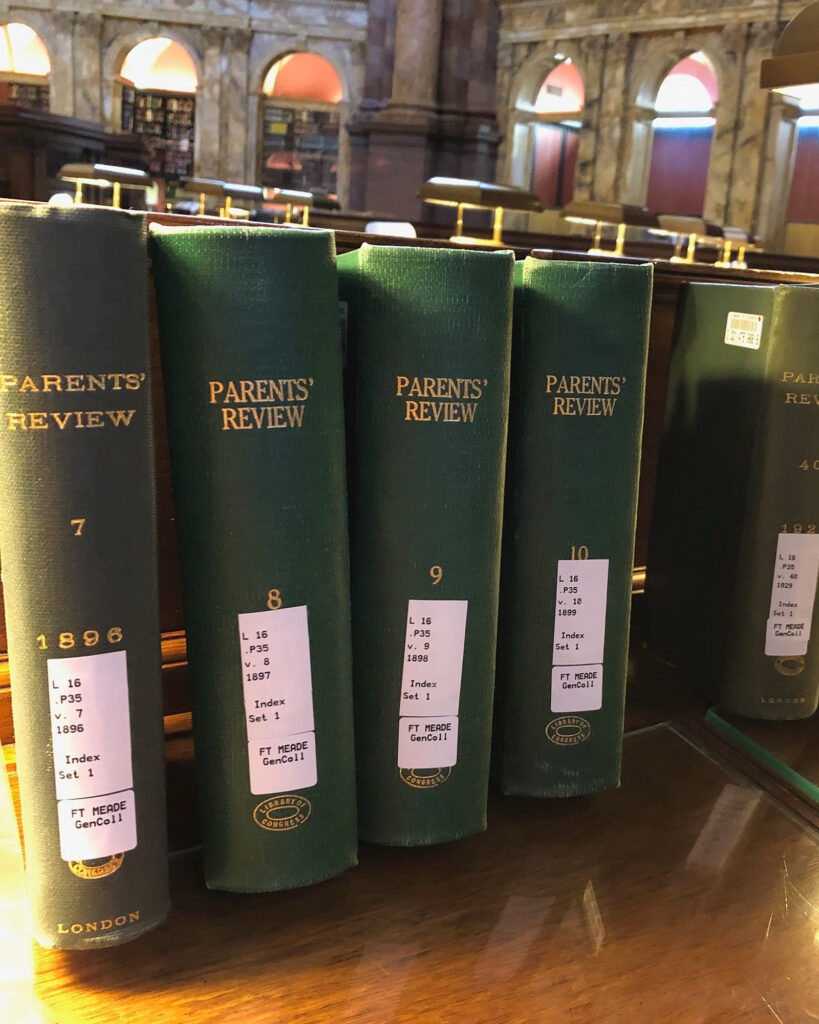
In the January 1906 Parents’ Review, Charlotte Mason made an announcement:
There are certain buried treasures in the first and second volumes of The Parents’ Review published some fifteen or sixteen years ago, and read by a former generation. The Editor proposes to reprint some of these from time to time, as they are too good to be lost and cannot be repeated.
The editor, of course, was Charlotte Mason, and she was indicating that the treasures read by one generation are meant to be read again by another. These words by Charlotte Mason clearly explain why all the volunteers who do the work of Charlotte Mason Poetry do what they do. The articles of the Parents’ Review are too good to be lost and they cannot be repeated. That’s why we keep transcribing, recording, and publishing them. It’s like finding buried treasure, and sharing it freely with the world.
@artmiddlekauff
January 9, 2026
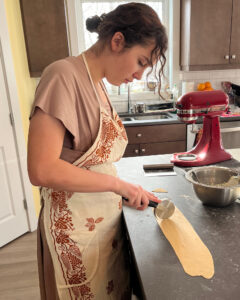
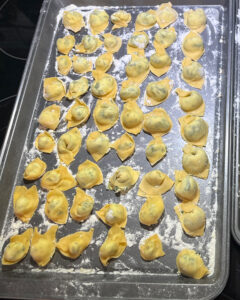
Over the Christmas break, my daughter wanted to learn how to make cappelletti (a cousin to tortellini), so called because they are in the shape of a little hat (cappello).
My maternal grandparents were from the Emilia-Romagna region of Italy and cappelletti are the pasta they traditionally make there at Christmas. Growing up, my cousins and I would spend the day in the kitchen with my nonna (my grandma) and our aunts, working together. We would make about 2000 for our family of 25. We would eat them twice: one day in broth, the next day in tomato sauce.
The traditional recipe uses three kinds of meat cooked in three different ways, plus ricotta, parmigiano reggiano, and eggs. But Serafina and I opted for the simpler ricotta and spinach in place of the meats. Both versions include a very healthy dose of nutmeg added. I think it is the nutmeg flavour that brings me right back to my childhood.
Serafina did a great job, making a well to put together the dough, kneading it by hand for 10 minutes, rolling it (much to what would have been my nonna’s chagrin we used a pasta machine. I honestly don’t know how my nonna used to roll out the sheets of pasta thinly by hand. Her sheets were translucent!), cutting the dough into squares, filling and shaping the cappelletti. Swipe to see the uncooked finished product.
It was a great way to spend a day together. And the cappelletti were quite delicious.
Is there a special food you made this Christmas that has been passed down through the generations?
@antonella.f.greco
January 10, 2026
We saw this mesmerizing phenomenon on our river for the first time this winter. It was at our little rapids, where the water flows quickly over some rocks.
They are little hollow pillar-like structures. The water is flowing up through them and you can see it bubbling and gurgling at the top. It is almost like a small volcano. They look a bit like stalagmites coming up from the frozen river top.
It seems like, every winter, there is something new for us to observe at the river!
If anyone knows what this is called, I would love to hear it.
@antonella.f.greco
January 11, 2026
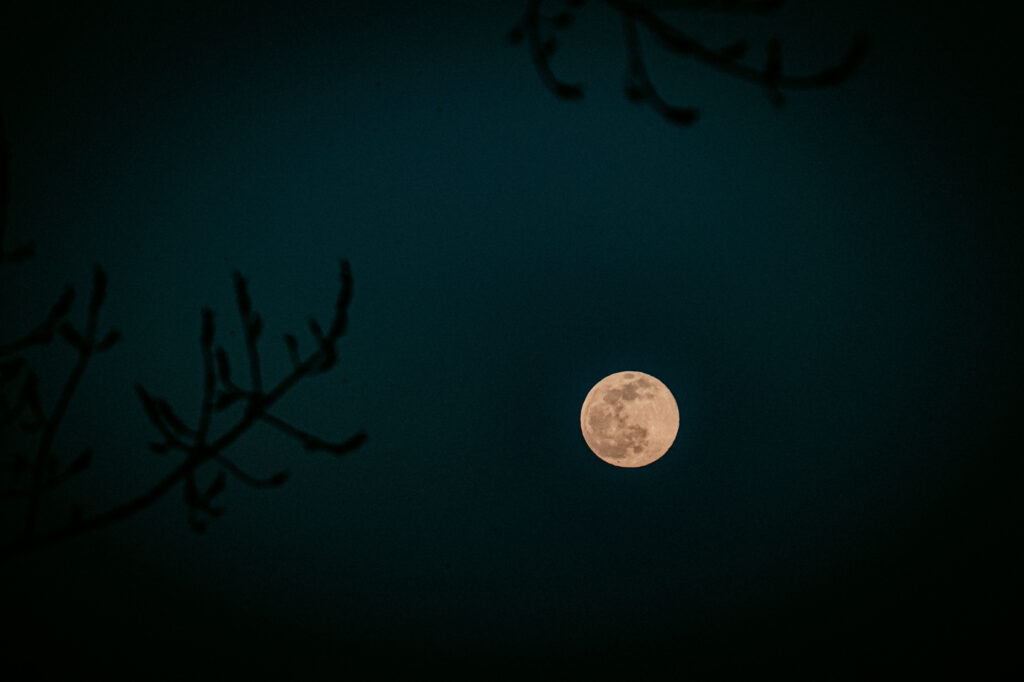
We recently spent the season of Christmas celebrating the birth of Jesus Christ. But the Gospel of John opens with a prologue that reminds us that the Son of God did not come into existence at his incarnation. Rather, He was in existence before the beginning of time. Today we begin a new journey through Charlotte Mason’s seven volumes of poems entitled “The Saviour of the World.” In the opening poem of her series, she praises the One who was with God from all time: the Word who enlightens “every man who comes into the world.” May your heart be enlightened as you praise Him too. Read or hear it here.
@artmiddlekauff
📷: @aolander