The CMP Review — Week of March 2
March 2, 2026

“It may take time and patience, but one of the most rewarding jobs in a busy mother’s life is to find for her children the books which will give them real pleasure.” (Jane Carruth, PR69, “What Are Your Children Reading?”)
@tessakeath
March 3, 2026
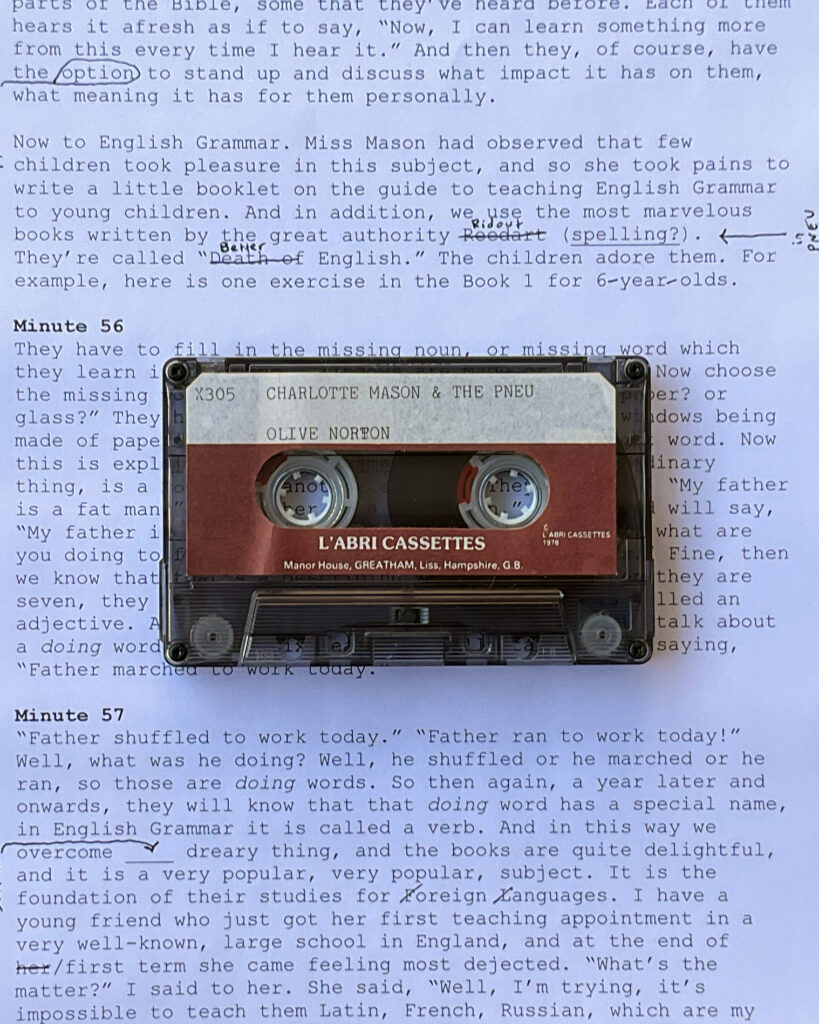
On a fateful January day in the early 1970s, two girls visited a school. Their names were Margaret and Kirsteen. The mother described what happened when the girls got home:
After the first day, Kirsteen came home glowing with life and interest. ‘We had the most exciting story today, but Mrs. Norton stopped at just the wrong place. I can’t wait to hear the next part of the story!’ And what was this exciting, vitalizing story? To my astonishment, it was Pilgrim’s Progress, read to them in the original.
Kirsteen’s mother was intrigued and spoke with the headmistress, whose name was Olive Norton. Years later she would write, “Thank you, Olive Norton, for introducing us to Charlotte Mason in the first place.” Kirsteen’s family was deeply involved in L’Abri and wanted to introduce Charlotte Mason to the wider community. What better way than to invite Mrs. Norton to speak? And so she did. And the lecture was recorded.
The name of Kirsteen’s mother is Susan Schaeffer Macaulay. Macaulay went on to write For the Children’s Sake, the book that introduced countless parents and teachers around the world to Charlotte Mason. The cassette recording of Mrs. Norton’s lecture has survived for half of a century. However, the quality of that recording has deteriorated so much over those years that it now takes effort and concentration to make out what exactly she is saying.
So, two years ago we began a project to transcribe the recording. A team of volunteers painstakingly studied every syllable on the cassette to piece together the original lecture. Today we present the complete transcript. The text was originally delivered as a lecture, however, and we wanted you to be able to hear it as well. So our talented reader Jennifer Talsma has produced a tour de force recording that captures the spontaneity of a live speech while maintaining word-for-word fidelity to the original text.
“I know that may sound to you just an ideal,” said Olive Norton, “but I can honestly tell you it is an actual fact.” Read or hear the lecture that started a movement, brought to life in a new way today. Find it here.
@artmiddlekauff
March 4, 2025

To say I wait for the flowering of the dogwood would be an understatement.
The American dogwood is native to Tennessee. When I first moved here, I was fascinated by the appearance of the tiny buds (shaped like lotus buds) that winter. I’d never seen anything like it, so captured it in my nature journal to await identification.
The blossoms only last for about two weeks—to me it’s the Southeast equivalent to seeing the cherry blossoms in DC.
@rbaburina
March 5, 2026
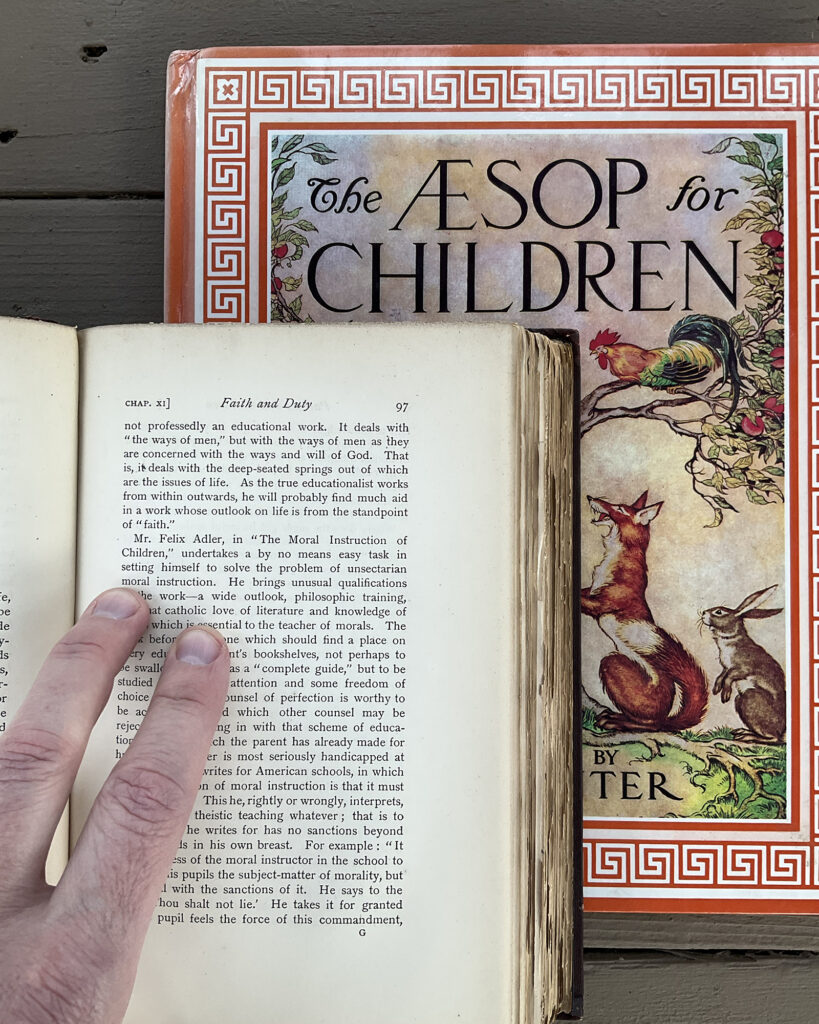
Many times I have read chapter 11 of Parents and Children in which Charlotte Mason engages at length with Felix Adler’s The Moral Instruction of Children. Many times I have read Mason’s concluding remark: “I commend the work to the perusal of parents.” But only recently have I taken up her advice.
It was with mixed feelings that I began Adler’s book. Mason clearly stated her main caveat about it, and I thought that might be a showstopper for me. I have been pleasantly surprised. I am finding the book to be thought-provoking and engaging. A page-turner, in fact.
One paragraph particularly struck me: “The directness with which [pupils between twelve and fifteen years of age] pronounce their verdict on fine questions of right and wrong often has in it something almost startling to older persons, whose contact with the world has reconciled them to a somewhat less exacting standard.”
I know what Mr. Adler is talking about. Like it or not, the world has slowly reconciled me to a less exacting standard. The world has not yet had time to do the same to my children. That is why I find it so valuable when they rebuke me, correct me from time to time, and point out my hypocrisies.
Some might find such remarks from their young-adult children to be disrespectful. Some might find it undermines their authority. I don’t see it that way at all. The church at Ephesus needed someone to tell them, “You have forsaken your first love.” The task was given to an angel. Angels bring that message to me too. I call those angels my children.
@artmiddlekauff
March 6, 2026
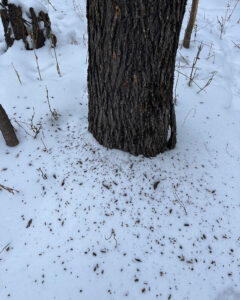
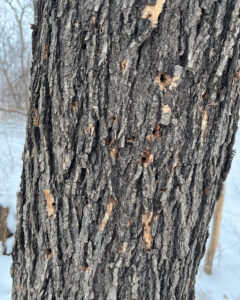
We happened upon this scene on a romp through the woods. Someone had very recently been there, with so much evidence of nature’s sawdust on top of the snow.
Who would make such small holes? They are about half a centimetre to a centimetre in diameter.
Our guess is small woodpeckers. We do have plenty of downy and hairy woodpeckers around all year. Such sweet things!
The tree was liberally sprinkled with these holes, but even low down to the ground (which we weren’t exactly expecting).
@antonella.f.greco
March 7, 2026
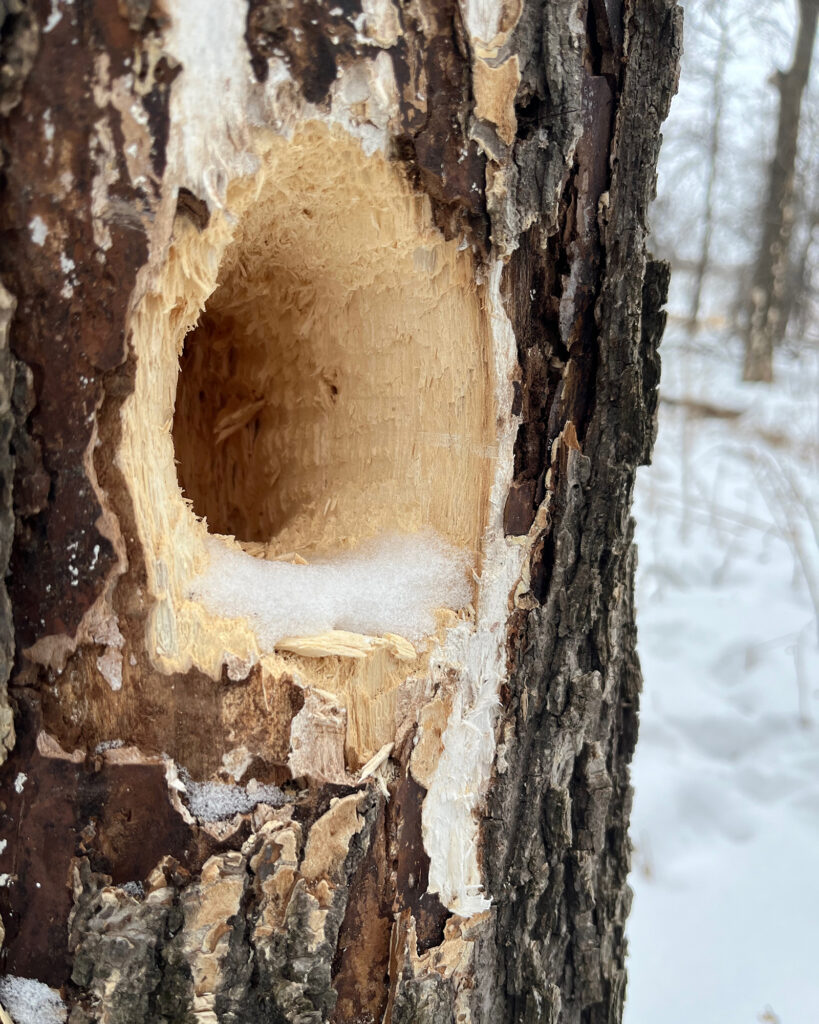
During the same walk as yesterday’s tiny woodpecker holes, we also saw this pileated woodpecker handiwork!
The contrast is incredible! It is fascinating to see how different types of woodpeckers are so different.
Which woodpeckers do you see? Are they regular visitors?
@antonella.f.greco
March 8, 2026
In 1908, Charlotte Mason lamented the state of Bible study in her day: “We have analysed until the mind turns in weariness from the broken fragments; we have criticised until there remains no new standpoint for the critic.” If that was the situation then, how is it now, a century later? Richard John Neuhaus recently lamented “the slide of biblical scholarship into hyper-specialized critical studies of ancient texts in remote historical context.” It seems that the broken fragments just keep getting smaller.
Mason aimed to reverse that trend by writing a “synthetic study of the life and teaching of Christ.” She believed that “if we could only get a whole conception of Christ’s life among men, and of the philosophic method of His teaching, His own word should be fulfilled, and the Son of Man, lifted up, would draw all men unto Himself.”
In her study, she assumed by faith that the entirety of Scripture — Old and New Testament — provide a unified witness to coherent theological truth. Therefore in her meditation on any particular passage of Scripture, she saw and contemplated the links from the part to the whole.
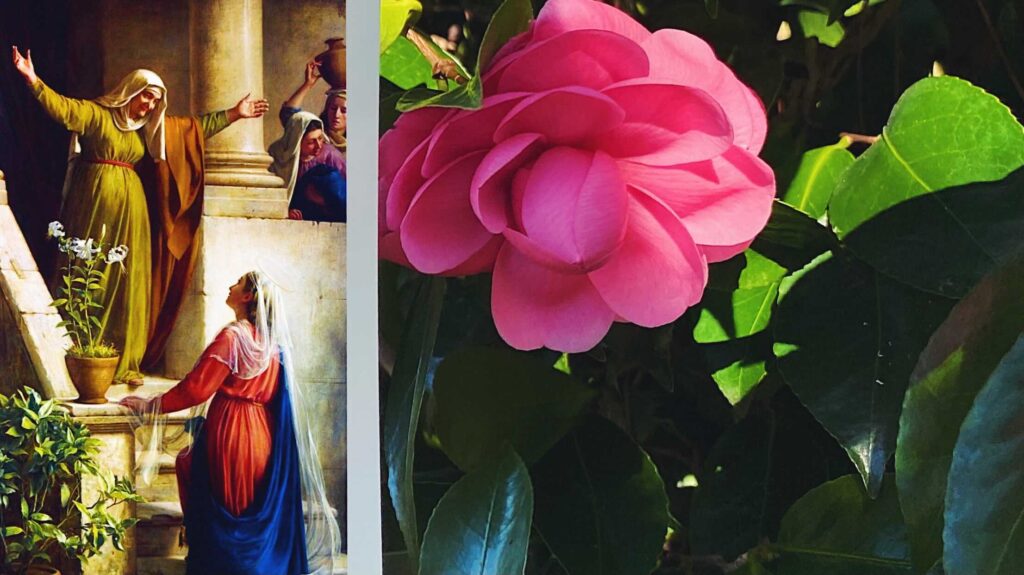
Today’s poem is a wonderful example of this Christ-centered contemplation. In studying Mary’s three-month visit to Elizabeth, the critic would have us analyze the syntax and grammar of 13 Greek words. Mason would have us take a tour of the Psalms and the Prophets. Read the poem here.
@artmiddlekauff