The CMP Review — Week of March 9
March 9, 2026
In choosing to follow Charlotte Mason’s philosophy and principles, I’ve found that her influence extends far beyond our homeschool lessons. There are many aspects of life where her ideas have challenged, encouraged, and shaped me.
The Parents’ Review article on Mother Culture has especially impressed upon me how important it is to take time for our own growth. About making time for mother culture, the article says:
The only way to do it is to be so strongly impressed with the necessity for growing herself that she herself makes it a real object in life.
The article goes on to say that, “if we would do our best for our children, grow we must; and on our power of growth surely depends, not only our future happiness, but our future usefulness.”
Not only our happiness, but our future usefulness! Grow we must.
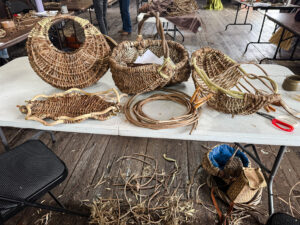
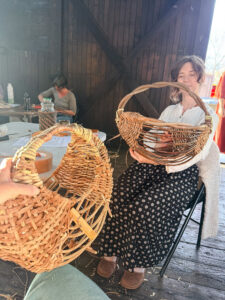
With that in mind, I spent this past weekend making a little space for my own growth, taking a basket weaving class with a dear friend who also happens to be a Charlotte Mason homeschooling mother. Getting to spend time together weaving, learning and growing in skills with our hands, and enjoying the fellowship of a shared pursuit is something I am incredibly grateful for.
Sometimes growth looks like reading a book, studying a subject, or spending time in nature. Sometimes it looks like learning or further developing a handicraft alongside a friend. However it takes shape, I want to make it a real object in life that it does take place. Nurturing our own growth is not separate from our work as mothers, but it strengthens it.
@tessakeath
March 10, 2026

When I talk to Charlotte Mason educators at conferences, retreats, and meetings, I find that certain themes emerge. The basic ideas of the method are inspiring and make sense. But sometimes difficulties are encountered in practice. Many of the difficulties I hear about are related to narration, pace, and the difficulty of books.
It turns out that I am not the only one to have this experience. F. M. Clark was one of the first teachers to adopt the Charlotte Mason method in the Gloucestershire schools. Over the years she heard about many of the same difficulties I hear about today — narration, pace, and books.
The inspiring thing about Miss Clark is that she had answers. Her 1927 paper was not called “Some Difficulties.” It was called “Some Difficulties Overcome.” That extra word makes all the difference in the world. Find answers that have stood the test of time here.
@artmiddlekauff
March 11, 2026
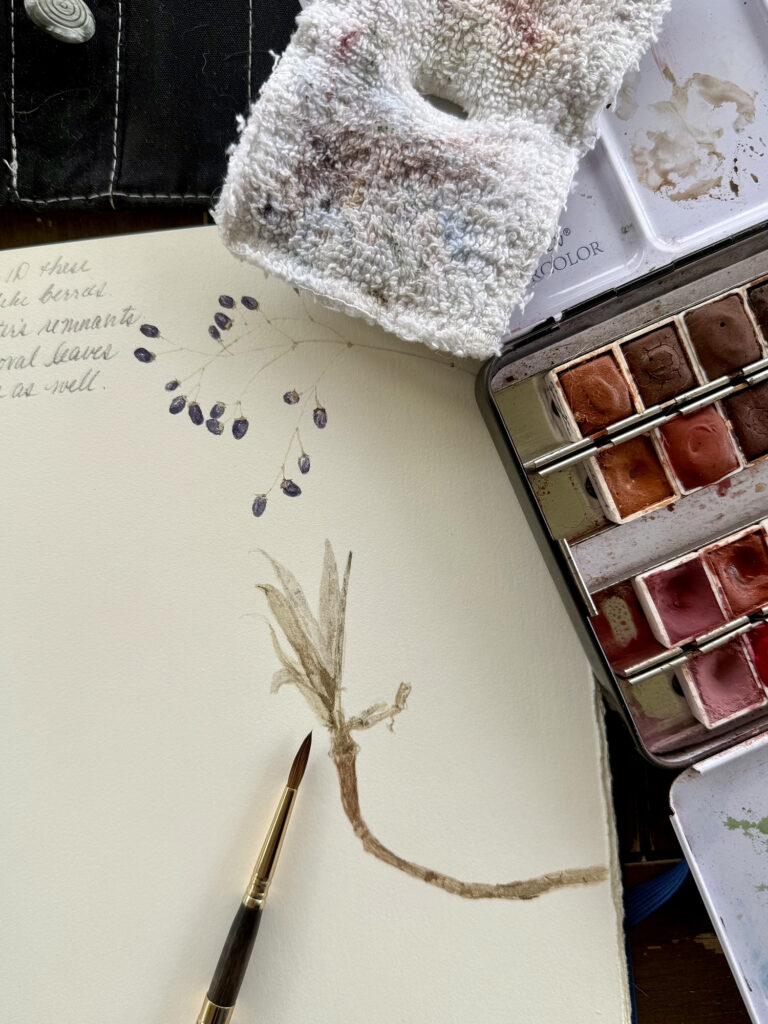
Nature journaling while traveling has become one of my favorite CM traditions. As I turn the pages later, the memories return—the people we met, the places we wandered, and the small magical moments that might otherwise have slipped away.
@rbaburina
March 12, 2026
“Mrs Norton was one of those very energetic people (like Edith Schaeffer). I think she just worked with what she had and did her best.”
This testimony was shared with me about eight years ago by a person who had in her youth attended Olive Norton’s school in England for two years. I didn’t recognize the name Norton, but I was very excited to be hearing first-hand about the experiences of someone with living memories of a PNEU school.
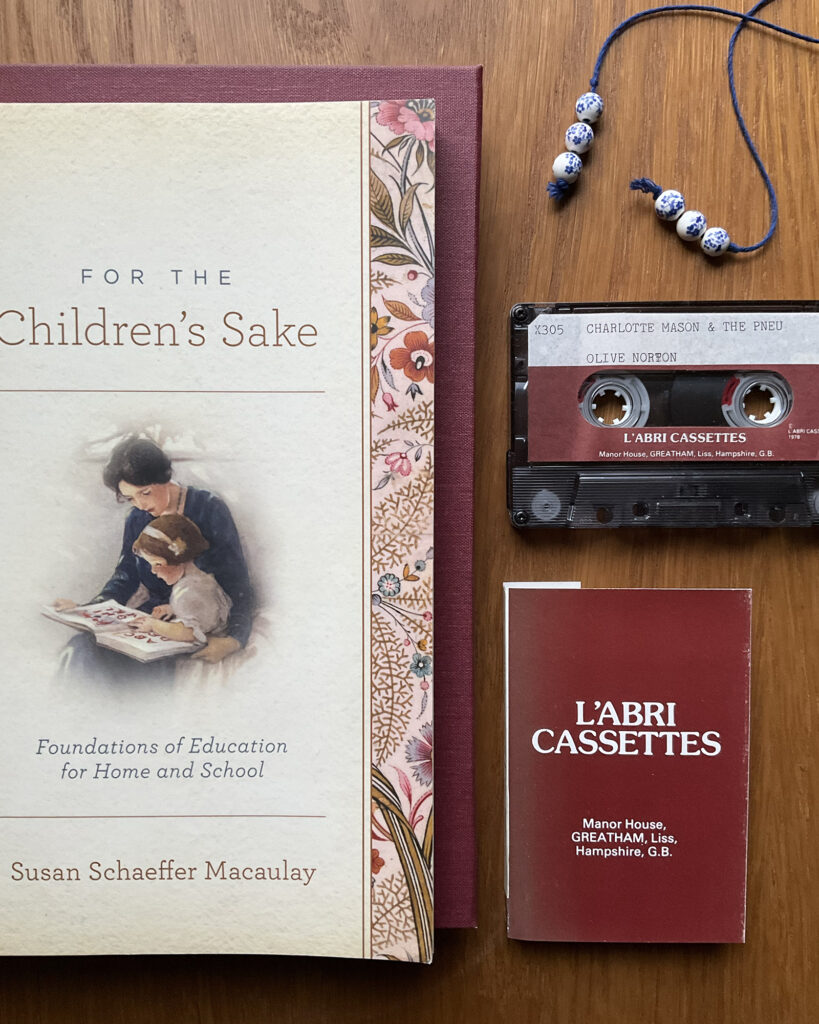
About a year before that I had been invited to speak at a modern American school organized around Charlotte Mason’s principles. After my talk the headmaster showed me his collection of artifacts. Among them was a cassette which he offered to give me. I accepted it with gratitude, but I had no real understanding of its significance. What would I do with a cassette anyway? At the time I had no podcast, no team of dedicated volunteers.
It took me several years to connect the dots. It turns out that Olive Norton is mentioned on pages 13 and 56 of Susan Schaeffer Macaulay’s For the Children’s Sake. On page 13 Macaulay makes the significant statement: “Thank you, Olive Norton, for introducing us to Charlotte Mason in the first place.”
Who was this Mrs. Norton? This “very energetic” person who played such a pivotal role in the modern rebirth of the Charlotte Mason method? The cassette I received out of courtesy became one of my treasured possessions. For the cassette is a recording of Mrs. Norton herself.
Probably my favorite moment in her 81-minute lecture is when she says, “I’m not afraid of any situation, because, of course, God is with me; He’s my friend. He’s my strength.” I think that faith was the source of Mrs. Norton’s energy and inspiration. And it’s a source that’s still available to us today. I hope you take the time to read our new transcription of her talk and the skilled recording of it by Jennifer Talsma.
@artmiddlekauff
March 13, 2026




The latter part of winter (I shan’t even presume to think about calling it the end. This is Manitoba, Canada, after all) has a beauty all its own.
The sun regains its strength, and vibrancy, and shares its warmth. The sky is a vivid cerulean. The trees are just starting to wake up (we can see a few new buds here and there). The snow is crunchy, so crunchy. And the ice below it is changing and showing forth. Best of all, the chickadees are changing their tune.
It is the promise of spring.
And it is amazing.
(Enjoy these photos from my most recent walk on the frozen river. I’m trying to get on it every day before we lose it to the thaw!)
What beauty are you seeing these days? Tell us about it in the comments!
@antonella.f.greco
March 14, 2026

Spring Break!
We’ve followed the local school district schedule since beginning homeschool. This made it possible for us to do things with friends who chose a more traditional route in education.
This year most likely marks my kids’ final spring break as they near college graduation. We celebrated with a camping trip to the Smokies with their childhood friends.
@rbaburina
March 15, 2026
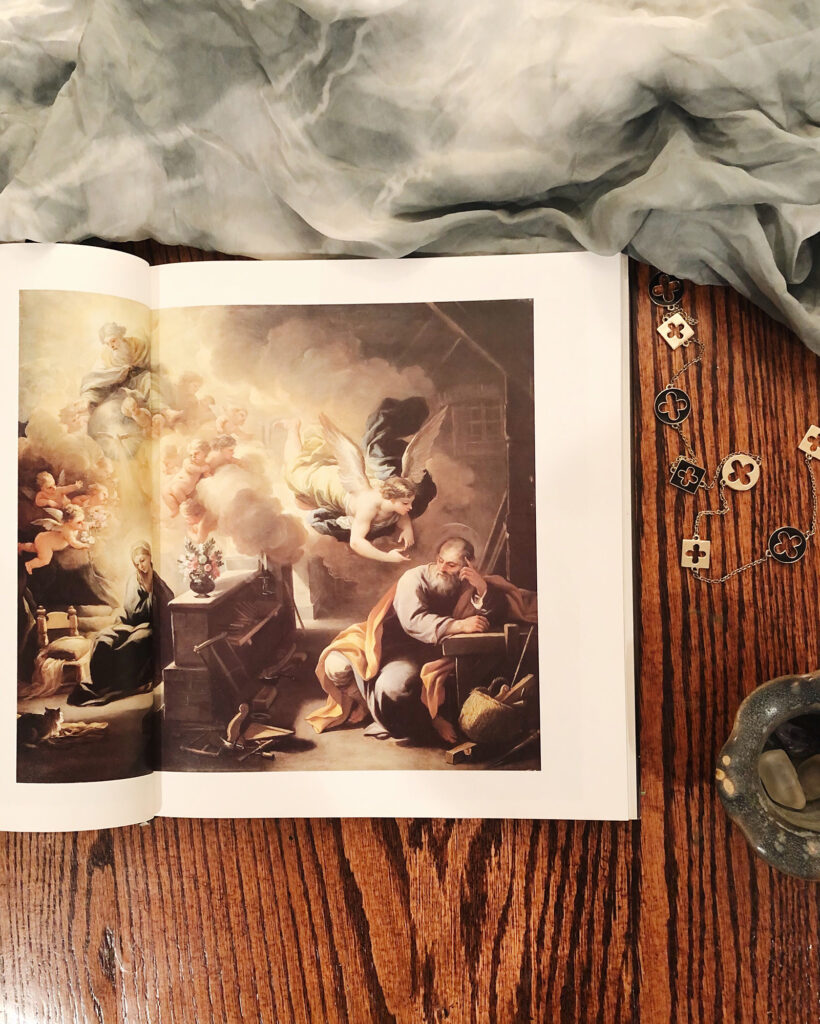
On page 166 of Charlotte Mason’s monumental Towards a Philosophy of Education, we are greeted with this quotation:
We are at present in a phase of religious thought, Christian and pseudo-Christian, when a synthetic study of the life and teaching of Christ may well be of use. We have analysed until the mind turns in weariness from the broken fragments; we have criticised until there remains no new standpoint for the critic; but if we could only get a whole conception of Christ’s life among men and of the philosophic method of His teaching, His own words should be fulfilled and the Son of Man lifted up, would draw all men unto Himself.
Here Mason is quoting from the Preface of her own The Saviour of the World. In those poetry volumes she truly attempted to portray “a whole conception of Christ’s life.” Nowhere is that better exemplified than in today’s poem. What does the heartwarming tale of the Nativity have to do with the heartbreaking account of the Cross? To the man who analyzes only the fragments, perhaps nothing. But to the man who surveys with the eye of synthesis, he sees that the story is one.
I invite you to contemplate the poem that contemplates Christ’s entrance into the world with a view towards His departure. Find it here.
@artmiddlekauff