The CMP Review — Week of March 16
March 16, 2026
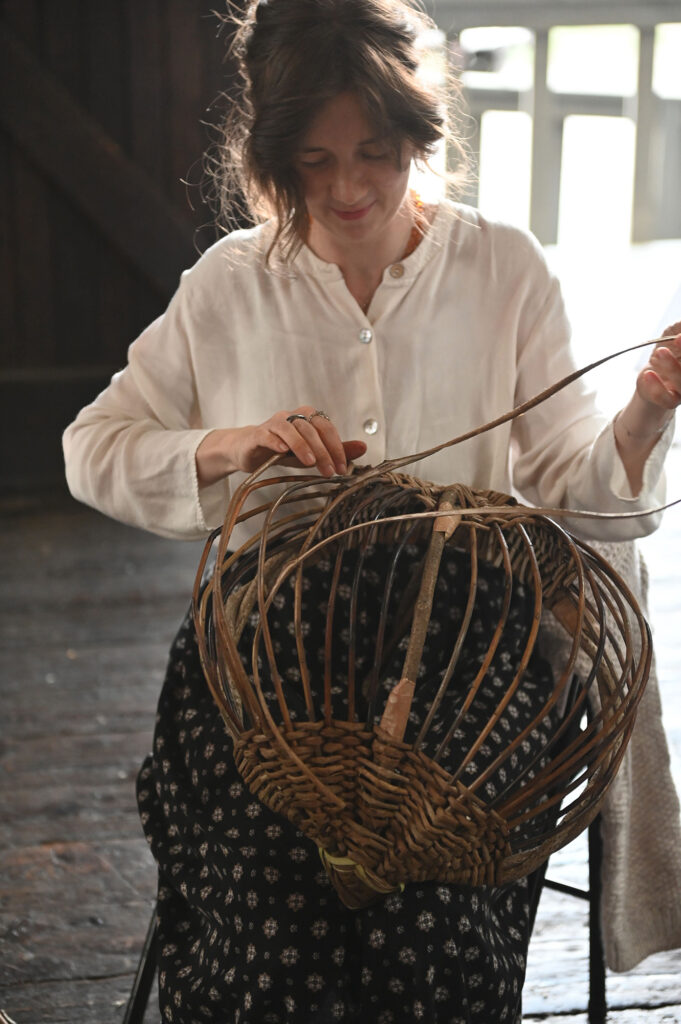
“It is only as we rise higher we breathe more freely; it is only as years advance we find out that a mother’s power depends not on cleverness, ability, or gifts, but on love and faith. It matters much more to your children what you are than what you do. You fear to find your head under water, at the pace of higher education! The young ones learn so much you never learnt! It matters not. If you are in sympathy with them, if they know it, and see you to be single-minded, honest, painstaking, religious, you cannot lose your hold over them, you have all that is needed for success in your work. Only you must believe it. Believe in the power of your eye, your smile, your voice, your hand, and, above all, your heart.
“Let your children find in you a large haven of peace—the gates of the harbour always open—the waters within always at rest.” (“Child Nature”, PR3)@tessakeath
March 17, 2026

What reason is there to teach handicrafts in an age of technology? At one time, the work of one’s hands supplied the needs of one’s life. But for the child of today, “his needs are chiefly supplied from shops and he is hardly aware that everything he uses has been made for him by someone who fed a machine.”
This observation was made by Agnes Drury in 1927. But she also observed that handicrafts have a value that transcends the utilitarian. She observed that the ability to create with our hands is part of our “inheritance as human beings” and that no child should “be deprived of it.”
Drury was the Senior Handicraft Teacher at the House of Education. Her article skillfully lays out the why, when, and how of handicrafts. Covering everything from paper sloyd to wood-carving, it is a must-read for understanding this essential element of a Charlotte Mason education. Find it here.
@artmiddlekauff
March 18, 2026
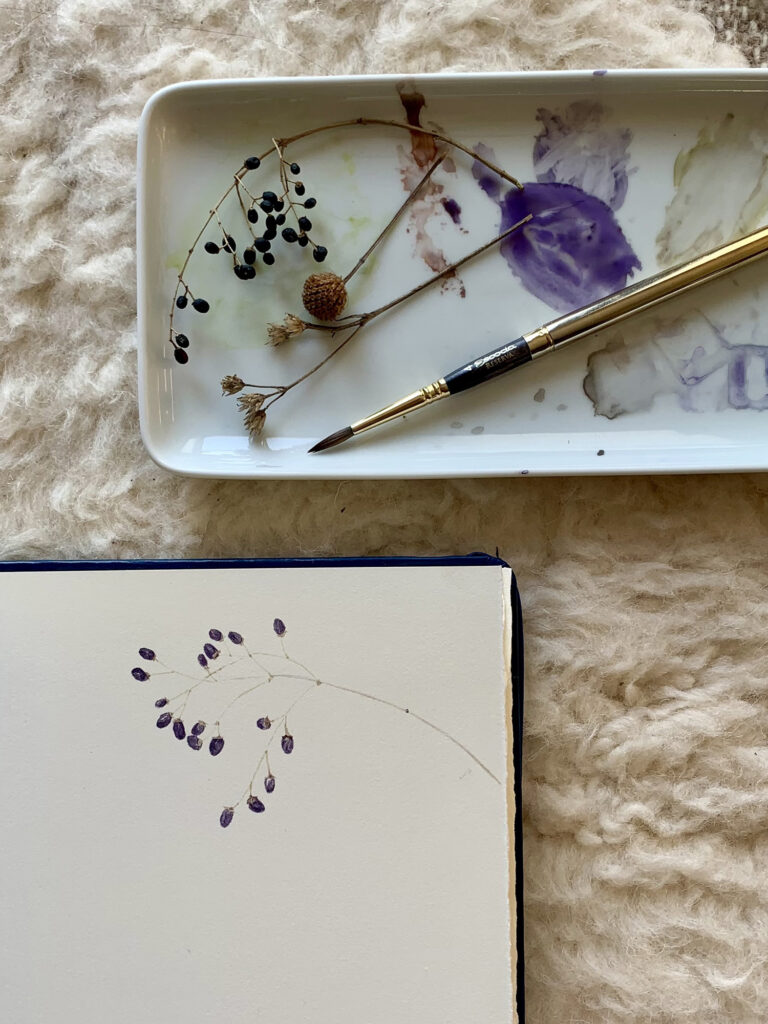
Wild privet is considered an invasive shrub in North America, but it’s also one of the most beautiful plants year-round. It has white trumpet-shaped flowers, leathery green leaves, and dark purple berries. If you want to catch sight of birds in late winter and early spring, you might find them eating privet berries. They’re considered bird “junk food” due to their low nutrient & high carb content, but are a good fallback when native berries have all been eaten. They’re toxic to humans and pets, though.
@rbaburina
March 19, 2026
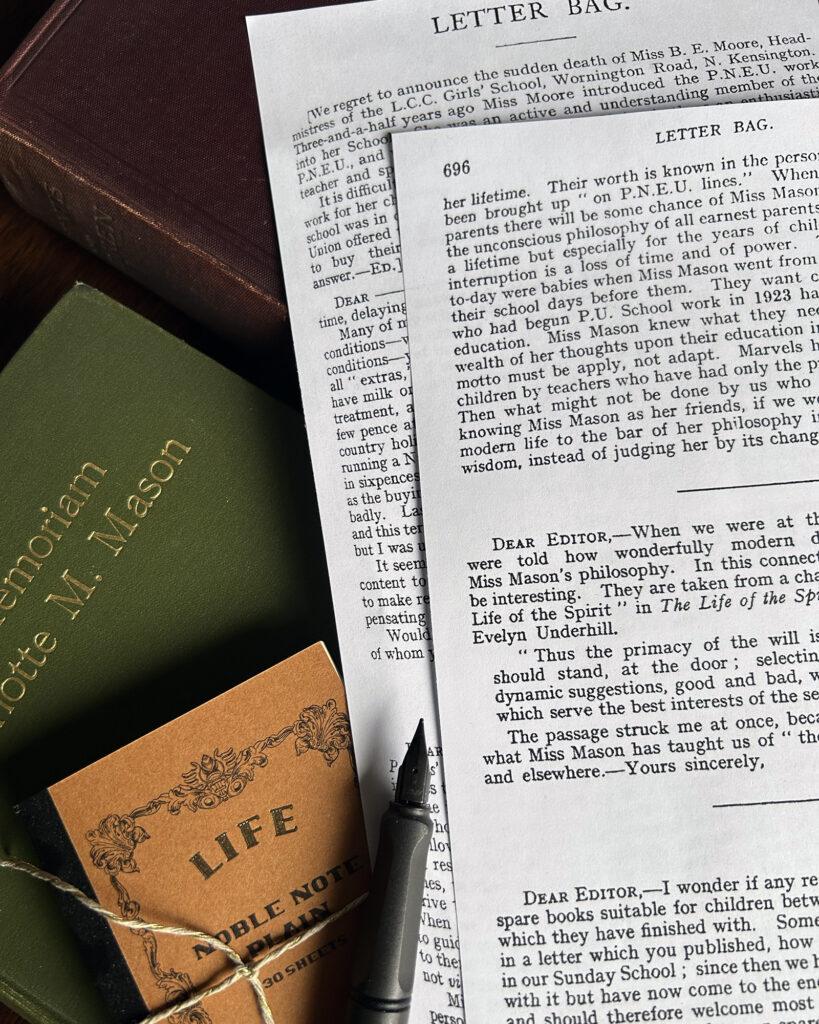
On Tuesday we shared Agnes Drury’s wonderful 1927 article on handicrafts. I have always been a fan of Miss Drury, and I appreciate Essex Cholmondeley’s assessment that Drury “was whole-heartedly faithful to the teaching of Charlotte Mason.”
In 1916 when Charlotte Mason first uttered the words “I can only point to the unusual results we obtain through adhering not ‘more or less,’ but strictly to the principles and practices I have indicated,” she had a co-presenter with her. Charlotte Mason spoke on the principles. And Agnes Drury spoke on the practices.
Agnes Drury is a name I can trust.
That’s why I was so struck by a letter Drury wrote to the editor of the Parents’ Review (also in 1927), four years after Mason’s death. It’s a letter that challenged me and I quoted from it in my 2025 presentation entitled “Trusting the Method.”
What does it mean to be faithful to the teaching of Charlotte Mason in 1927? How about 2027? We’ve transcribed her whole letter so you can read it now here.
@artmiddlekauff
March 20, 2026

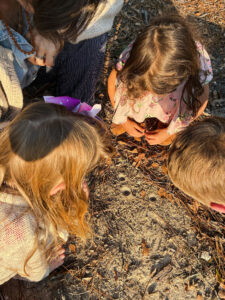
We got another huge pile of snow this week here in Manitoba.
Snow freshens everything up and makes the world look clean again.
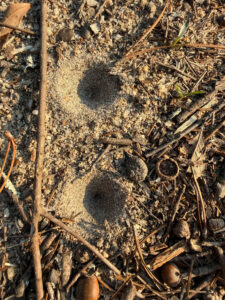
And it gives us a fresh canvas to observe anew the activities of our little friends!
What are you keeping an eye on outside?
@antonella.f.greco
March 21, 2026
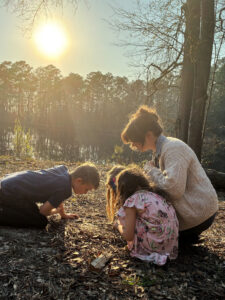
March 22, 2026
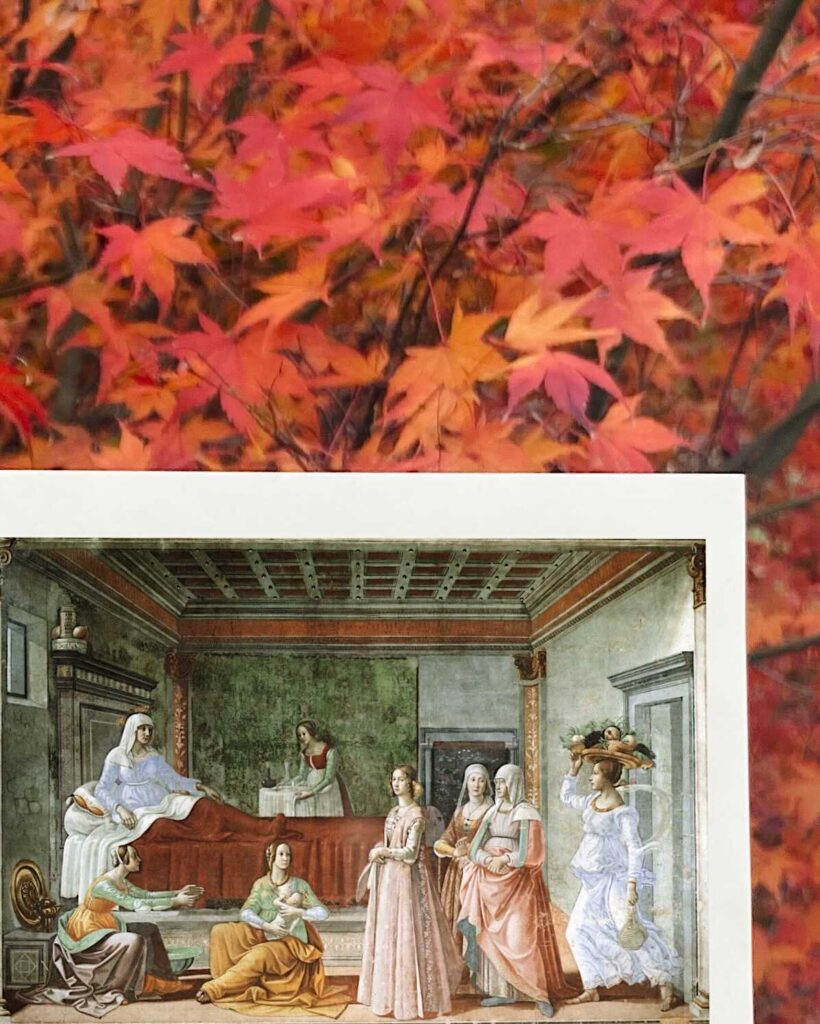
The Gospel of Luke includes three songs. One is the prophecy of Zechariah, the father of John the Baptist, sung at the time of his son’s birth. When this song was translated from Greek to Latin for the Vulgate, the first line read, “Benedictus Dominus Deus Israel” (“Blessed be the Lord God of Israel”). Because of this, the hymn (Luke 1:68–79) has been known as the Benedictus.
According to J.H. Blunt, “This prophetic hymn of Zacharias has been used as a responsory canticle to the Gospel Lessons from very ancient times, being spoken of as so used by Amalarius [a.d. 820]; and perhaps by St. Benedict, nearly three centuries earlier, since he speaks of a Canticum de Evangelio occurring here in Mattins.”
Blunt goes on: “The position of this Canticle makes its ritual meaning self-evident. It is a thanksgiving to Almighty God for His mercy as exhibited towards mankind in the Incarnation of our Lord, whereof the Gospel speaks, and in the foundation of the Church in His blood, as recorded in the Acts of the Holy Apostles. It is the last prophecy of the Old Dispensation, and the first of the New, and furnishes a kind of key to the Evangelical interpretation of all prophecies under the one by which they are connected with the other.”
It is poetry indeed, but its poetic character is not very evident in our English translations. Charlotte Mason recast this ancient liturgical song, this connection between testaments old and new, with the meter and rhyme that we associate with traditional English verse. Mason’s poem has found new life in a recording by Antonella Greco. Take a moment to listen here.
@artmiddlekauff