The CMP Review — Week of April 6
April 6, 2026
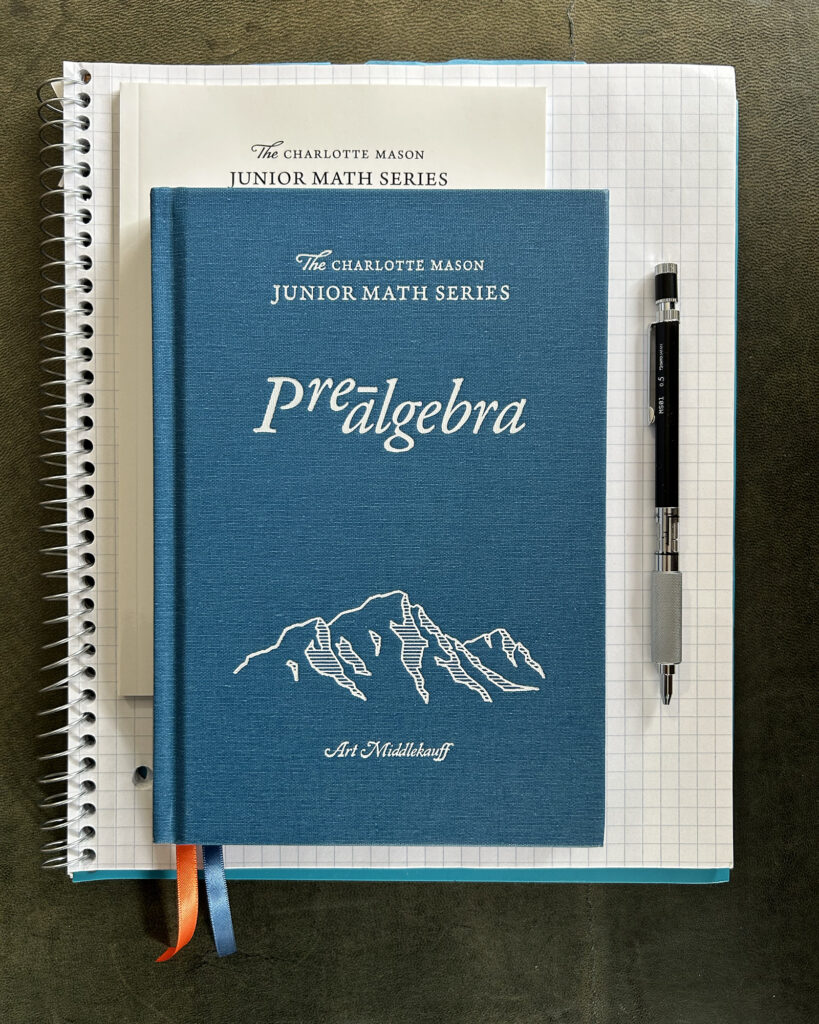
What would be the Charlotte Mason approach to a pre-algebra lesson?
That’s the question I asked myself every single day as I developed the first book in the Simply Charlotte Mason Junior Math Series. Of course there were many considerations, but one factor stood above of the rest: the importance of the idea.
What is an idea? It’s “more than an image or a picture,” says Charlotte Mason. “It is, so to speak, a spiritual germ endowed with vital force—with power, that is, to grow, and to produce after its kind. It is the very nature of an idea to grow.”
That was my guiding principle as I developed each lesson: to uncover the idea — the living idea — behind each element of mathematics that comprises pre-algebra. My goal was to help students find not just static procedures but rather living principles that would spark their imagination and curiosity.
But education is not only about living ideas. Education is an atmosphere, a discipline, and a life. So the discipline of habit and the atmosphere of the real world are an ever-present undercurrent throughout the entire book.
I taught my three children math at home from birth to the end of high school. Each child was unique and approached the subject differently. I learned so much by walking with them through the journey of discovery for the past 20 years. This is the book that I wish I had when I was teaching them. I’m glad I can now share it with you. Find it here.
@artmiddlekauff
April 7, 2026
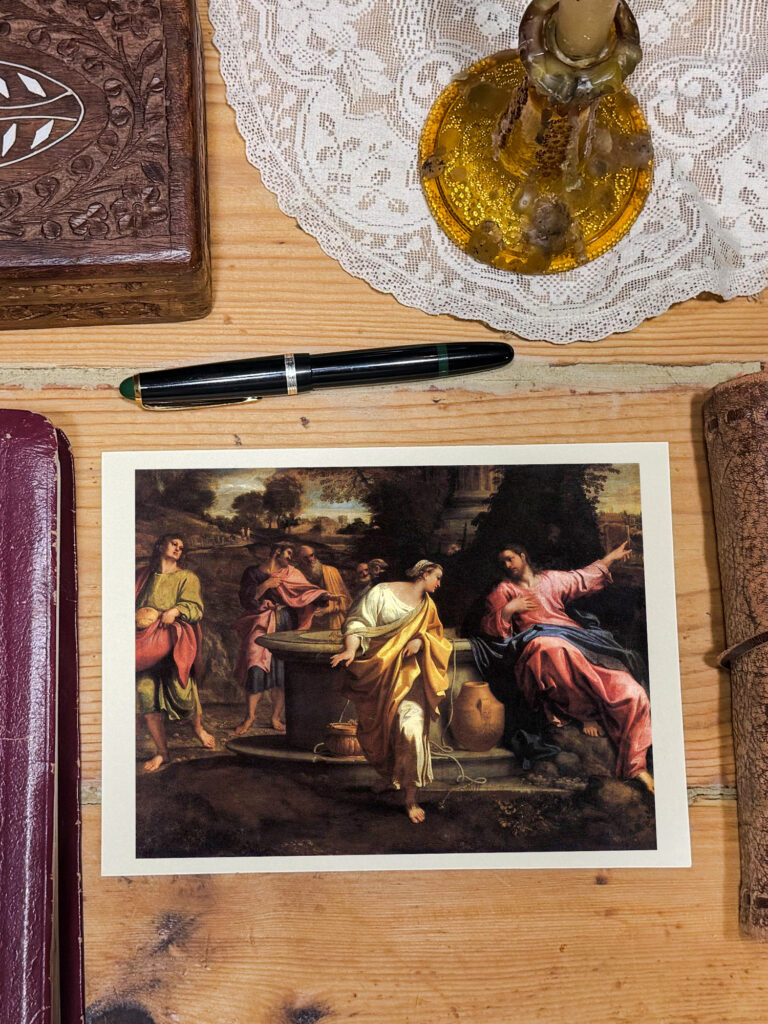
“We all want children to became citizens of character,” writes Elsie Kitching. “The question is what is character and what develops it?”
Many Christian schools and homeschools regard the cultivation of virtue as one of the most, if not the most, important purposes of education. Nearly all parents and teachers want their children and students to grow up not only thinking rightly but also acting rightly.
Did Charlotte Mason have a specific idea on how character is to be formed? According to her close associate Elsie Kitching, she certainly did. 1920 was a time of reconstruction and upheaval in Europe. Many Britons were asking “What next?” Miss Kitching was ready with Miss Mason’s answer.
Kitching’s article is full of flavor, thought-provoking anecdotes, and humorous stories that all gather around the question of character formation. Kitching’s final answer is profound and eminently applicable today. Read or hear her article, now on the internet for the very first time here.
@artmiddlekauff
April 8, 2026

It’s a wonder that hop clover is considered such a nuisance.
Also known as black medic or yellow trefoil, it can basically be eaten as one would eat collard greens in the south (sautéed, braised, added to soups & stews). According to Eat the Planet, “every 100g black medic leaves contain around 23g of protein and around 25g of fiber, making this herb an amazing source of protein and fiber.” As with everything, moderation is key.
@rbaburina
April 9, 2026
“Another elemental relationship, which every child should be taught and encouraged to set up, is that of power over material. Every child makes sand castles, mud-pies, paper boats, and he or she should go on to work in clay, wood, brass, iron, leather, dress-stuffs, food-stuffs, furnishing-stuffs. He should be able to make with his hands and should take delight in making.” (School Education, p. 80)
That delight isn’t only for children. I wove this little willow baby rattle and truly took delight in the making of it.
@tessakeath
April 10, 2026
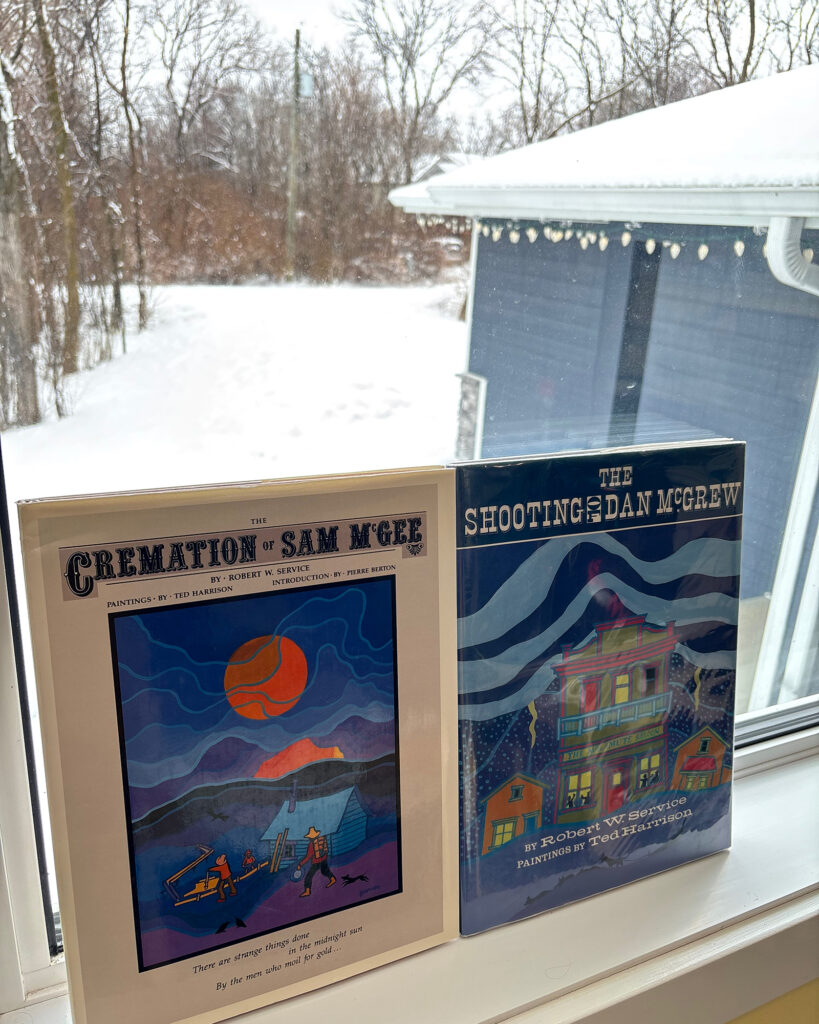
One of our favourite Canadian poets is Robert Service. We love to read his poems aloud. There’s just something about how the words sound. And his poems are just rollicking, his verses roll off the tongue! We can’t help but smile and laugh as we read them!
Though we consider him a Canadian poet, his biography tells us that he was born in England in 1874, his family returned to their native Scotland when he was a boy, he came to British Columbia Canada in his early 20s, moved around western North America for a decade, lived in the Yukon for a decade, in France for a decade and a half during WWI, in California during WWII, and moved back to France where he spent the final years of his life. He died there in 1958.
What makes this world traveller feel like a Canadian poet is the subject matter of his poems, his poetic sensibilities, his turn of phrase, the ideas he incorporates into his story-telling, his quirky humour, and more than that, the way he captured this country’s essence. He put into words our unique experience, from (his) present and the past, including many poems set in Gold Rush times. Robert Service could describe ice and snow and cold and that “chilled to the bone” feeling like no other.
If you’ve not had these Arctic experiences yourself, this poetry can transport you to a different place and time with such vivid, captivating imagery. The classic northern paintings by Ted Harrison, who also lived in the Yukon for 25 years, paired with Robert Service’s poems in these picture books don’t hurt, either.
And, wonderfully, here in Manitoba, we woke up to a fresh snowfall of 5 or 6 cm on Wednesday, just in time for me to take this photo. ❄️🇨🇦 ❄️
Do you have a favourite national, regional, or even local poet? Share with us the poets that tell the tales of your land, those who capture the unique flavour of your region. So that we, too, can be transported!
@antonella.f.greco
April 11, 2026



There’s a pink explosion here in NE Tennessee!
How’s spring coming along in your neck of the woods?
@rbaburina
April 12, 2026
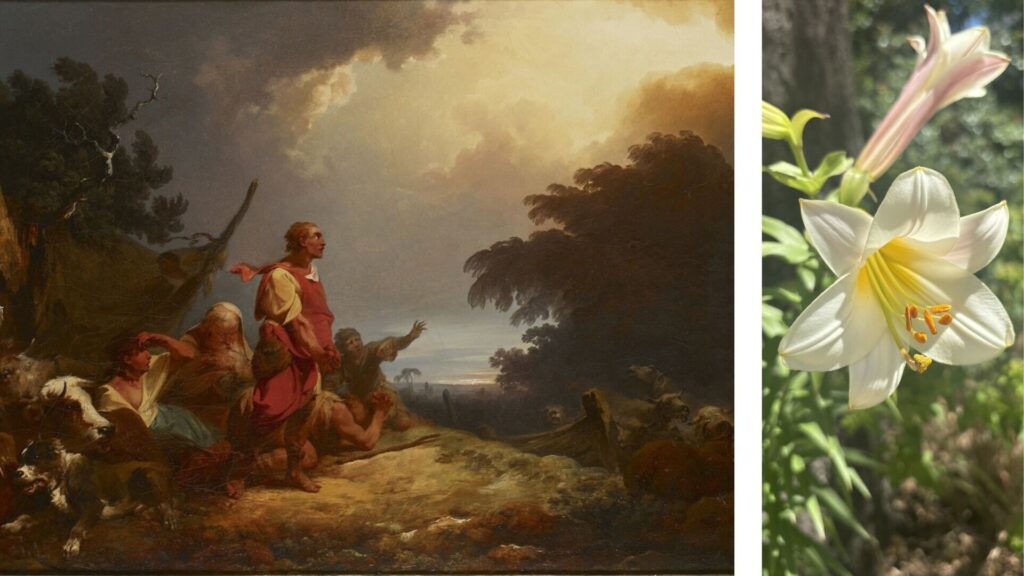
“When the Chief Shepherd appears,” wrote the Apostle Peter, “you will receive the crown of glory that does not fade away.”
This Chief Shepherd was the Son of David, who had been told, “You shall shepherd My people Israel.”
The Shepherd’s first advent was announced to shepherds, and Charlotte Mason wrote about it in a poem that recognized the link between shepherd and king. Read or hear it here.
@artmiddlekauff
🖼️: The Angel appearing to the Shepherds by Philip James de Loutherbourg