The CMP Review — Week of May 11
May 11, 2026

“But Nature does more than this for us. She gives us certain dispositions of mind which we can get from no other source, and it is through these right dispositions that we get life into focus, as it were; learn to distinguish between small matters and great, to see that we ourselves are not of very great importance, that the world is wide, that things are sweet, that people are sweet, too; that, indeed, we are compassed about by an atmosphere of sweetness, airs of heaven coming from our God. Of all this we become aware in ‘the silence and the calm of mute, insensate things.’ Our hearts are inclined to love and worship; and we become prepared by the quiet schooling of Nature to walk softly and do our duty towards man and towards God.” (Charlotte Mason, Ourselves, Book 2 p. 98)@tessakeath
May 12, 2026
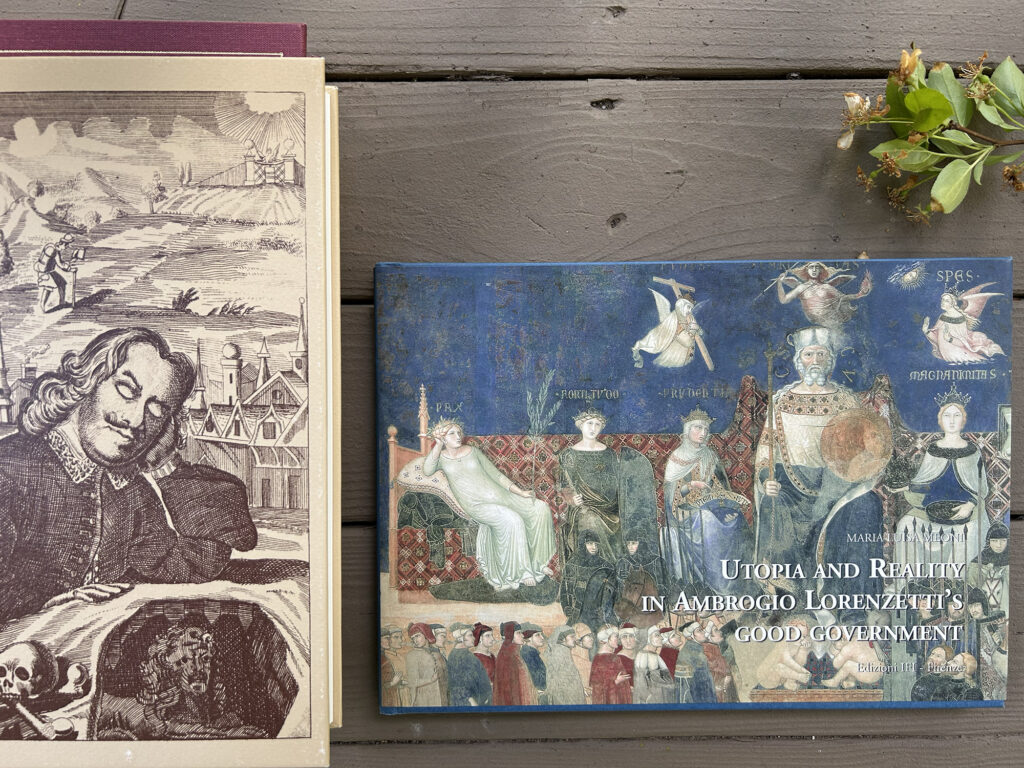
Allegory has always been a powerful way to express abstract ideas. From Isaiah’s Song of the Vineyard, to Ambrogio Lorenzetti’s Allegory of Good and Bad Government, to John Bunyan’s Pilgrim’s Progress, allegory shows us how invisible ideas are dynamically related by pointing us to familiar phenomena that we see in the world every day.
Charlotte Mason herself began Ourselves with the allegory of Mansoul, which has captured the imagination of countless readers of all ages. There is something about contemplating the soul as a kingdom which makes self-reverence, self-knowledge, and self-control more inviting and more profitable to contemplate.
In 1917 Elsie Kitching wanted to express how the ideas of her mentor and teacher fit within the broader history of thought. She could have chosen an essay format, and with careful definitions and transitions have given us an academic and analytical exposition. Instead, she chose allegory. The result is a contextualization of Miss Mason’s ideas unlike anything you’ve ever seen before.
Kitching’s piece is highly unusual and as a team we discussed whether our audience would even appreciate her allegorical approach. But Kitching’s use of allegory places her in good company. And if you’re following us here, you’re probably just the kind of person who could find something inspiring and intriguing in Kitching’s one-of-a-kind presentation. So today it’s on the internet for the very first time, and you can read or hear it here.
@artmiddlekauff
May 13, 2026
No field guide with color photographs has helped me identify plants and wildflowers as well as Edith Holden’s watercolors in The Country Diary of an Edwardian Lady.
@rbaburina
May 14, 2026
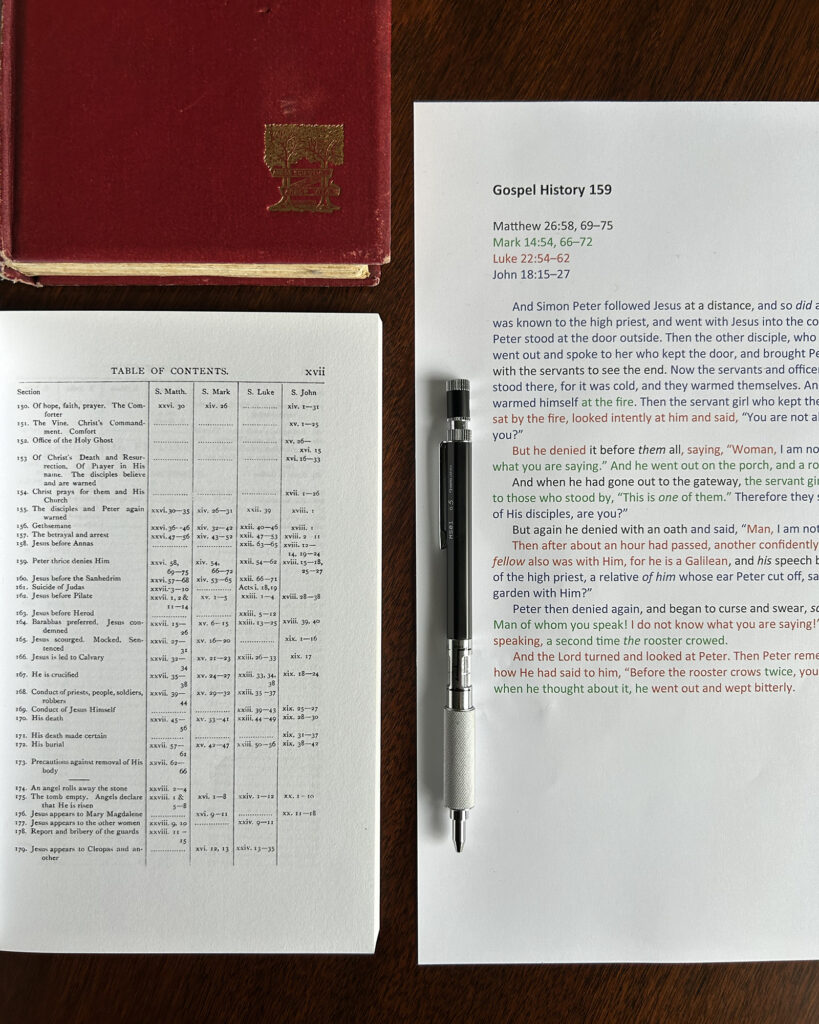
In her final volume, Charlotte Mason gave us this plea: “Let us observe, notebook in hand, the orderly and progressive sequence, the penetrating quality, the irresistible appeal, the unique content of the Divine teaching; (for this purpose it might be well to use some one of the approximately chronological arrangements of the Gospel History in the words of the text).”
The chronological arrangement she preferred was The Gospel History, a harmonization of the four Gospels by C. C. James. Enriched by Charlotte Mason’s own poems, it formed the basis for a branch of Bible lessons for Forms 3–6. The text of The Gospel History looks unassuming. It reads like the Bible text, which is natural, since Rev. James used the actual words English Revised Version (ERV), an 1881 translation in the King James tradition.
In our homeschool, however, we found the ERV to be a bit inaccessible, so I began making equivalent readings based on the 1982 New King James Version (NKJV). Since one of the goals of the synthetic study is to bring out the emphasis of each Gospel writer, I decided to color-code the source of each sentence or phrase. It was in the process of doing this that I discovered the hidden genius of James’s unassuming work. Verse after verse and chapter after chapter I have thrilled at how he chose to harmonize and reconcile the biblical data.
Now that my son has finished The Saviour of the World, we are continuing our study of “the orderly and progressive sequence … of the Divine teaching.” With C. C. James as my guide, the color-coded texts have enhanced the understanding of student and teacher alike. And “the irresistible appeal, the unique content of the Divine teaching” is becoming our possession for life.
@artmiddlekauff
May 15, 2026

Meandering around, you never know who you will find, if you look carefully.
We almost walked right over this toad without noticing!
@antonella.f.greco
May 16, 2026

“The wisest woman I ever knew—the best wife, the best mother, the best mistress, the best friend—told me once, when I asked her how, with her weak health and many calls upon her time, she managed to read so much, ‘I always keep three books going—a stiff book, a moderately easy book, and a novel, and I always take up the one I feel fit for!’ That is the secret; always have something ‘going’ to grow by.” (“Mother Culture”, PR3)@tessakeath
May 17, 2026
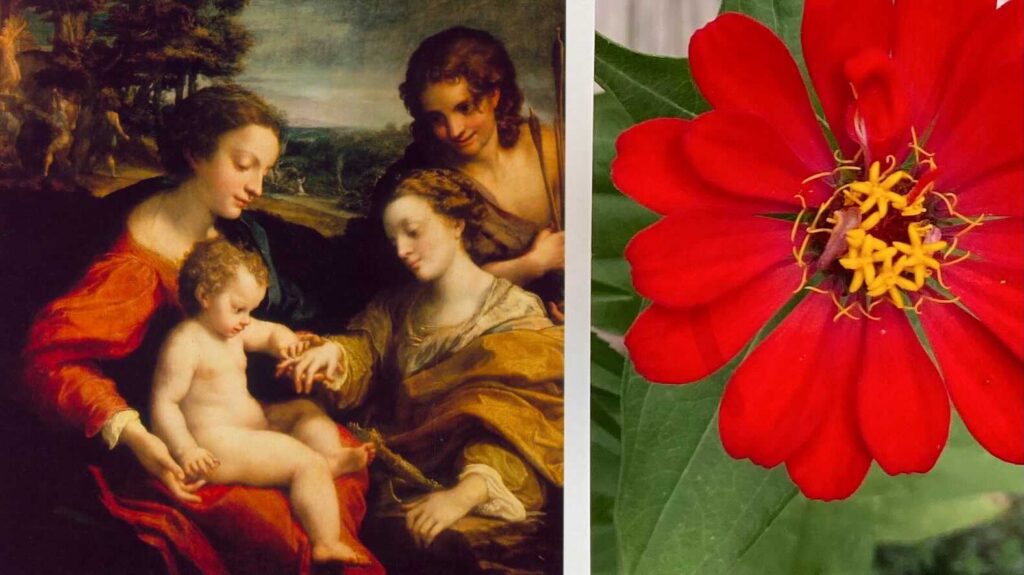
Charlotte Mason wrote, “The main object of the Gospels is to hold up for our regard a presentation of the image of Christ, therein we may see him as he walked among men, as he looked upon men, as he spake, as he worked, as he died.”
There are other reasons we could go to the Gospels. We could look for proof-texts and doctrines. We could try to “find words of comfort and admonition for ourselves.” But Mason says that the better way is “to perceive with our minds and receive upon our hearts the impress of Christ.”
Jesus Himself said something like this when he called out, “You search the Scriptures because you think that in them you have eternal life; and it is they that bear witness about me, yet you refuse to come to me that you may have life.” And what is life? “That they know you, the only true God, and Jesus Christ whom you have sent.”
As we meditate on the Gospels, something wondrous happens. “Just as, from the apparently casual touches of the painter,” wrote Charlotte Mason, “the living likeness grows, so, by laying upon the canvas of our hearts every apparently casual and insignificant detail about our Master, we shall by degrees gather a living vision of the Son of Man.”
Mason wrote six volumes of poetry for the express purpose of helping people to cultivate this living vision of Christ Himself. In today’s poem she reflects on His glory. Open the canvas of your heart and read or listen here.
@artmiddlekauff
🖼️: Mystic Marriage of Saint Catherine by Correggio