The CMP Review — Week of June 8
June 8, 2026
“The ‘leafy month of June’ is upon us—the high-water mark of our English summer has reached us. The rich greenery of our lanes and woods is at its freshest and best. What hosts of small birds hide within the green thickets of our copses and hedges! What myriads of bright bird-eyes watch thence! … In June the ‘sweet birds’ are singing in every green tree.” (Taylor, “The Queen of the Year”, PR1)
@tessakeath
June 9, 2026
I am always thrilled when I find a Parents’ Review article written by an “ordinary mother.” I look to these home educating parents of an earlier generation as trailblazers, the first to use the Charlotte Mason method in their homes. Last summer when I found a piece from 1918 it was no exception. I saw all the things I love to see — stories of books and drill and nature walks and the home schoolroom — all from the point of view of a parent who was thankful to have found Miss Mason.
However, I also realized that this article by Mrs. Pell was different. This mother did not simply tell of all the wonderful things she found in Miss Mason’s programme. She also provided extensive detail on what Mason saved her family *from*.
She called her piece “The Evolution of Home Education for Girls,” and at first glance, it may seem that it describes an evolution that has run its course. But a sensitive and thoughtful editor’s note by Tabitha Wirges explains that Mrs. Pell’s message is more relevant today than we all may care to admit.
I encourage anyone involved in the education of children to read or hear this article. It provides a warm testimony about the effectiveness of Miss Mason’s methods. And it provides a challenging reminder that we all still have a way to go. Recorded by Tabitha Wirges, you can find it here.
@artmiddlekauff
📷: @dave_stillwell
June 10, 2026
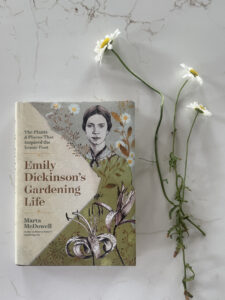
My current read is definitely something to “grow by.” While I love wildflowers, gardening or cultivating flowers has never been high on my list.
Emily may turn me into a gardener yet.
@rbaburina
June 11, 2026
I often remind parents of what Mrs. Pell wrote in the article we shared on Tuesday:
It is well to remember that it is not always those who hold the highest diplomas who are the most capable of imparting knowledge. Sometimes it is the less learned and the more sympathetic who understand and grasp the difficulties presented to the average minds of beginners.
I recently shared this quote with a gathering of parents who wanted to know how Charlotte Mason talks about math and science. “How might Charlotte Mason encourage mothers in this area,” they asked, “especially those who feel intimidated by these subjects themselves?”
In the Q&A at the end I used the example of sloyd from my own experience. I said it was one of my least favorite subjects, but I worked the models side-by-side with my son, thinking I was well-qualified to be one of those “less learned and the more sympathetic who understand and grasp the difficulties presented to the average minds of beginners.” I had the slanted lines, imperfect cuts, and flawed models to prove it.
But even as I was speaking, it dawned on me that I was speaking of a person I once was but am no more. “I have throughout spoken of ‘Relations,’ and not of ‘Interests,’ because interests may be casual, unworthy, and passing,” wrote Charlotte Mason. Those difficult days of sloyd models were not cultivating an interest. They were cultivating a relation.
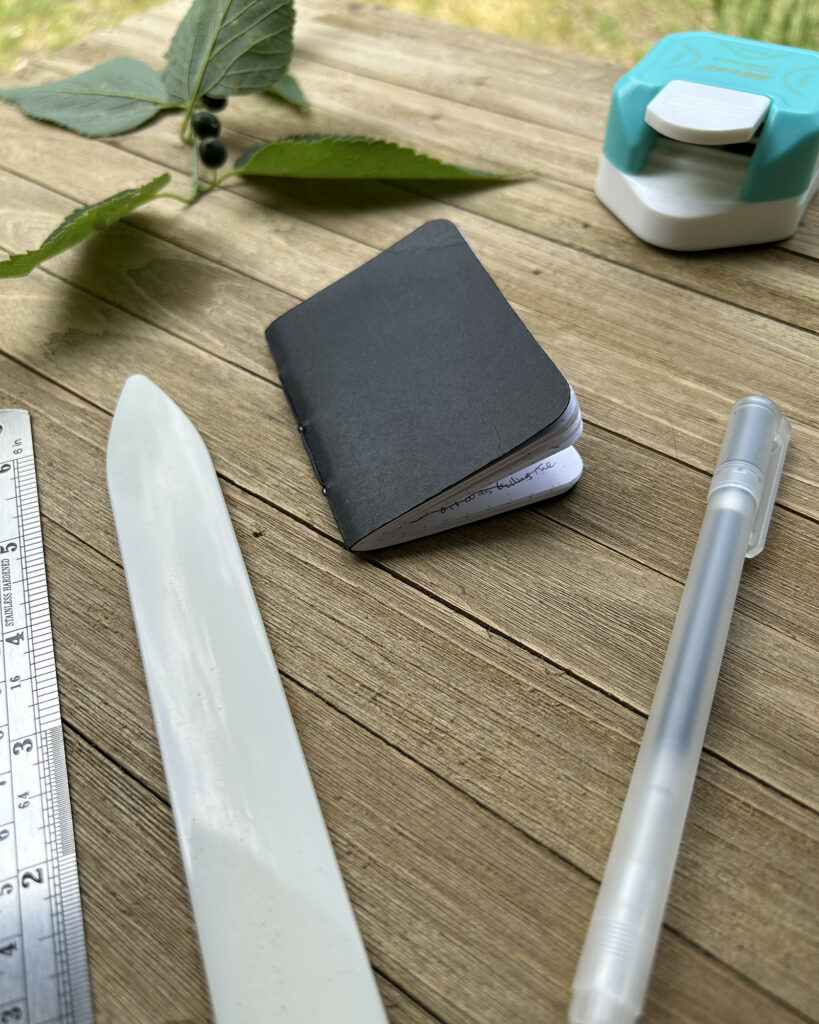
I thought about my pocket notebook, how I made it using skills that began with sloyd, and how I look forward to making my next one. I thought about the benefits of working side-by-side with our children. One great blessing is that it helps our children to learn. Another blessing is that it helps us to learn too. The science of relations is what helps us be more fully human. And that’s important not only for children but for parents too.
@artmiddlekauff
June 12, 2026
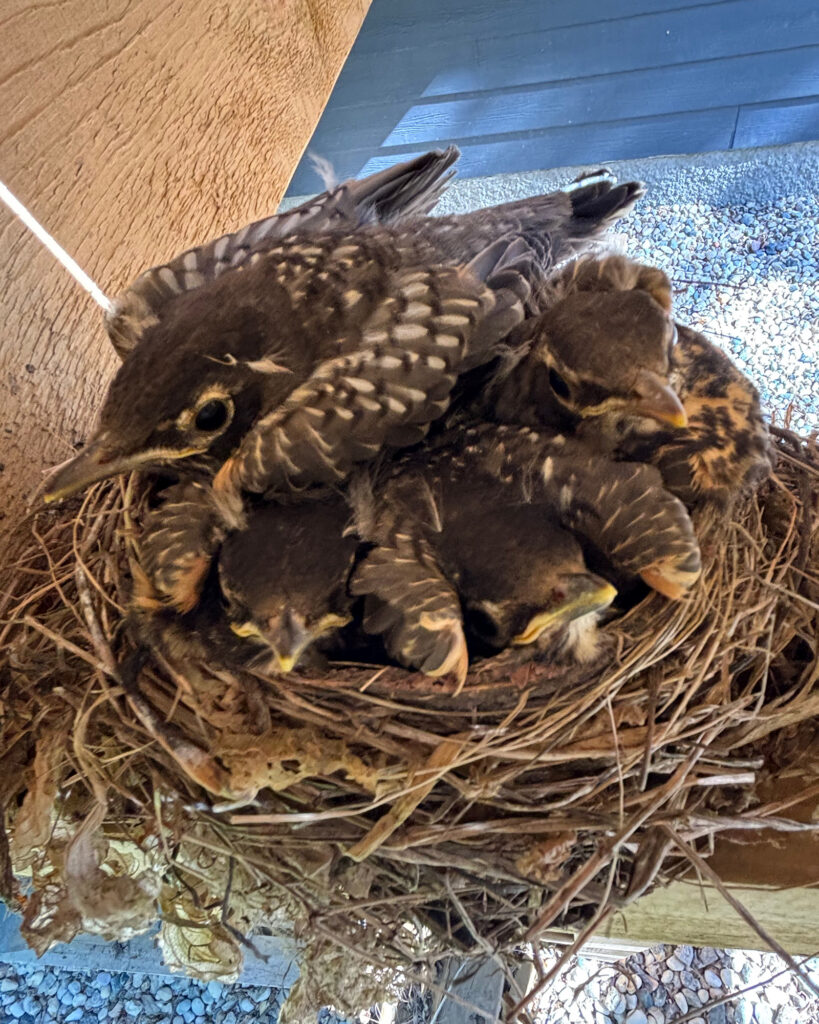
I went to check again on the baby robins under my deck. They were all squished, one on top of the other. As I stepped back to leave, one of them got startled and they all four flew out in different directions. I was worried that they weren’t ready. Some landed on the ground for a few seconds, but then flew up into the trees, thankfully!
The mom came and squawked at me for a bit when she returned with a worm in her beak and she kept coming back for the rest of the day to make sure they were gone.
But they were ready! Even if I inadvertently startled them into leaving early.
Such fun to watch them progress from eggs right to flown!
@antonella.f.greco
June 13, 2026
“There is a delightfully casual element in nature walks. We simply choose which way to go and nature does the rest because Ambleside is an unrivalled spot to learn in. We like to be teased when the nature walk lingers to watch a dipper or a grey wagtail, or the bird walk finds the yellow gagea or the marsh cinquefoil, as if we were poaching on each other’s preserves! For the fact is that we take whatever comes, and the unexpected always happens.” (The Story of Charlotte Mason)
@tessakeath
June 14, 2026
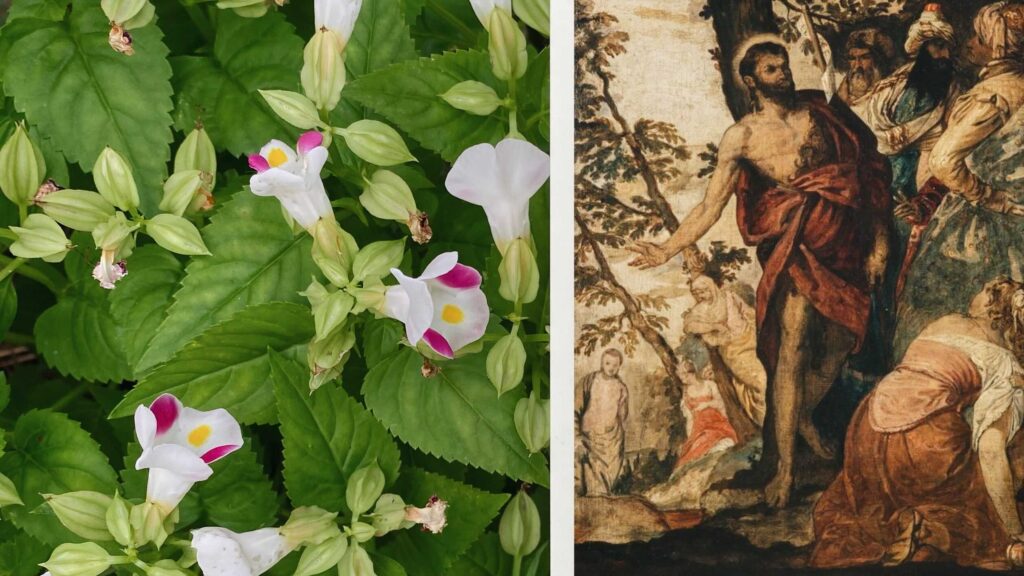
“But it is in the books of the Saviour of the World that I have lately found [Charlotte Mason] as a person,” wrote E. M. Gregson in 1955. “It is also in these books that we share her deepest thoughts and it is here indeed that we can know her mind… in the Saviour of the World she speaks of ‘the supreme moment of a very great number of lives—that in which a person is brought face to face with Christ.’”
And yet in spite of this and many similar testimonies about Charlotte Mason’s poetry, it can be difficult for families and teachers to get started using these books with our children. Many of us have little experience with poetry, and are not quite sure how to read and digest these texts.
When I have led immersion lessons using The Saviour of the World, I have found the barriers dissolve by one simple means: by reading the poem, with feeling, aloud. Somehow hearing the words spoken with proper pacing, tone, and care brings the meaning to life to those of us for whom poetry is not exactly our “mother tongue.”
Today we share Mason’s epic poem on John the Baptist. It is worth the effort to read. But it is not absolutely necessary to read… because you can listen to Antonella Greco’s recitation with all of her pacing, tone, and care. Click on the link and scroll down to find the audio playback link, or follow along on The Saviour of the World podcast, and join E. M. Gregson in finding Charlotte Mason — and John the Baptist — in a whole new light. Find it here.
@artmiddlekauff
🖼️: Saint John the Baptist Preaching by William Etty