CMP Review 2026-09-20
“Philosophically,” writes Edward J. Carnell, “truth has only two loci.” Writing in his 1952 A Philosophy of the Christian Religion, he explains:
“When a Ph.D. candidate is examined for his knowledge of the Eudemian or Nicomachean Ethics of Aristotle, his interrogators are concerned only with his ability to compose answers which correspond to the data in Aristotle’s system. Whether or not the student is ethical in his own person is hardly a matter which directly concerns the philosophy department. In the same manner, the professors are hired to teach, not witness to, the truth…
“But suppose that the mother of the Ph.D. candidate is on hand. Since she is related to her son personally, she is concerned with another species of truth. Thought can only prepare for the type she is looking for; it is not an end in itself. She wishes above all else that her son be the truth, namely, that he reflect goodness and honesty in his own character. What worth is a theoretical knowledge of morals if he is lewd and predaceous in his social relations? The mother does not disparage the theory; her only concern is that the boy live in accordance with the morals he learns.”
Carnell calls this mother’s wish the “third locus of truth.” It is a truth beyond the reach of philosophy. By philosophy, a person “may comprehend formal truth after memorizing a world view” — the first two loci of truth. “But he is the truth only when he is kind, humble, and gentle in his own character.” This is a truth that lives not in the mind, but in the heart.
In the Gospel of John, we read that “many believed on his name, beholding his signs which he did.” But had they arrived at third locus of truth? “What profit in a faith of the mind alone,” asks Charlotte Mason, “That reacheth not the springs of love in a man?” Read or hear her full reflection here.
@artmiddlekauff
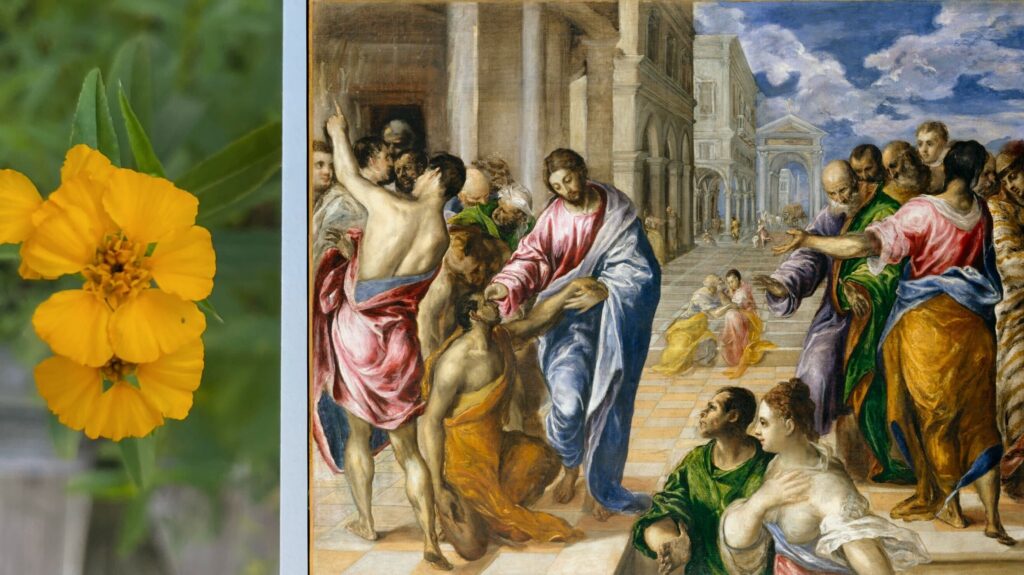
🖼️: Christ Healing the Blind by El Greco