The CMP Review — Week of September 21
September 21, 2026
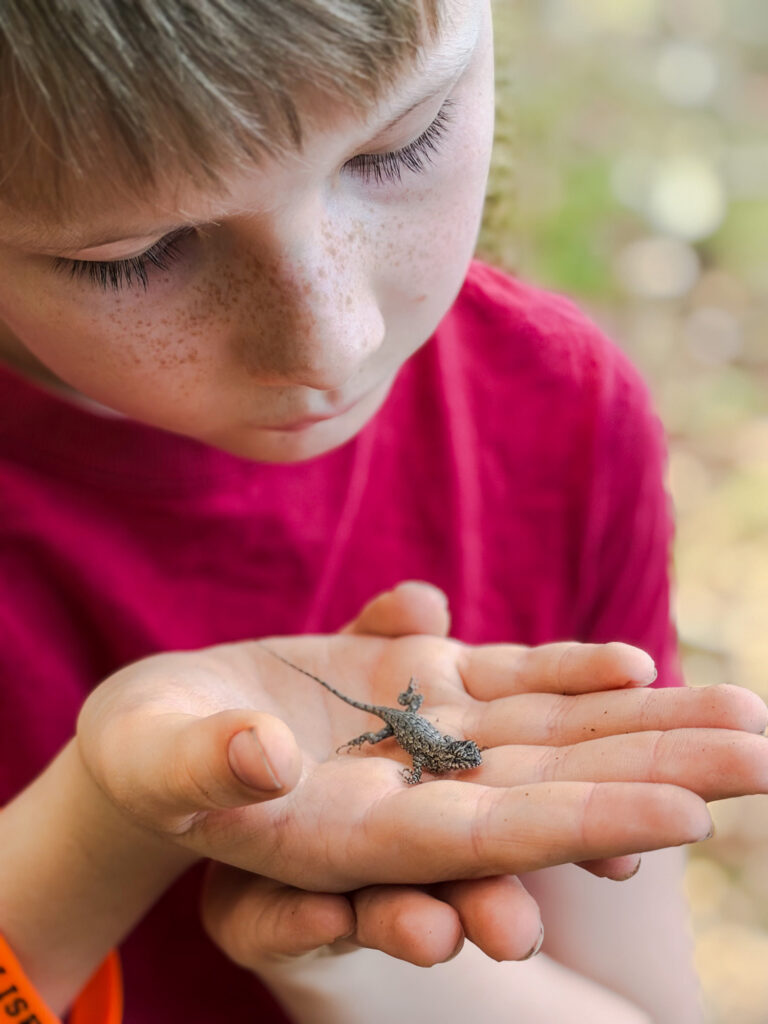
“I do not suppose that anyone here will want or expect to be told or convinced of the great advantage to be gained by Nature Study, of the widening of the powers of observation, and what an American author has called the ‘mental uplift’ of it, or of the solace and relief to be derived from having a pure and elevating hobby (if you will call it so) to which to turn at intervals among the worry and trouble of necessary avocations. To quote the same author again, ‘every one’ of your pupils ‘will some day need the solace and the rest which Nature Lore can give.’” (“Nature Work at the House of Education”, PR9)
@tessakeath
September 22, 2026
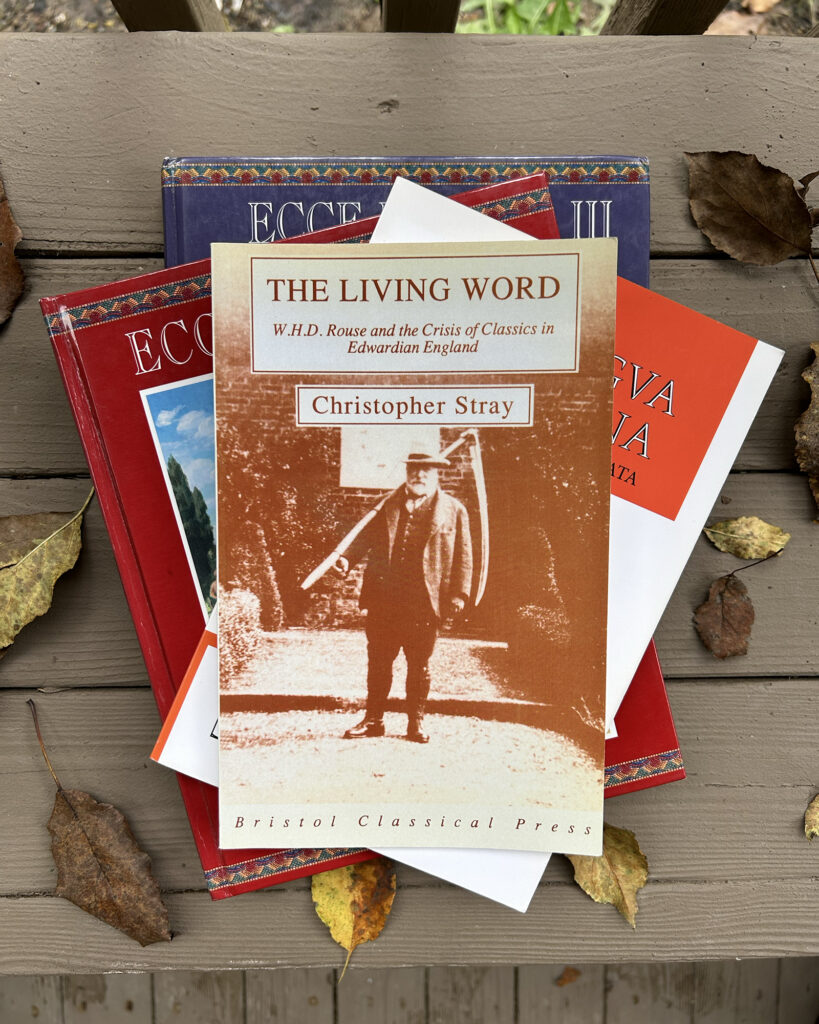
Charlotte Mason’s approach to Latin instruction seems to have evolved over the years. In the 1905 edition of Home Education we read, “Of the teaching of Latin grammar, I think I cannot do better than mention a book for beginners that really answers. Children of eight and nine take to this First Latin Course (Scott and Jones) very kindly, and it is a great thing to begin a study with pleasure.” Scott and Jones first published their somewhat traditional book in 1901 and it was assigned in the PNEU programmes for years.
However, in Mason’s 1925 An Essay Towards a Philosophy of Education, we read, “Latin is taught at the House of Education by means of narration after each section has been thoroughly studied in grammar, syntax and style. The literature studied increases in difficulty as the pupil advances in grammar, etc. Nothing but good Latin is ever narrated, so the pupil acquires style as well as structure. The substance of the passage is usually reproduced with the phraseology and style of the original and both students and children learn what is really Latin and realise that it is a language and not a mere grammar.”
Miss Mason was quoting M. C. Gardner, who wrote that in 1919 she had been “asked by Miss C. M. Mason … to introduce ‘narration’ into the teaching of Latin. It is now an essential, both with the students of the House of Education and with the children in the Parents’ Union School.”
Something seems to have driven Miss Mason to explore a more narration-based approach to Latin instruction. Of course, this might be seen as simply a natural extension of her reliance on narration in the teaching of other subjects. But perhaps other influences were at work. A leading candidate is an event that took place in 1906. At the tenth annual PNEU conference, one of the speakers was W. H. D. Rouse. His story, his address, and his fascinating interaction with the PNEU are presented at the article here.
@artmiddlekauff
September 23, 2026
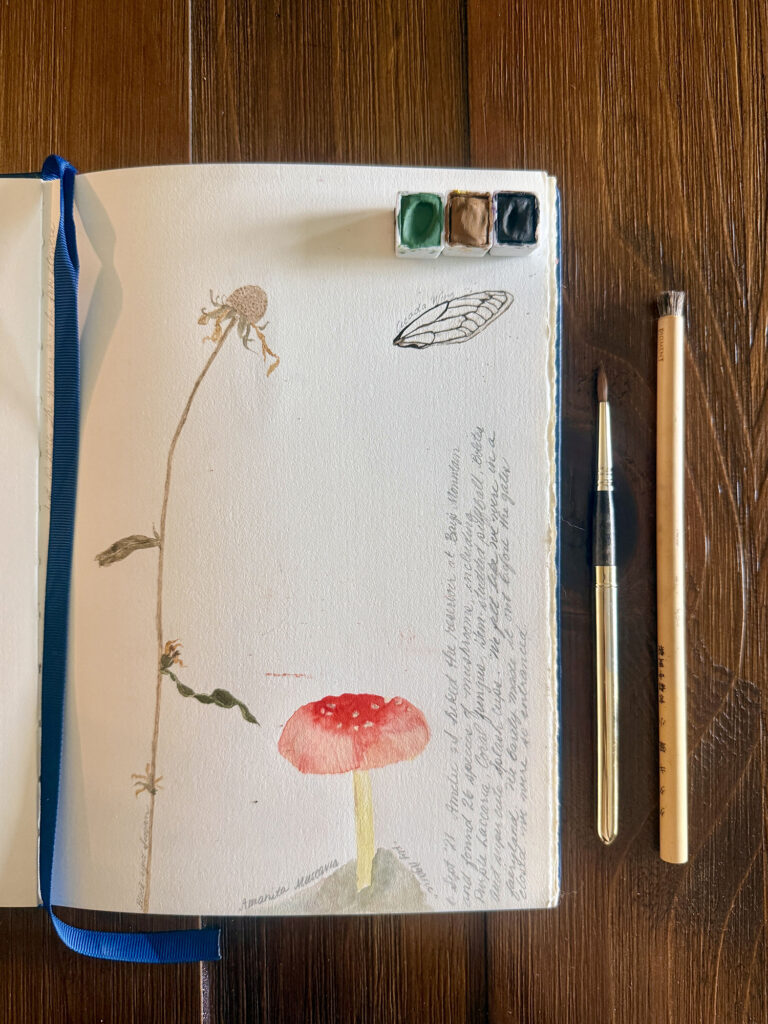
Go, sit upon the lofty hill,
And turn your eyes around,
Where waving woods and waters wild
Do hymn an autumn sound.
The summer sun is faint on them—
The summer flowers depart—
Sit still—as all transform’d to stone,
Except your musing heart.
-Elizabeth Barrett Browning, “The Autumn”
@rbaburina
September 24, 2026
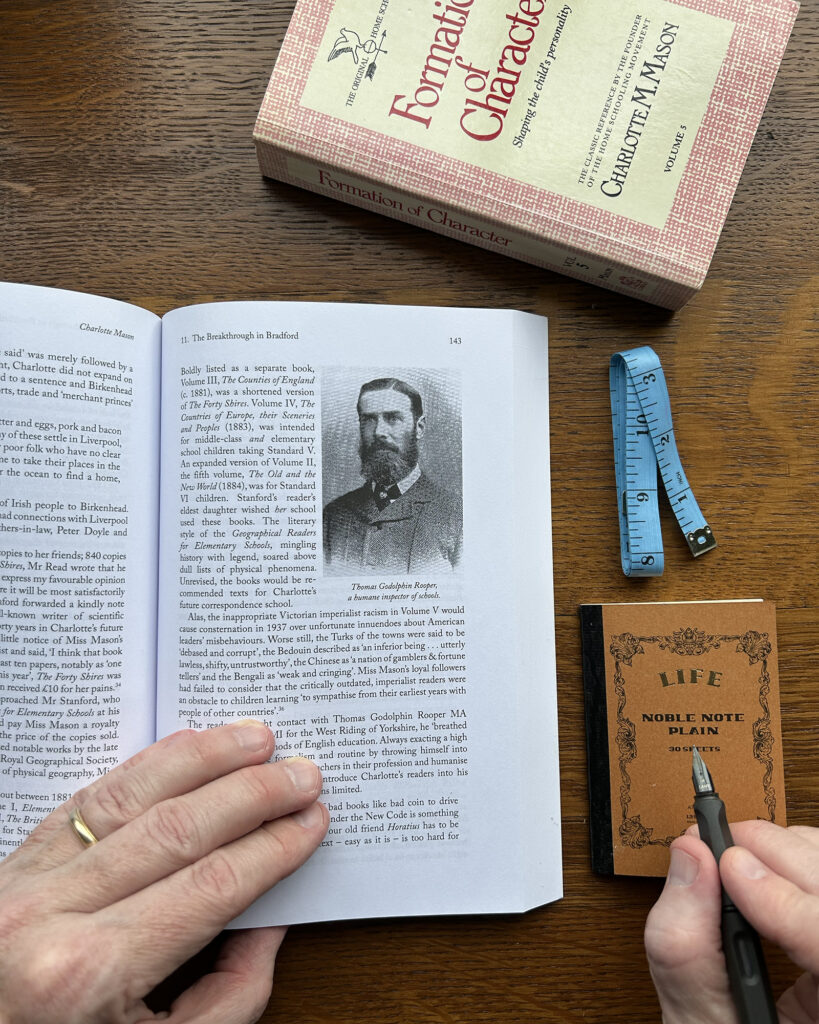
The last chapter of Formation of Character is entitled “A Modern Educator: Thomas Godolphin Rooper,” and it captures Charlotte Mason’s heartfelt appreciation of “a great Educator” who died in 1903. She mentions two books written by him, and I am currently reading the first.
(I’m reading it with a group of Idyll Challenge participants. If you are part of or a graduate of any Idyll Challenge group and would like to join this supplementary group, please reply with a comment.)
Rooper’s perspectives in the book are very similar to Mason’s, but with a difference. He was writing in the early days of the PNEU, and it has been hard for me to discern just who was influencing whom. Either way, I am finding the book interesting and thought-provoking.
For example, Rooper writes, “The difference between technical instruction and general instruction lies not in the subject, but in the method and purpose of the course of study.”
He explains that French, math, handicrafts, and even Latin, can all be taught in a utilitarian way. “As soon as a subject is taught at any school, if that subject has an almost exclusive bearing on the child’s money-earning power, and is not of general application, the school becomes a Technical School.”
It is a challenging question for any homeschooler. Is your home school a “Technical School”? The answer cannot be determined just by looking at the list of subjects in your program. The answer is determined by how the subjects are taught and learned. Is it for the utility of the future? Or knowledge for its own sake?
@artmiddlekauff
September 25, 2026
❝
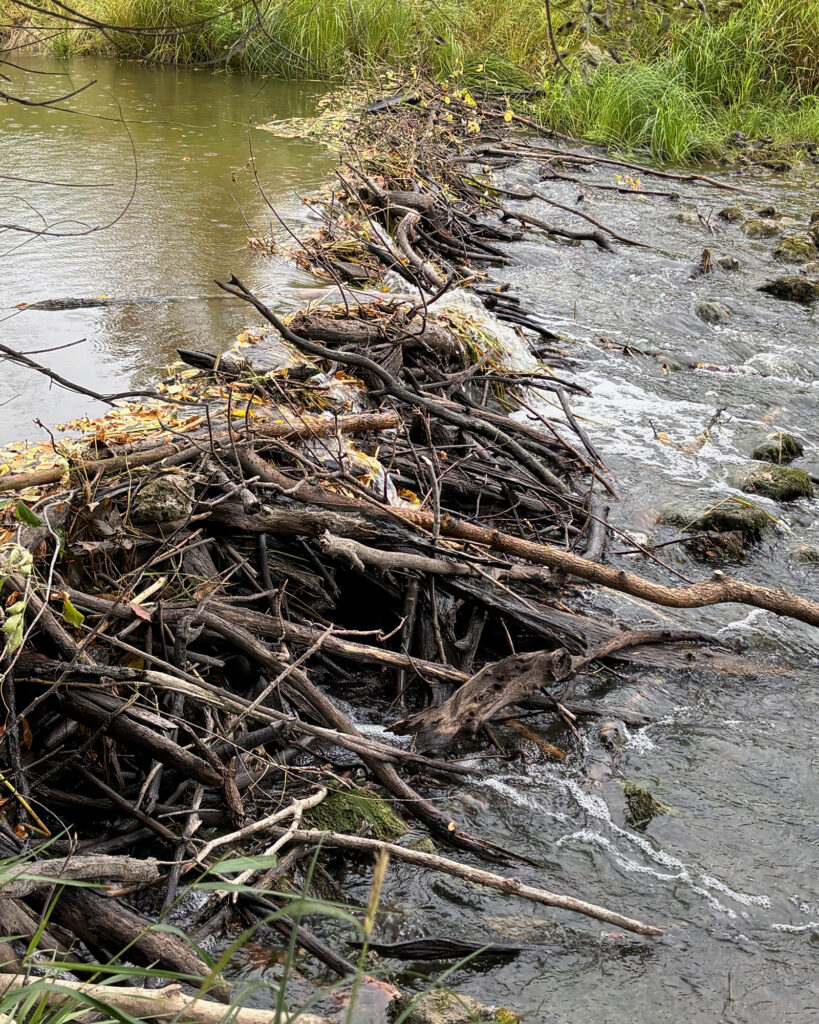
They were standing on the edge of a steep, narrow valley at the bottom of which ran—at least it would have been running if it hadn’t been frozen—a fairly large river. Just below them a dam had been built across this river, and when they saw it everyone suddenly remembered that of course beavers are always making dams and felt quite sure that Mr. Beaver had made this one. They also noticed that he now had a sort of modest expression on his face—the sort of look people have when you are visiting a garden they’ve made or reading a story they’ve written. So it was only common politeness when Susan said, “What a lovely dam!” And Mr. Beaver didn’t say “Hush” this time but “Merely a trifle! Merely a trifle! And it isn’t really finished!”
Above the dam there was what ought to have been a deep pool but was now, of course, a level floor of dark green ice. And below the dam, much lower down, was more ice, but instead of being smooth this was all frozen into the foamy and wavy shapes in which the water had been rushing along at the very moment when the frost came. And where the water had been trickling over and spurting through the dam there was now a glittering wall of icicles, as if the side of the dam had been covered all over with flowers and wreaths and festoons of the purest sugar. And out in the middle, and partly on top of the dam was a funny little house shaped rather like an enormous beehive and from a hole in the roof smoke was going up, so that when you saw it (especially if you were hungry) you at once thought of cooking and became hungrier than you were before.
❞
(C. S. Lewis, Chapter 7 of The Lion, the Witch and the Wardrobe)
@antonella.f.greco
September 26, 2026
Bald eagles weren’t nesting in this area of Iowa for 72 years due to DDT poisoning. They made their return in 1977 and were officially removed from the Endangered Species list in 2007.
It was a delight to see almost a dozen on our recent boating trip on the Mississippi River on the Wisconsin-Iowa border.
@rbaburina
September 27, 2026
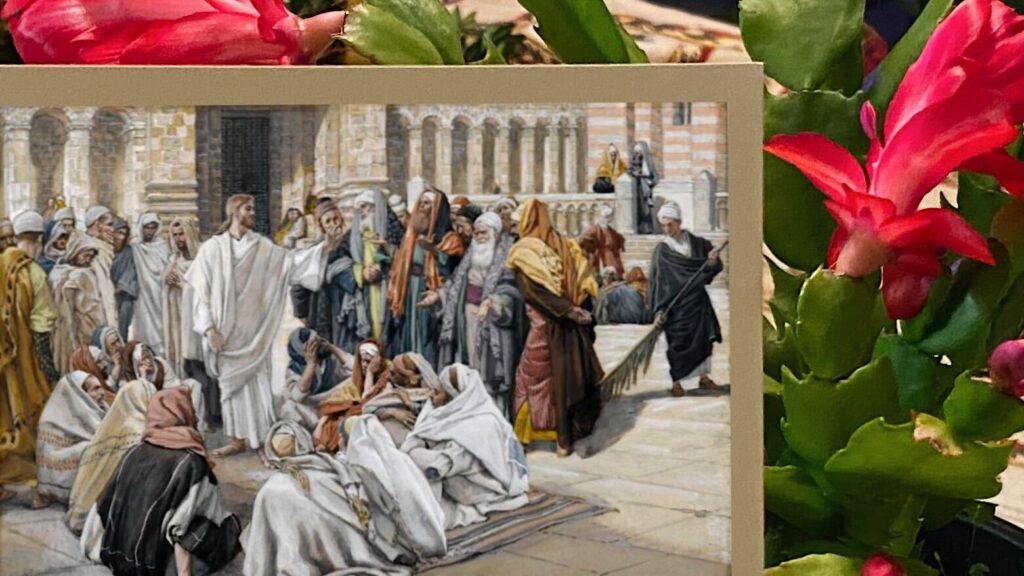
During Jesus’ last days in Jerusalem, He faced multiple attacks from the religious leaders of His day. In some of the most dramatic passages of the New Testament, Jesus brilliantly disarms questions from the Herodians, the Sadducees, and the Pharisees. Finally, Jesus begins to question them.
“What think ye of Christ?” (Matthew 22:42, KJV), He asks the assembled Pharisees. It is a question that echoes through the centuries, as every person who hears the name of Christ wrestles with it as well.
Jesus had been to Jerusalem before. On an earlier visit he had also engaged the party of the Pharisees — not as a group, but as a single man. That time it was neither an open nor public dispute. Rather, it was secretive, a meeting that took place at night. The Pharisee’s name was Nicodemus. “Rabbi,” he said, “we know that you are a teacher come from God, for no one can do these signs that you do unless God is with him.”
Did Nicodemus pay this visit on his own initiative? Or was he sent? This intriguing thought plays a part in today’s poem by Charlotte Mason. It is a poem named after the question that all persons are asked: “What think ye of Christ?” Read or hear it here.
@artmiddlekauff
🖼️: The Pharisees Question Jesus by James Tissot