Conference Lessons — Class IA
Editor’s Note, by Art Middlekauff
In June of 1915, the PNEU held its 19th annual conference. This conference promised an interesting feature:
The morning of June 15th will be devoted to classes of children who live in or near London and who are members of the Parents’ Union School. These classes will be taught by Ex-Students of the House of Education, who will also take the children for expeditions in the afternoon.[1]
These special classes were conducted as promised, and the August issue of The Parents’ Review contained several first-hand retrospectives. These narratives by ex-students of the House of Education provide an interesting glimpse into how teachers trained by Miss Mason herself conducted live lessons with PUS students.
Back in 2020 we released a transcript of one of these narratives, “Impressions of Conference Work With Class II,” by Eleanor M. Frost. Over the next few months, we plan to release the remaining narratives. The first is by M. W. Kitching, whose demonstration lesson was with Class IA, children “of about six” years of age.
Who was M. W. Kitching? In The Story of Charlotte Mason, in a section entitled “Elsie Kitching” we read:
One of the students who entered the House of Education during its second year of work was Miss Winnie Kitching. Her home was in Bognor. In 1893 Miss Mason had work to do at Bishop Otter College, Chichester, and in order to be within reach of it she stayed with the Kitching family. Winnie’s sister Elsie was living at home.[2]
I Buy a School by Marion Berry states that in 1943, Winnie Kitching had been running Rickmansworth PNEU School for twelve years[3]; The Parents’ Review in 1940 identifies M. W. Kitching as the headmistress of the same school.[4] This demonstrates that M. W. Kitching is in fact Winnie Kitching, Elsie’s sister. In Elsie Kitching 1870–1955: Recollections, we read of Elsie’s “elder sister Maggie,”[5] so it is possible that M. W. is Maggie Winnie.
Winnie’s lively account of her demonstration lesson gives us a snapshot of a day in the life of a woman who spent her life teaching in the PNEU. It also gives hints of how we can continue her legacy in our teaching of children today.
By M. W. Kitching
The Parents’ Review, 1915, pp. 567-569
The class consisted of thirteen small people of about six, looking supremely happy and not a little important. The opening hymn was sung lustily right through by most of them, and I think all took some part. After prayer and a few words from Miss Parish, we all filed out and upstairs to our various class-rooms. When I saw the rather big desks in the Art Studio—the room allotted to Class Ia—I felt rather doubtful as to whether the little people would be able to sit still for long together with their feet right off the floor; however, we soon settled down to our first lesson, which was “Number.”
Each child had ten letters (we could not use the beans I had brought, as the desks were sloping and I feared disaster!) These letters were arranged as two fives thus—
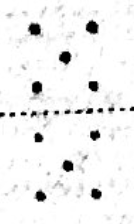
and then by putting a pencil across in various ways we made up our ten as 7 + 3; 8 + 2; 6 + 4; etc.
After each division we made little problems,—e.g., “If I had ten pennies and spent seven, how many should I have left?” etc., etc.
At first most of the children were backward in doing this, but before we finished I think nearly every child had at least made an attempt, and some did it very well; one dear little boy of six volunteered several.
Our next lesson was “Natural History.” This was chiefly to show narration, so we took lesson iv. out of “By Pond and River.” Here again the efforts of the children were very varied. Some were quite ready to tell a short paragraph; others could only do it in a very scrappy way, and some not at all without help. All, however, seemed to enjoy the lesson, and I heard of one mother who had the whole story told to her the next day.
We now had a break, and Miss Macfarlane gave the children five minutes breathing and arm exercises. The space was very limited, so not much could be done, but the change of position was, I am sure, a relief to little legs that could only dangle while lessons were going on.
“Reading” came next. Each child had about twenty letters. We started with ING, and then, by adding some other one letter we made Ring, Sing, Wing, Wings, etc. After each word one or more of the children made sentences, using the new words. We then put two letters together at the beginning—br-ing, cl-ing, th-ing, etc. We made also think, and brink, and the final effort was to change “brink” into “brisk,”—this most of the children found very difficult.
In this lesson the efforts of the children were very unequal. Some seemed to have a fair idea of sound, one or two could do hardly anything, while a few were very good. Surely if children had more of this fascinating “phonetic drill” we should not find in later years such careless pronunciation as we often do, nor come across children of 8 and 9 who can write ‘thing’ for ‘think,’ ‘enjoys’ for ‘enjoyed,’ ‘through’ for ‘though,’ etc., and hardly hear the difference.
Geography.—We now took the chapter from The World at Home called “Where does cocoa come from.” Most of the children understood a little about a map, so we were able to find Mexico on a large map of the world hanging up in front of the class. We read from the book, and looked at the various specimens as we came to them in the reading. The Educational Supply had kindly lent us a real cocoa pod, and two students had fastened cocoa nibs, cocoa butter, etc., on a large sheet of cardboard so that all could see them easily. These, with various pictures in a book sent us by Cadbury’s of Bournville, helped the children to understand the chapter. One small boy came to show Mexico on the map at the end of the lesson, and the youngest pupil—a girl of 5½—volunteered to show our own country, which she did without hesitation.
We now had a few more minutes for breathing exercises, and then settled down for our last lesson, “Tales.” We had not got very far, however, in reading and narrating chapter vi. in “Our Island Story,” when Miss Parish came to summon us back to the big Hall again.
Although these thirteen children were nearly all strange to each other, and were having their lesson under rather trying circumstances, with people coming and going between each lesson, they did not seem in the least perturbed, but all in more or less degree showed signs of being able to attend and concentrate.
Editor’s Note: The formatting of the above article was optimized for online viewing. To access a version which is formatted more similarly to the original, and which includes the original page numbers, please click here.
Endnotes for the Editor’s Note
[1] The Parents’ Review, vol. 26, p. 308.
[2] The Story of Charlotte Mason, Essex Cholmondeley, p. 46.
[3] I Buy a School, Marion Berry, p. 98.
[4] The Parents’ Review, vol. 51, p. 55.
[5] Elsie Kitching 1870–1955: Recollections, p. 4.
Subscribe: Apple Podcasts | Spotify | Amazon Music