The CMP Review — Week of October 12
October 12, 2026
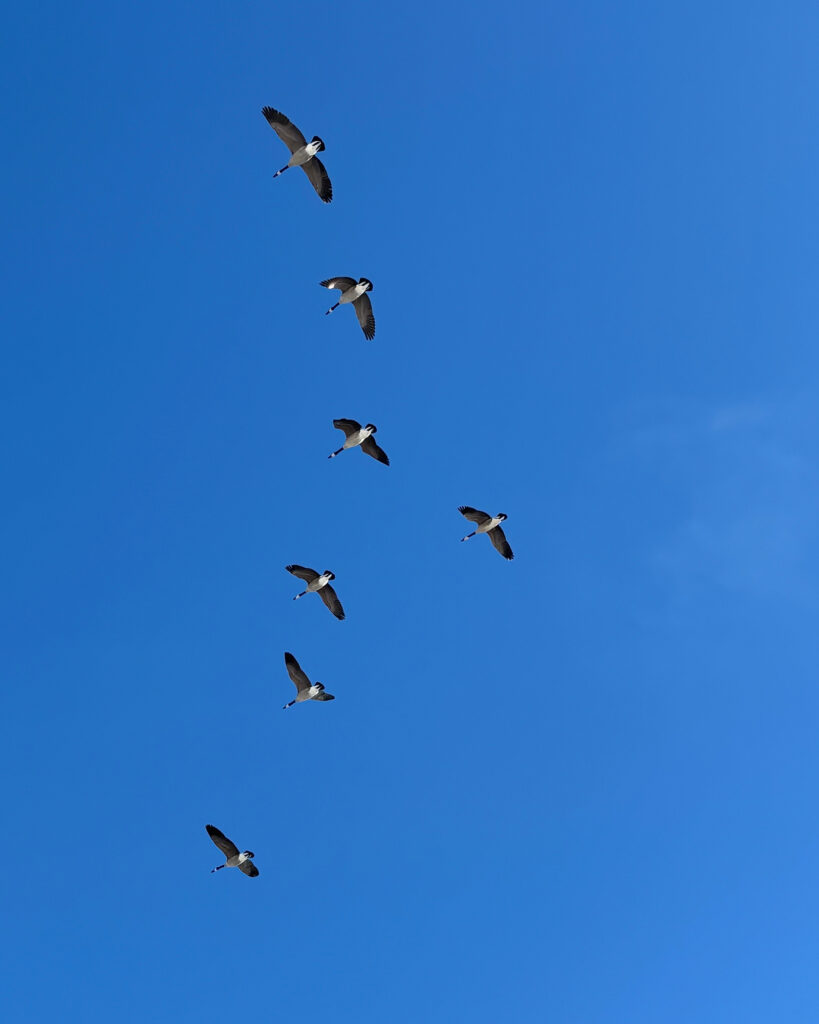
“Nature teaches us Gratitude.—But it is not only as she helps us in our own spiritual life that Nature instructs us in our duty to God. Some people have the grace to be tenderly and reverently thankful to the author of a great book, the painter of a great picture—thankful, if less reverently so, to the discoverer of a great invention. What daily and hourly thanks and praise, then, do we owe to the Maker and designer of the beauty, glory, and fitness above our heads and about our feet and surrounding us on every side! From the flower in the crannied wall to the glorious firmament on high, all the things of Nature proclaim without ceasing, ‘Great and marvellous are thy works, Lord God Almighty.’” (Vol IV, Book II, pp 99–100)
Happy Thanksgiving to our Canadian friends!
@antonella.f.greco
October 13, 2026
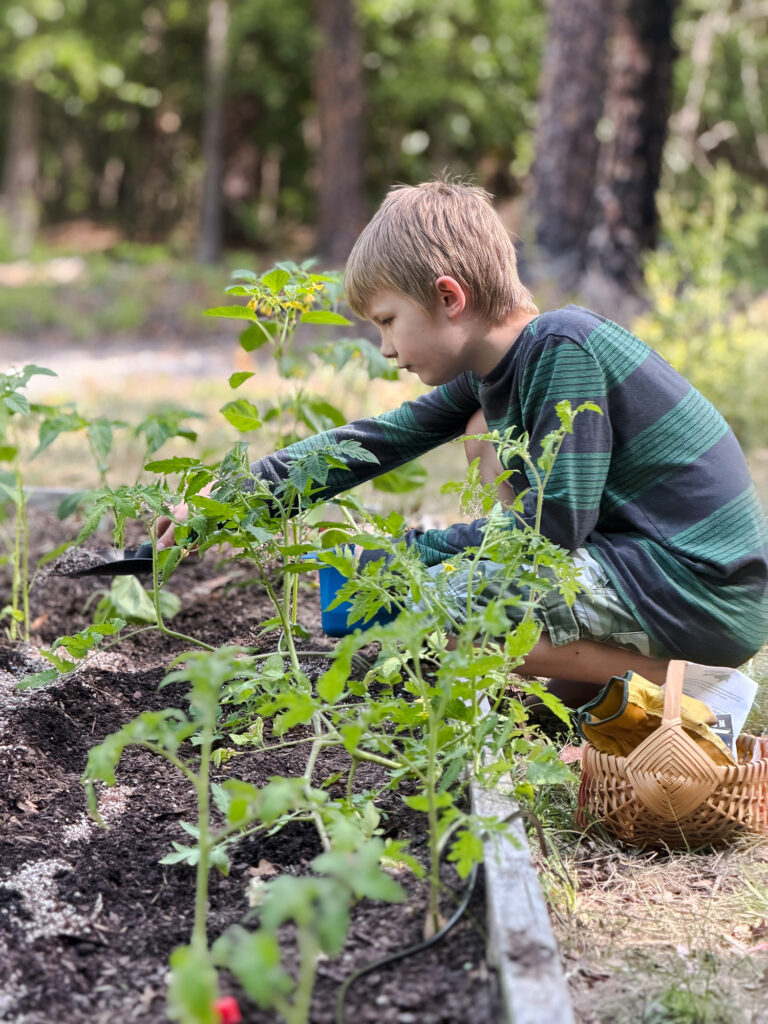
Charlotte Mason wrote that “there is no habit or power so useful to man or woman as that of personal initiative.” But how are we as parents to develop that habit in our children?
Mason pointed the way via an article by Mrs. James Ward that she published in 1891. But this article was not entitled “Initiative.” It was called by initiative’s more earthy nickname: “Grit.”
We know that Mason liked the article because she published it again in the Parents’ Review 27 years later. Mason would republish old articles from time to time, an honor she reserved for articles that she believed had special significant or ongoing relevance.
In Mrs. J. W.’s article, we read not only about the importance of grit, but also how to cultivate it. “Let a child earn a garden by thoroughly digging and weeding a plot, a pet by keeping it clean and well fed, a doll by sewing or washing its clothes, a tea-party by helping in the arrangements, a holiday by extra good work,” she writes. “In this way life will mean much more to him; he will have a sense of power and acquire self-respect.”
It’s been about 100 years since the article was reprinted. It’s a good time to reprint it again. Do you want your children to have a sense of power and acquire self-respect? Read or hear Mrs. J. W.’s article here.
@artmiddlekauff
October 14, 2026
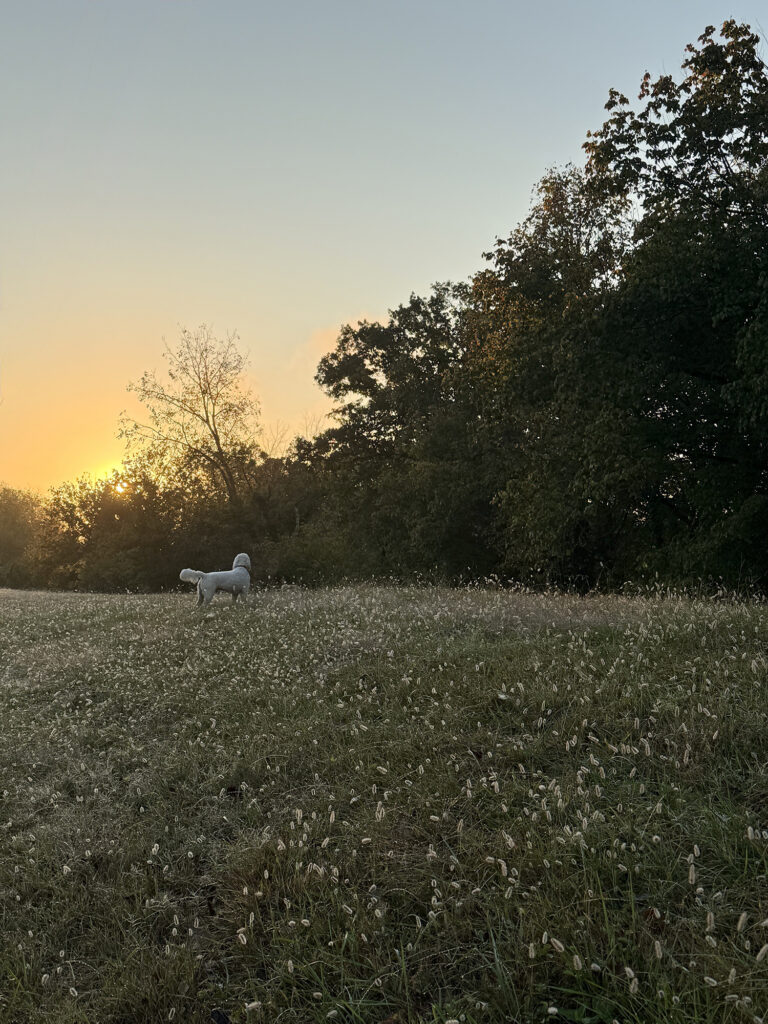
Miss Mason tells us that the line of poetry “that strikes us as we read, that recurs, that we murmur over at odd moments” is the one that influences our living.
On my morning walk, the words “Summer’s glories mellowed down” came to me, and for a moment, I felt a kinship with Anne Brontë and her dog Flossy.
This is one of poetry’s gifts: to find a kindred spirit across time, and to have her words return like the voice of an old friend.
@rbaburina
October 15, 2026
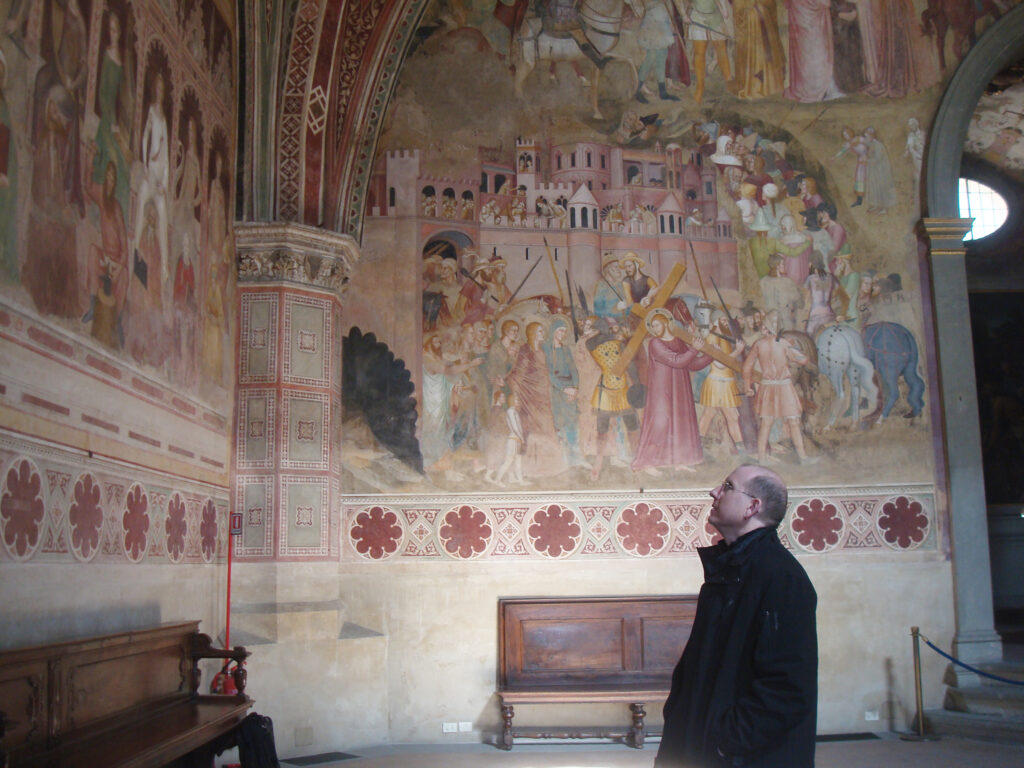
“There is, indeed, within the opposite cloister, an arch of entrance, plain enough. But no chapel, whatever externally manifesting itself as worth entering. No walls, or gable, or dome, raised above the rest of the outbuildings—only two windows with traceries opening into the cloister; and one story of inconspicuous building above. You can’t conceive there should be any effect of magnitude produced in the interior, however it has been vaulted or decorated. It may be pretty, but it cannot possibly look large.
“Entering it, nevertheless, you will be surprised at the effect of height, and disposed to fancy that the circular window cannot surely be the same you saw outside, looking so low. I had to go out again, myself, to make sure that it was.
“And gradually as you let the eye follow the sweep of the vaulting arches, from the small central keystone-boss, with the Lamp carved on it, to the broad capitals of the hexagonal pillars at the angles,—there will form itself in your mind, I think, some impression not only of vastness in the building, but of great daring in the builder; and at last, after closely following out the lines of a fresco or two, and looking up and up again to the colored vaults, it will become to you literally one of the grandest places you ever entered, roofed without a central pillar. You will begin to wonder that human daring ever achieved anything so magnificent.”
— John Ruskin, Mornings in Florence, describing the Spanish Chapel of Santa Maria Novella in Florence
@artmiddlekauff
October 16, 2026
❝
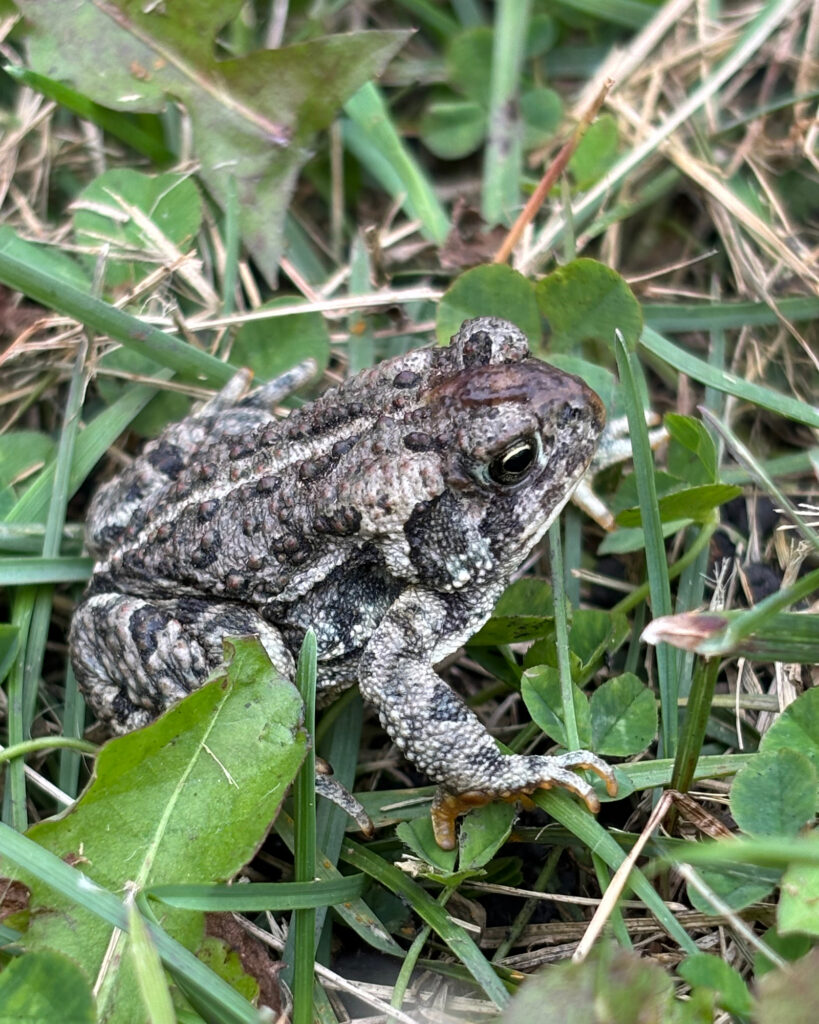
“Ho, ho! I am The Toad, the handsome, the popular, the successful Toad!” He got so puffed up with conceit that he made up a song as he walked in praise of himself, and sang it at the top of his voice, though there was no one to hear it but him. It was, perhaps, the most conceited song that any animal ever composed.
“The world has held great Heroes,
As history-books have showed;
But never a name to go down to fame
Compared with that of Toad!
“The clever men at Oxford
Know all that there is to be knowed.
But they none of them know one half as much
As intelligent Mr. Toad!
“The animals sat in the Ark and cried,
Their tears in torrents flowed.
Who was it said, ‘There’s land ahead?’
Encouraging Mr. Toad!
“The army all saluted
As they marched along the road.
Was it the King? Or Kitchener?
No. It was Mr. Toad.
“The Queen and her Ladies-in-waiting
Sat at the window and sewed.
She cried, ‘Look! who’s that handsome man?’
They answered, ‘Mr. Toad.‘”
There was a great deal more of the same sort, but too dreadfully conceited to be written down. These are some of the milder verses. He sang as he walked, and he walked as he sang, and got more inflated every minute. But his pride was shortly to have a severe fall.
❞
(Kenneth Grahame, Chapter 10 of The Wind in the Willows)
@antonella.f.greco
October 17, 2026
I recently picked up this travel watercolor set at Papier Tigre. I love the saturation of the colors. I’ve used it a few times in my nature journal and have really enjoyed painting with it. The little set is easy to tuck into a bag and take along wherever we go.
Having a paint swatch helps me see how the colors actually look on paper and makes choosing the color I want a little easier at a glance.
@tessakeath
October 18, 2026
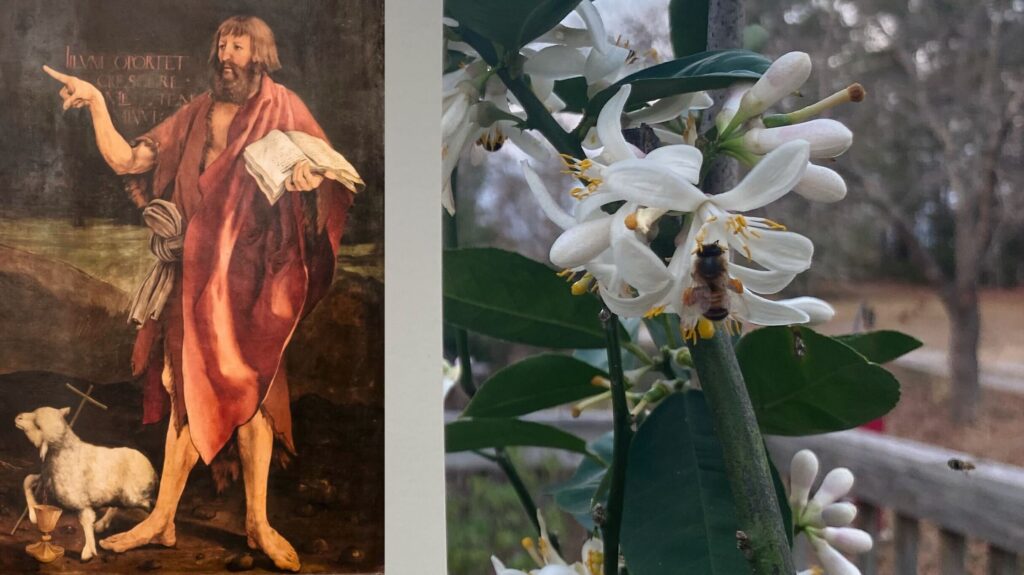
When Jesus spoke with Nicodemus by night he said, “Truly, truly, I say to you, unless one is born of water and the Spirit, he cannot enter the kingdom of God.” Then Jesus departed to a place where there was an abundance water and of the Spirit.
There at Salim, “Jesus and John the Baptist came together for apparently the last time,” writes J. J. S. Blaney. “Jesus and His disciples came for the purpose of baptizing. John was already there baptizing new followers, and immediately a contrast arose in the minds of some of the people concerning the comparative virtues of the two baptisms.”
The contrast between the two baptisms arose in the mind of Charlotte Mason as well. At Salim she saw a “new baptism, of mystic grace, First shown to Nicodemus.” Mason’s poetic reflection on these baptisms is filled with theological and devotional insight. And it ends with Mason’s consideration of John the Baptist’s unforgettable words: “He must increase, but I must decrease.”
Thomas Aquinas applied the Baptist’s words to all believers: “It is necessary for Christ to grow in you, for you to progress in your knowledge and love of him: for, the more you know him and love him, the more he grows in you. … The more a person discovers God’s greatness the less importance he gives to his own human condition.”
This is the thought Mason sets to verse. Read or hear it here, and make the call your own.
@artmiddlekauff
🖼️: John the Baptist by Matthias Grünewald