The CMP Review — Week of November 2
November 2, 2026
I recently started reading John Ruskin’s Praeterita with my Idyll Challenge supplement group. Charlotte Mason references it in School Education, wondering how much greater Ruskin might have become had he been allowed his “right of free living as a child.”
I found this lovely vintage three-volume set to read from.
I really appreciated Ruskin’s Mornings in Florence, but another book I read later left me with conflicted feelings about him as a person. I’m looking forward to reading his own account of his life and learning more about the experiences that shaped him into the man he became.
@tessakeath
November 3, 2026
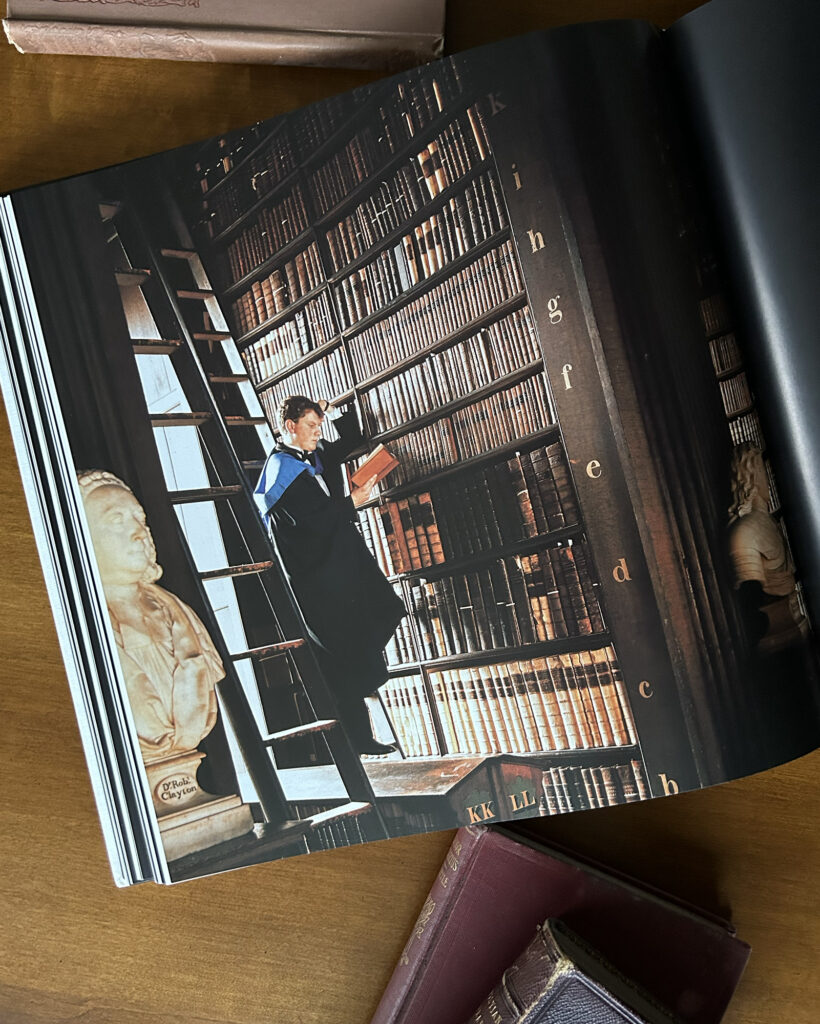
The Charlotte Mason education is commonly (and rightfully) associated with nature, gentleness, and living books. This image raises questions, however, about what to do when children grow up. Does Charlotte Mason in the upper years simply blend into a more traditional educational model?
Not according to J. W. Clouston. A veteran headmaster of a secondary school for boys, he tried adopting the Charlotte Mason method. Writing in 1920, he explained the shift not in terms of a tweak here or there but as a complete change of approach.
After using the method for ten years, he wrote, “the method has come to stay, and it has come to stay for this reason, that it is not a question of a programme, but a revolution in our attitude towards children and education in general.”
Charlotte Mason for boys in secondary school? It’s revolutionary. Read or hear Clouston’s story here.
@artmiddlekauff
November 4, 2026
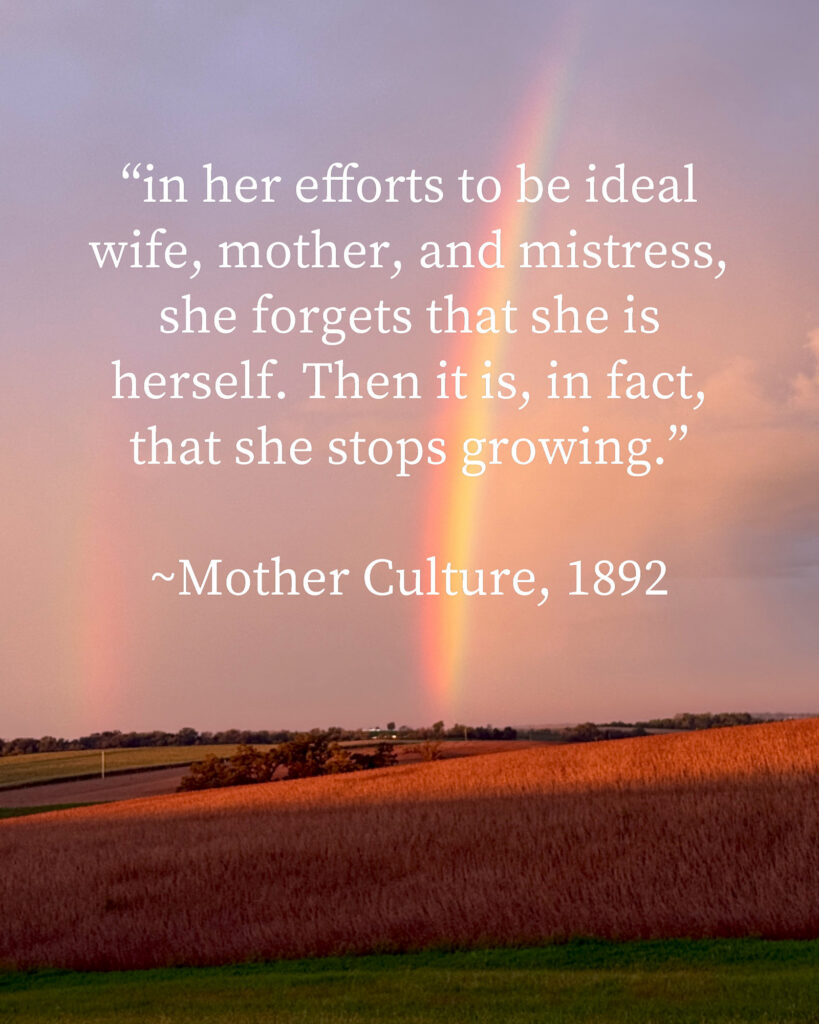
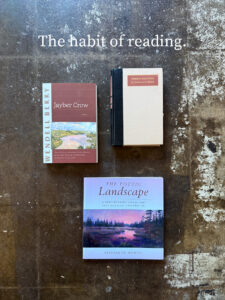
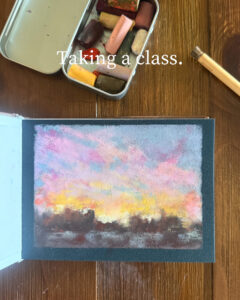
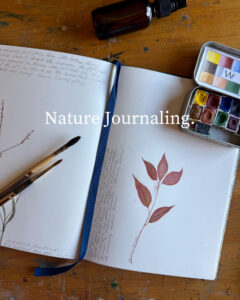
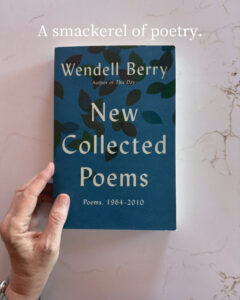
Mother Culture® isn’t another item on our to-do list, but a necessity of life.
It’s the ongoing cultivation of our minds and souls through engagement with the world of ideas, beauty, and experience.
There was a time when I gave so much attention to the growth of others that I neglected my own. I came to appreciate the importance of making room for learning, creating, observing, and pursuing the things that nourish my growth.
These are some of the ways I make room for that in an ordinary week. Not a checklist to complete, but a life to continue cultivating.
If you haven’t read the original “Mother Culture” article (or would like a refresher), you’ll find it linked here, along with an editor’s note by Dean Andreola.
@rbaburina
Mother Culture® is a registered trademark of Charlotte Mason Research Company, LLC
November 5, 2026
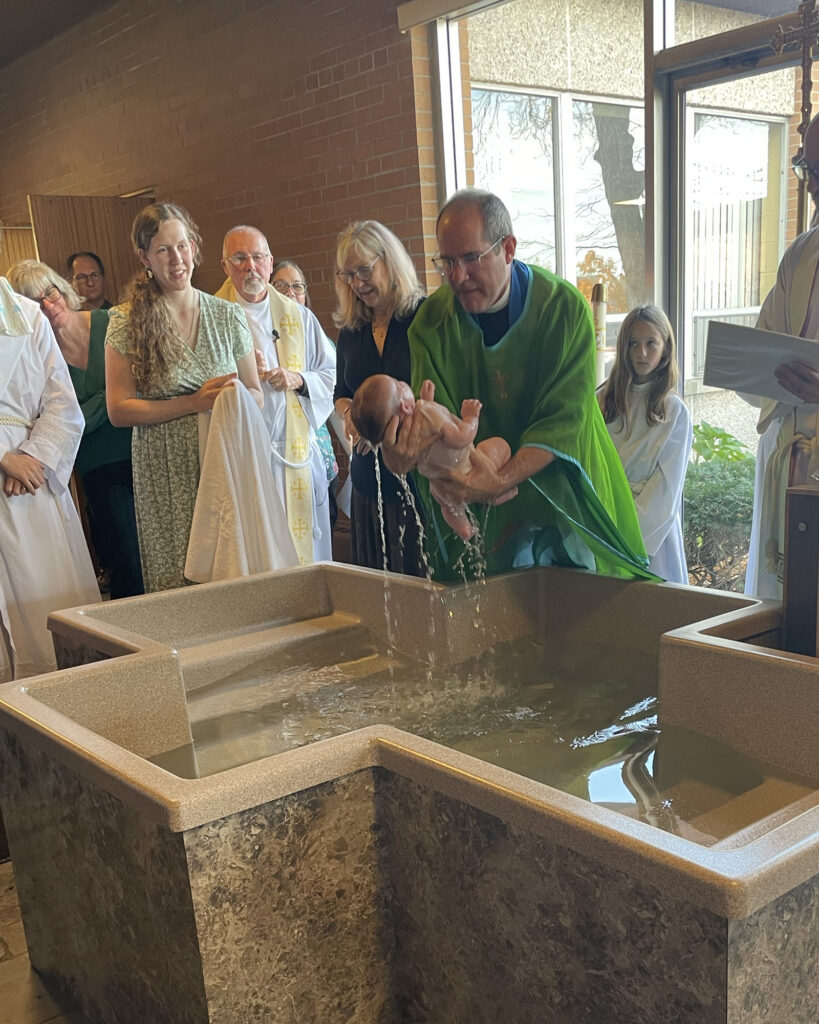
In John 1:32, we read that John the Baptist “saw the Spirit descending from heaven like a dove.” When Charlotte Mason reflected on these words, she contemplated the significance of the dove at our Lord’s baptism:
“The Church of Christ has always loved this emblem of a dove, this embodiment which the Holy Spirit assumed when He descended upon Christ and abode with Him. The dove, ‘sweet messenger of rest,’ moving upon the face of the waters, was a pledge of restoration; its return to the Ark typified the homing instinct of men; tenderness and peace, confidence and comfort, constancy and sweetness, abiding love, unfailing gentle-ness, quiet ways, these are among the notions which men by nature associate with the dove, and which through this image we learn to associate with the ‘gracious Spirit, heavenly Dove.’”
From this sign, she inferred that every baptism invites the presence the heavenly Dove, who brings us tenderness and peace, confidence and comfort.
And so she writes, “What a thought of joy at the baptismal font, of consolation throughout life amid the tossing of the waves of this troublesome world, is this of the Divine Spirit coming to us, also, in the likeness of a dove.”
These words came to my mind when I was by the font and my little granddaughter, my second grandchild, was baptized. I did not see a Dove, but I trusted He was there.
“It was by the dove which rested upon Him that John was taught to know his Lord,” wrote Charlotte Mason, “and, wherever Christ is, the Divine Spirit will brood in gentleness and tenderness, in quietness and confidence, and in unspeakable ‘inward glee;’ for, ‘He baptiseth with the Holy Spirit.’”
@artmiddlekauff
November 6, 2026
Do you ever suffer from tired, cramping fingers while writing?
Charlotte Mason writes “It would be a great gain if children were taught from the first to hold the pen between the first and second fingers, steadying it with the thumb. This position avoids the uncomfortable strain on the muscles produced by the usual way of holding a pen—a strain which causes writer’s cramp in later days when there is much writing to be done. The pen should be held in a comfortable position, rather near the point, fingers and thumb somewhat bent, and the hand resting on the paper.” (Vol I, p 239)
When my hand starts to feel tired from writing for a prolonged period of time, I switch to the position Mason describes.
I do find it takes the strain off. My writing is as “neat” as usual, though the work goes more slowly. And I find it easier to hold this position when writing in cursive. When I try it while printing, I have a harder time controlling the pen.
Give it a try with your family and friends and let us know what you think!
@antonella.f.greco
November 7, 2026
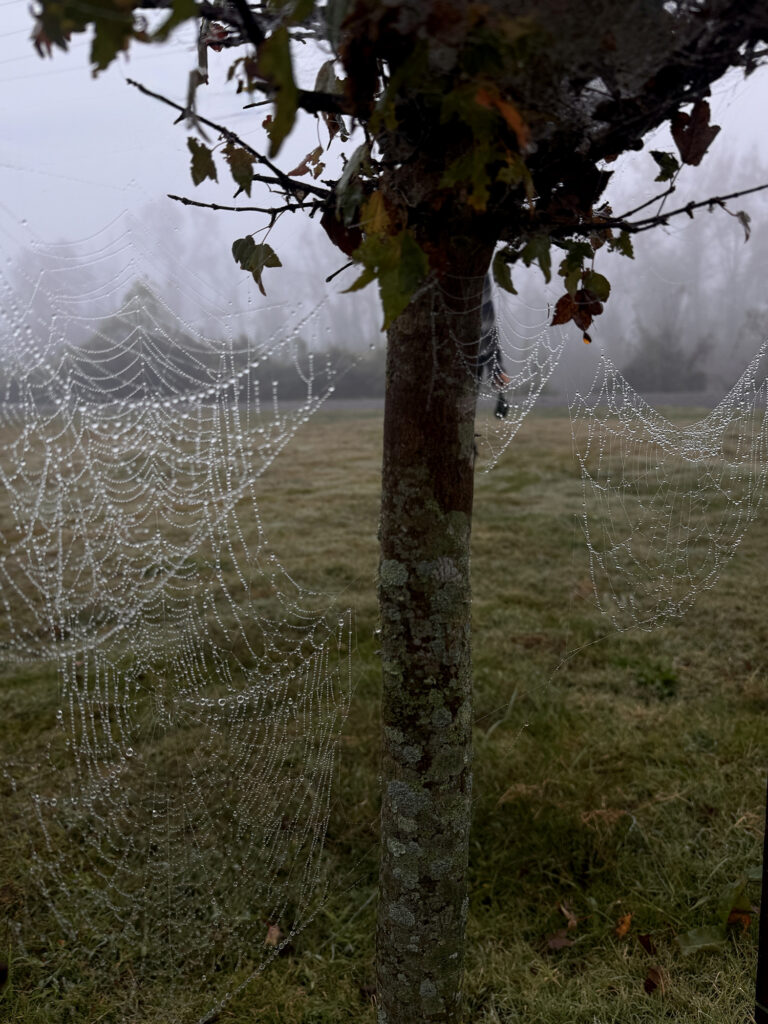
“Cobwebs”
The spider as an artist
Has never been employed
Though his surpassing merit
Is freely certified
By every broom and Bridget
Throughout a Christian land.
Neglected son of genius,
I take thee by the hand.
~Emily Dickinson
@rbaburina
November 8, 2026
“When Jesus becomes aware of the surveillance of the Pharisees, he moves north,” writes Allen Dwight Callahan. “His destination is again Galilee. The narrator says that Jesus ‘had to go through Samaria’… But this was not due to the brute fact of geography. Though Samaria lies between Galilee and Judea on the West Bank of the Jordan, Israelites from Galilee who worshiped in Jerusalem were accustomed to crossing the Jordan twice to do an end-run around hated Samaritan territory. This day, however, Jesus takes the express route.”
Why does Jesus take the express route? Perhaps it’s because there is someone in Samaria that He wants to see. Charlotte Mason writes:
All this, for He had gathered one poor soul,
Gain we should scorn, in our lordlier wise!
Our Master, teach us Thy humility,
And how a single soul is all to Thee!
Hear or read Mason’s poem about the Man which told the woman of Samaria all things that ever she did. Find the poem here.
@artmiddlekauff
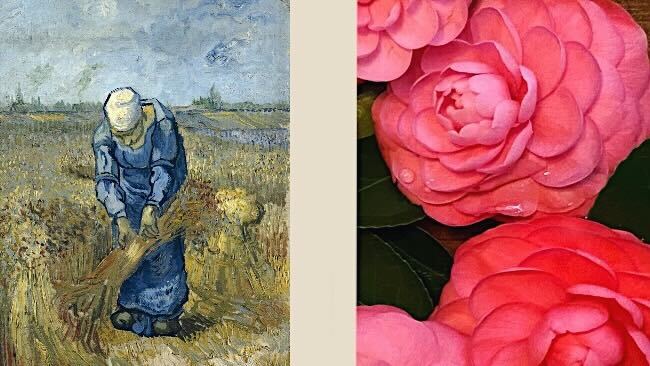
🖼️: Peasant woman binding sheaves (after Millet) by Vincent van Gogh