The CMP Review — Week of November 9
November 9, 2026
“‘Children are born persons.’ Many people, most people, in an educated environment treat children with respect and kindness, treat them as persons, generally speaking; perhaps even treat them as the all-important persons of the household. But do the words light up our path at every difficult educational turning? Do they illuminate our everyday attitude not only towards our children but towards everyone else? They can do all this. A person, someone quite separate from us, someone with a direct relationship of his own towards the past, the present, the future, that no one else can share; someone who has to find out everything for himself; someone to whom we can give nothing, unless he be willing to receive it; someone who has a direct relationship with God, of his own. Dare we hinder such a one in the realisation of his life, in his rightful relationship to everything around? We can only look on at each other in a certain sense, because we cannot make or unmake the person. He exists as a separate entity from ourselves. I want to emphasise the point of every person in this world being a different person, and all of us alongside of each other, and room for each one of us in our relationship with the world, with other persons, and in our direct relationship with God.” (PR 55, “The PNEU from a Parent’s Point of View”)
@tessakeath
November 10, 2026

It is somewhat rare that we get a first-hand account of a Charlotte Mason education with the upper forms (III to VI). But that is just what we get in the report from the 1920 meeting on “A Liberal Education in Secondary Schools.” In her paper, Beatrice Millar set out to “describe to you Miss Mason’s method in the working, particularly as regards children above the elementary age, and to contrast their education with that given to girls of the same age in other schools.” Best of all, she was writing from her experience.
And what experience! “It is very difficult to translate an ‘atmosphere’ into words,” she wrote, “even though I know it so well myself, having had the privilege of spending eight years at Ambleside, training and then teaching under Miss Mason’s influence.”
With an editor’s note highlighting Millar’s colorful and interesting history with the PNEU, her paper describes everything from math to atmosphere to handicrafts in the upper forms. Read or hear it here.
@artmiddlekauff
November 11, 2026
A little flip-through of five years of observing, learning, and returning.
This perpetual nature journal is a record of what I’ve noticed and what has changed: the wildflowers that return, the birds that come and go, the seasons that never quite repeat themselves, and even the growing steadiness of my own hand.
@rbaburina
November 12, 2026
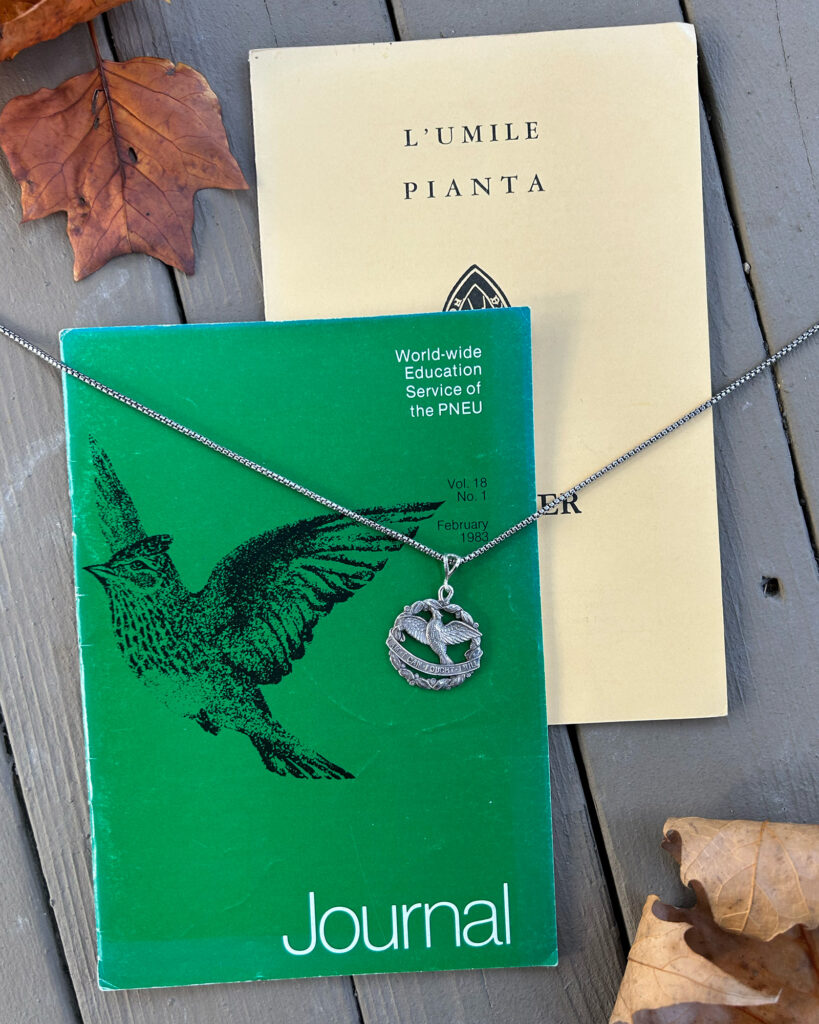
In 1923, Charlotte Mason honored the late Miss R. A. Ambler with these words:
Miss Ambler was the Headmistress of the Drighlington Elementary School … and … she was the first Head of an Elementary School to introduce the work of the Parents’ Union School. Miss Ambler’s school was already a first rate school and she had a staff of devoted and able teachers, but both she and her staff felt that there was something better for their children in the books and methods of the P.U.S., and they took up the work with whole-hearted enthusiasm… Miss Ambler’s venture of faith … started the “Liberal Education for All” movement in Elementary Schools, a movement which has now spread to most of the Counties of England.
Miss Ambler was a pioneer, believing that Miss Mason’s inspired ideas could bring new life in a new setting. Yet despite her extraordinary contribution to the Charlotte Mason movement, it seems she may have felt like an outsider. This is suggested by her touching letter of December 11, 1916 in which she wrote:
I wonder if I might be allowed to wear one of your badges inscribed with the words “For the Children’s Sake,” or is this a privilege intended exclusively for those trained at the House of Education?
There is no record of a response, but as Dr. John Thorley wrote, “I do hope she got her badge!”
In the 21st century there is no PNEU, no Parents’ Union School, and no House of Education. And yet, like Miss Ambler, we are pioneers, believing that Miss Mason’s powerful ideas can bring new life in new settings all over the world.
And we all may ask, with Miss Ambler, for permission to wear the badge. We were not trained at the House of Education. But we continue the work, “For the Children’s Sake.”
@artmiddlekauff
November 13, 2026
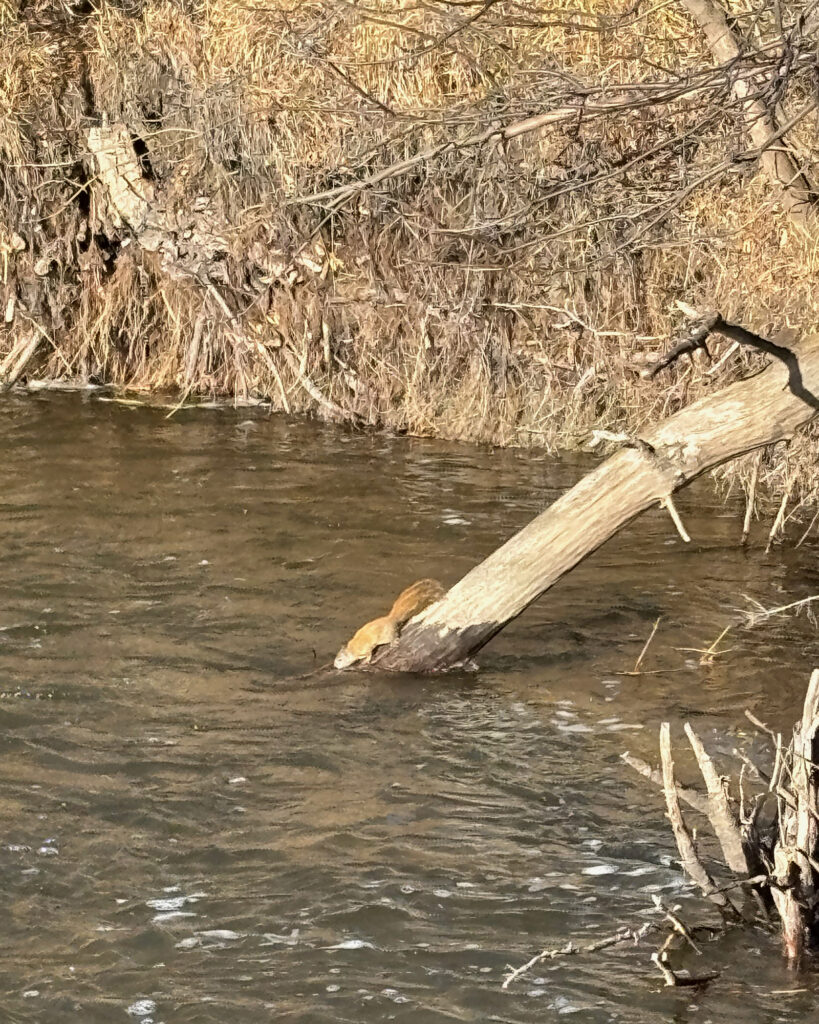
Never have we ever seen a squirrel drinking before.
We were on a walk through the forest and at the river’s edge we saw this squirrel running back and forth on this log. He would take a drink, run back up, and then run back down again for another drink. We watched him do this repeatedly for a few minutes before he scampered off into the forest.
Which got us wondering, how do they drink in winter?
@antonella.f.greco
November 14, 2026
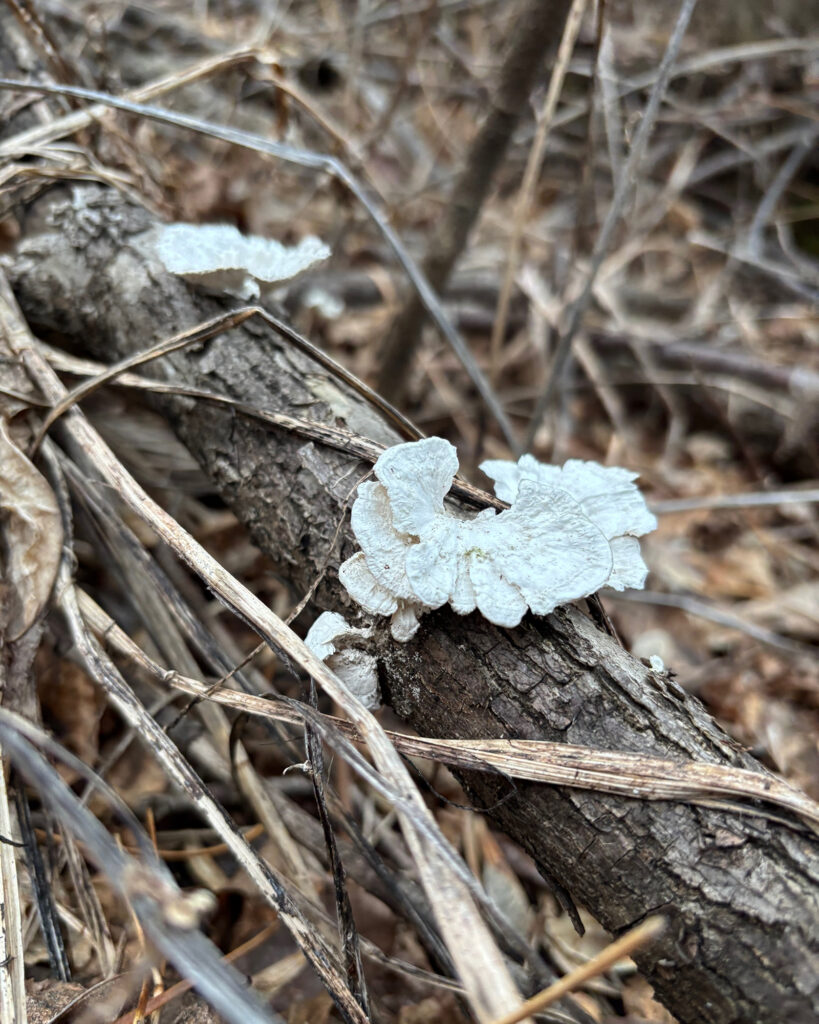
We have a local spot here on campus where we regularly go for a quick jaunt.
It is amazing how when you go repeatedly to the same place, you will always find something different and new to observe!
These lovelies caught my eye for the first time a couple of days ago.
Do you have a regular place to go for a wander? Have you seen something new there this week?
@antonella.f.greco
November 15, 2026
From 1960 to 2015, only one biography of Charlotte Mason was available, the classic by Essex Cholmondeley. Reprinted by two different publishers, it remains a favorite today.
In 2015, however, a second biography was introduced, this one by Margaret Coombs. Packed with facts and interpretations, it challenged much of what we’d read before.
For example, on p. 216 we read, “Miss Mason sensibly refuted belief in original sin by stating that children are ‘not born either good or bad but with possibilities for good or evil’.”
Did she really? Many follow Coombs on this line of interpretation, but I wonder if those who hold to this view have ever read Charlotte Mason’s poetry.
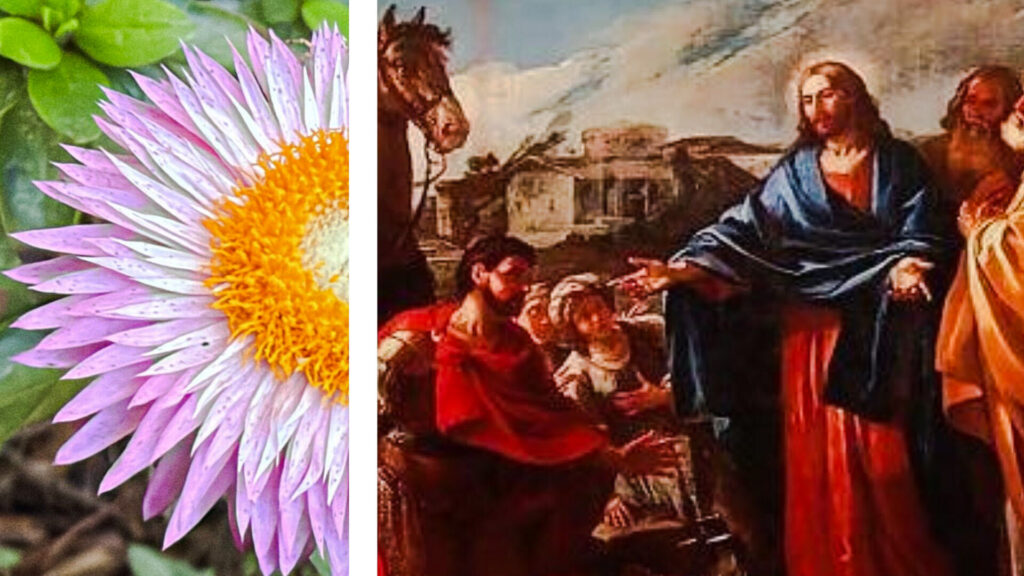
Consider today’s poem, “Christ heals the Nobleman’s Son,” where we find these words:
The Saviour of the World, in casual way,
Drops words of our Salvation, links of chain
Let down to draw us from that nether hell
Which is but our own self to itself left
Such statements are incomprehensible without the framework of the Articles of Religion to which Charlotte Mason subscribed. Article IX states that “man is very far gone from original righteousness, and is of his own nature inclined to evil.” That is why, according to Miss Mason, “Nature, left to herself, produces a waste” (vol. 5, p. 24).
Mason’s poems in The Saviour of the World are valuable resources for spiritual reflection and development. But they also provide us with the deepest insight into Mason’s theology. They help us move past appearances and get to truth. Read or hear the poem here.
@artmiddlekauff
🖼️: Healing the Royal Official’s Son by Joseph-Marie Vien