CMP Review 2025-04-27
“Now let me sing to my Well-beloved
A song of my Beloved regarding His vineyard.”
So opens the fifth chapter of Isaiah. “The readers of this book can easily work out what this vineyard stands for,” explains John Goldingay. However, “for the original audience of Isaiah’s song, matters were more complicated… Isaiah appears before his audience as a minstrel singing a love song on behalf of his best friend, perhaps as his best man. It appears at first to be a touching song about the man’s efforts to cultivate a fruitful relationship or a fruitful marriage, yet worryingly its lines have the short second half characteristic of the limping lament form, which suggests that it will turn out to be a sad song.”
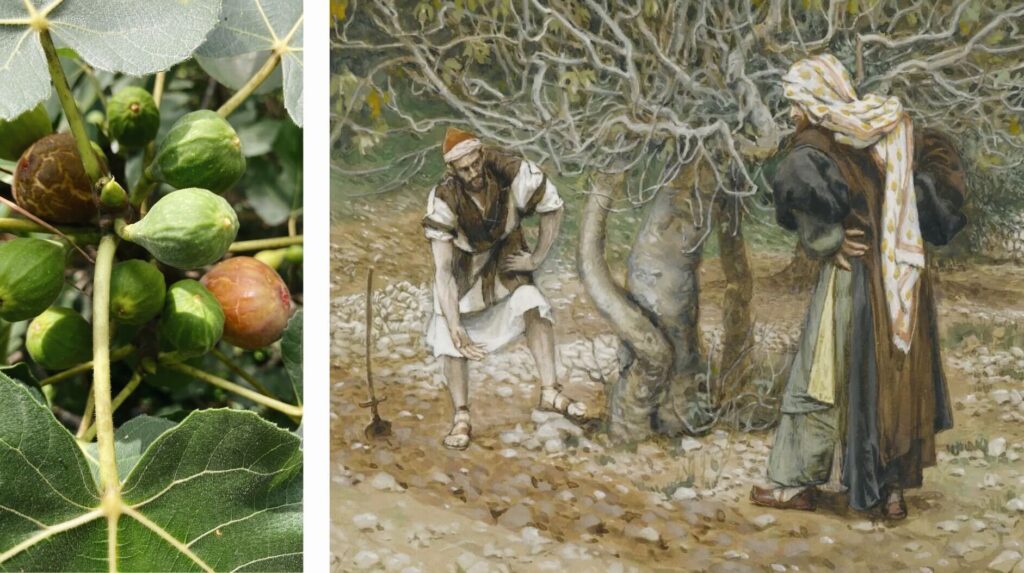
In Luke 13:6, Jesus begins a parable with these words: “A certain man had a fig tree planted in his vineyard.” Would his hearers have immediately thought of Isaiah’s song to his Well-beloved? But then what is a fig tree doing in a vineyard?
In Charlotte Mason’s imaginative poem “The barren fig-tree,” she enters the mindset of Christ’s first-century hearers. In verses that pose more questions than answers, she leaves us again wondering if it will turn out to be a sad song. Read or hear Mason’s poem here.
@artmiddlekauff
🖼️: The Vine Dresser and the Fig Tree by James Tissot