CMP Review 2025-06-03
June 3, 2025
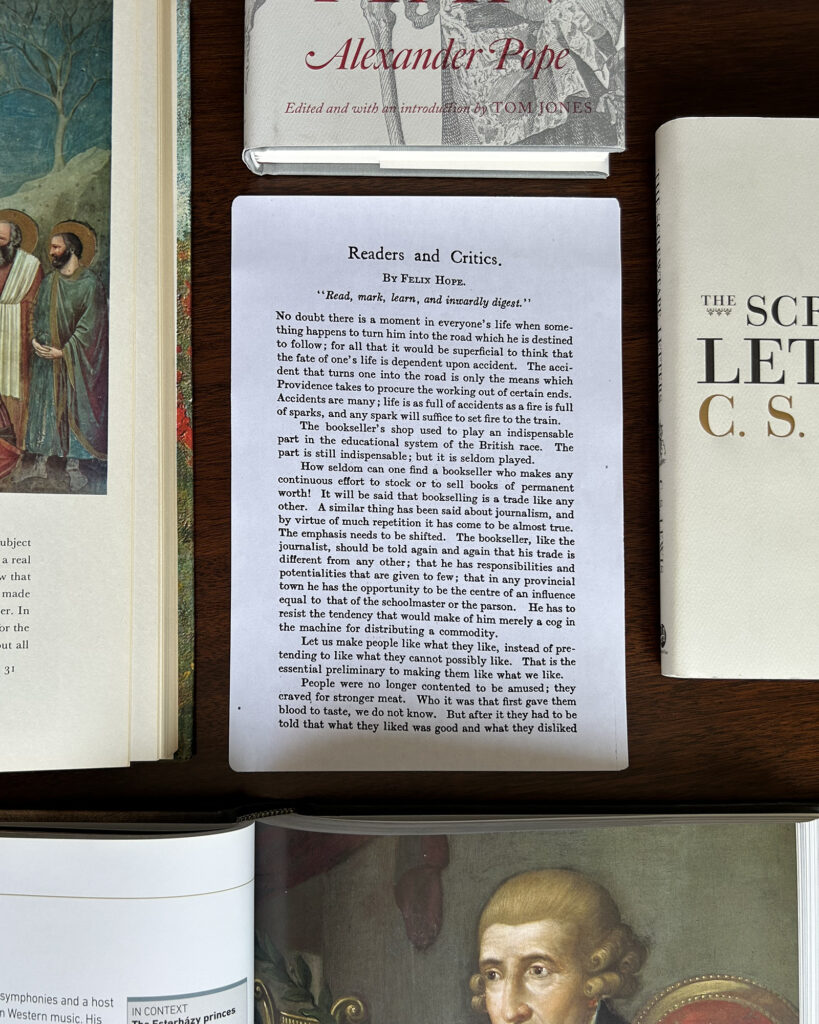
C. S. Lewis, in the voice of Screwtape, masterfully explains an approach to literature that has characterized the “intellectual climate” of the West:
The Historical Point of View, put briefly, means that when a learned man is presented with any statement in an ancient author, the one question he never asks is whether it is true. He asks who influenced the ancient writer, and how far the statement is consistent with what he said in other books, and what phase in the writer’s development, or in the general history of thought, it illustrates, and how it affected later writers… To regard the ancient writer as a possible source of knowledge—to anticipate that what he said could possibly modify your thoughts or your behaviour—this would be rejected as unutterably simple-minded.
The “Historical Point of View” was resisted by Charlotte Mason and her PNEU, who believed that persons of all ages can access truth from authors and artists “mind to mind.”
In 1924, the editor of The Parents’ Review enlisted a skilled and clever writer name Felix Hope who took aim at the “Historical Point of View.” His article preceded Screwtape, of course, but it would have given him a shiver.
Do you think you know how to appreciate Giotto, listen to Haydn, and study Alexander Pope? Take a moment to read or hear Felix Hope’s incisive piece and let him reopen your heart to art. Find it here.
@artmiddlekauff