CMP Review 2025-09-18
September 18, 2025
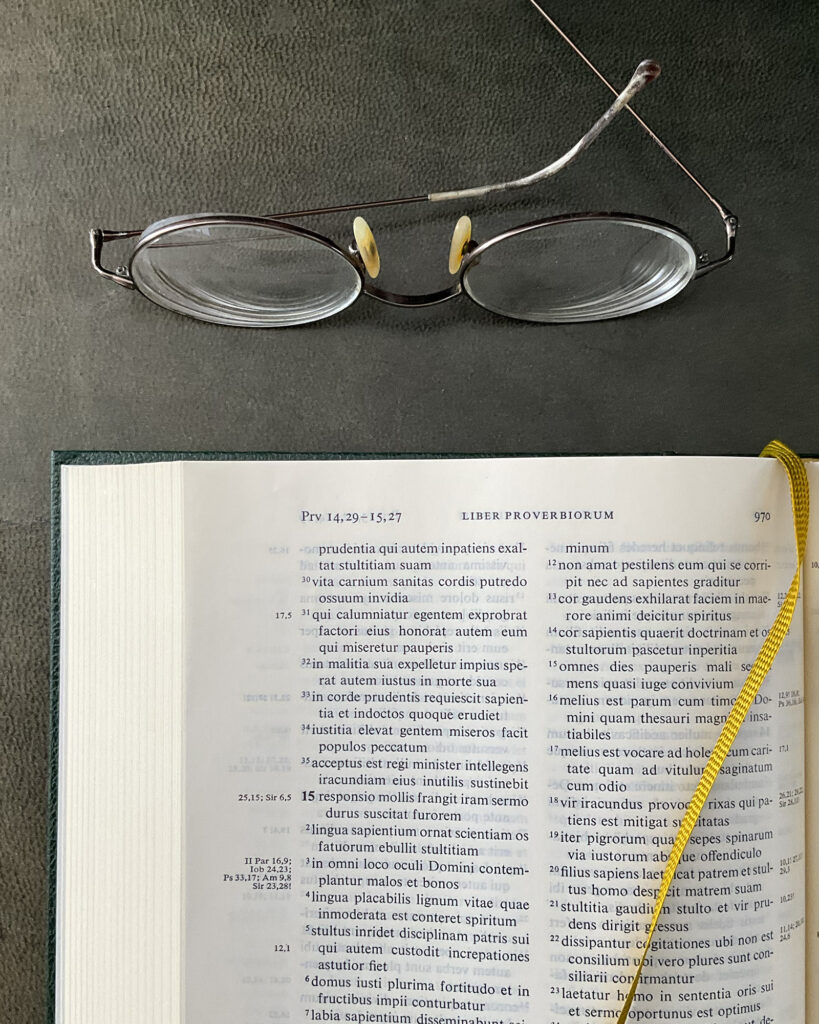
At church when people get out their Bibles to follow along with the reading or the sermon, eyebrows sometimes raise when I get out mine. People are not expecting to see the Weber-Gryson Biblia Sacra Vulgata (Editio Quinta). In other words, they are not expecting to see the Latin Vulgate.
Why would I have a Latin Bible with me when everything in our church service is in English? Here are my top reasons:
(1) Because Latin is an inflected language, a single word can convey the meaning of an entire phrase of English. This results in denser sentences that help me linger on the nouns and verbs. This aids my contemplation of the passage.
(2) Reading along in Latin while I am listening in English helps me to improve my Latin skill. (I am still a beginner.)
(3) When Jerome translated the Old Testament, he had access to Hebrew manuscripts that are not available today. I find it is interesting to get a 4th century view of the text of the Bible.
Over the years I have seen many reasons given for why we should study Latin. I have heard that students of Latin score better on the SAT, have a larger vocabulary, and have a deeper understanding of grammar. Perhaps these benefits are real. But I find one reason far more compelling than the rest: learning Latin allows us to hear voices from the past — in their own words.
@artmiddlekauff