CMP Review 2025-12-11
December 11, 2025
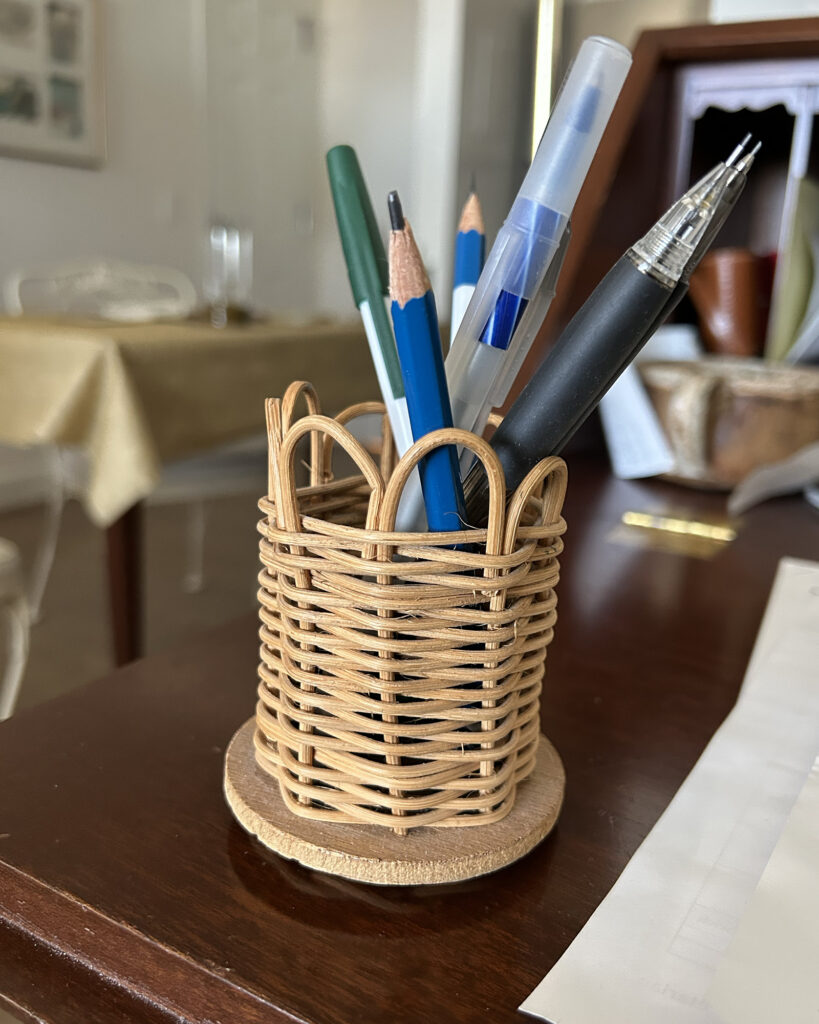
One of my rare experiences with handicrafts as a child was at a school or a summer camp. We were to weave small baskets. They were supposed to fan out and upwards like a bowl. I grasped the weaving part, but my inexperienced hands and mind could not grasp the part about fanning outwards. My little basket ended up straight as a can.
In Home Education, Charlotte Mason writes, “The points to be borne in mind in children’s handicrafts are: (a) that they should not be employed in making futilities such as pea and stick work, paper mats, and the like; (b) that they should be taught slowly and carefully what they are to do; (c) that slipshod work should not be allowed; (d) and that, therefore, the children’s work should be kept well within their compass.”
When I looked at the completed projects of the other children, and notably that of my older brother, I saw that I had failed miserably. I recall that my slipshod piece earned a few dismissive laughs from my peers.
I brought my piece home to my mother who received it without question. What was supposed to be a bowl became for her a pencil holder.
Over Thanksgiving I visited my mother. I was struck by the sight of her pencil holder. I knew that it was fifty years old, and that it was made by me.
It is a lesson for me in handicrafts. That work was no futility. It was more or less within my compass. But was it slipshod? I see how much that rests in the eyes of the beholder. My craft has served my mother for a half-century, and her unquestioned acceptance of it spelled the difference for me between shame and joy.
Our responses can spell the same difference to any child who entrusts their work to our care.
@artmiddlekauff