CMP Review 2025-12-23
December 23, 2025
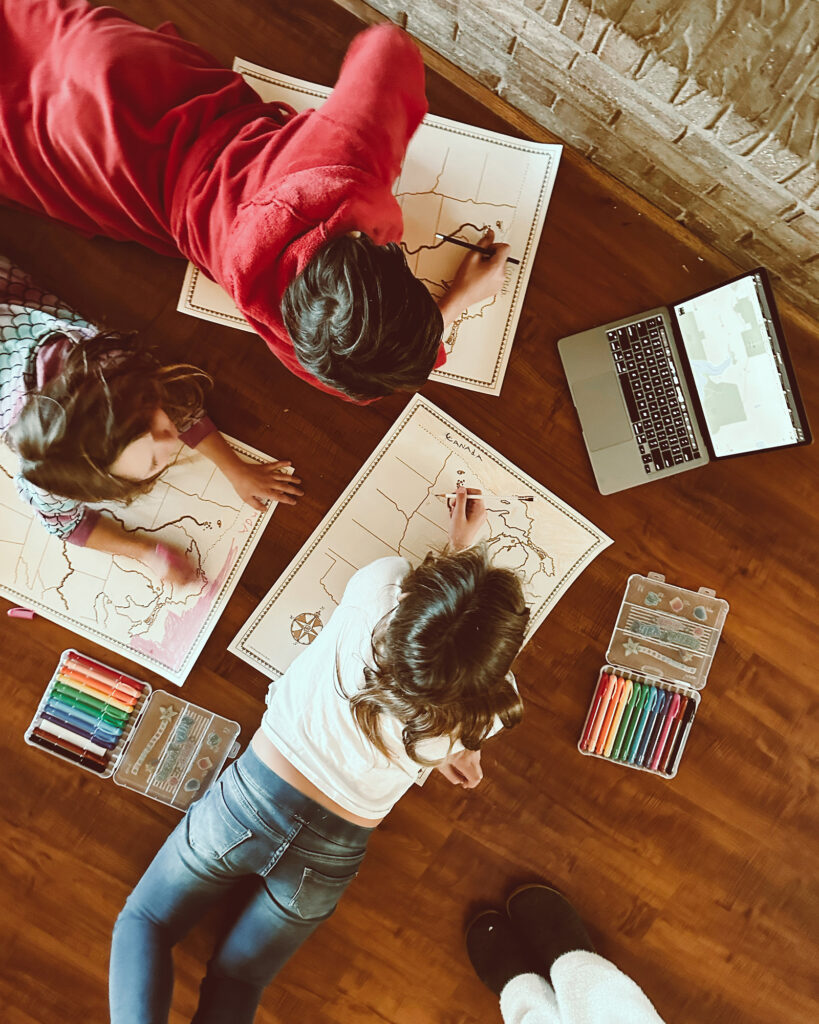
“Are we teaching geography?” asks Charlotte Mason. “The child discovers with the explorer, journeys with the traveller, receives impressions new and vivid from some other mind which is immediately receiving these impressions; not after they have been made stale and dull by a process of filtering through many intermediate minds, and have found at last their way into a little text-book.”
And then later she writes, “Perhaps no knowledge is more delightful than such an intimacy with the earth’s surface, region by region, as should enable the map of any region to unfold a panorama of delight, disclosing … mountains, rivers, frontiers, … associations, occupations, some parts of the past and much of the present, of every part of this beautiful earth.”
These words would inspire any parent or teacher to offer a healthy (and enticing) serving of geography in the educational banquet of their home. But just how do we make it “alive” as Mason so strongly urges?
Readers may be surprised that Mason goes on to explain that “great attention is paid to map work; that is, before reading a lesson children have found the places mentioned in that lesson on a map and know where they are.”
So we have maps, map work, books, reading, narration, and more? How do all these pieces fit together?
That was the question faced by teachers in the Gloucestershire schools who had adopted the Charlotte Mason method. They loved the method — and they shared their experiences on how they made it work. Today we share a practical and insightful piece from 1920 by G. H. Smith, with a thoughtful modern introduction by Dawn Tull. Find it here.
@artmiddlekauff
📷: @aolander