CMP Review 2026-02-22
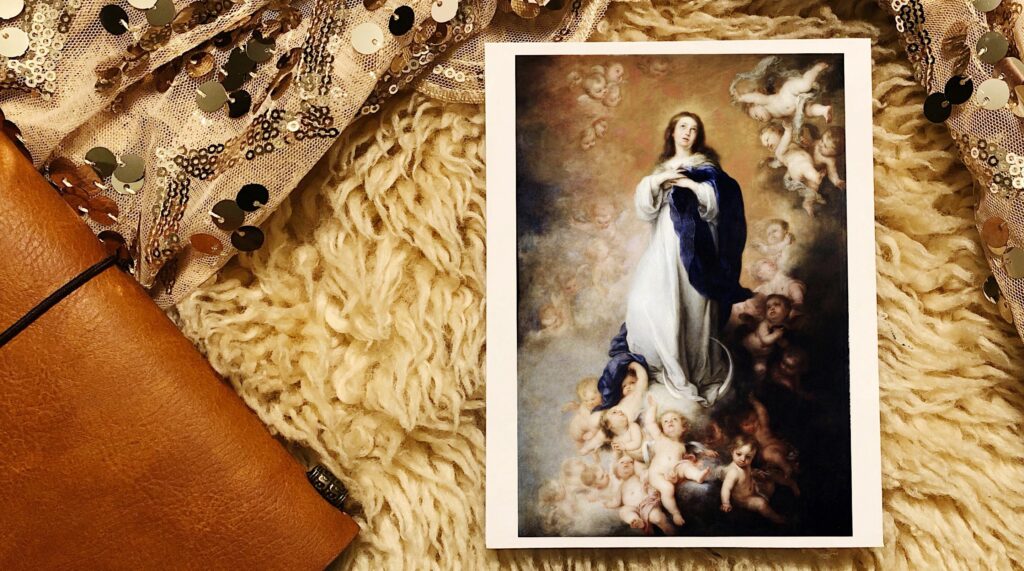
Year after year as a young woman and through the rest of her life, Charlotte Mason would hear these words: “Almighty God, who hast given us thy only begotten Son, to take our nature upon him, and … to be born of a pure Virgin…” This prayer, first arranged by Thomas Cranmer for the 1549 Book of Common Prayer, blesses the Anglican liturgy to this day. But what do these words mean, “born of a pure Virgin”?
Some notions are difficult to explore or express in prose; it seems that the highest truths often reach us through art, whether poem, painting, or performance. One image in particular touched Mason deeply when she was not yet thirty years old. Art brought forth art and she penned verses to express the ideas forming in her heart.
When it became time to explore the Advent mystery in her Saviour of the World volumes, Mason lingered after the Annunciation. She reached back to that poem from her earlier days, that poem written “on a picture.” But it was not until two years after the poem was published that she gave another glimpse into how this poem was to be understood. Writing in “The Nativity” in the 1910 Parents’ Review, she explained: “Born of a pure Virgin.—Perhaps here, too, the painters are the best helpers to our meditative thought…”
Born of a pure Virgin. Perhaps it’s an idea that cannot be reduced to catechism or creed. It leaves the heart hungry for more. At least it did for Charlotte Mason. And so from the liturgy to the canvas, Mason contemplated the great mystery of the woman whose womb the Son of God would take for a home.
Find Charlotte Mason’s poem here.
@artmiddlekauff