CMP Review 2026-05-12
May 12, 2026
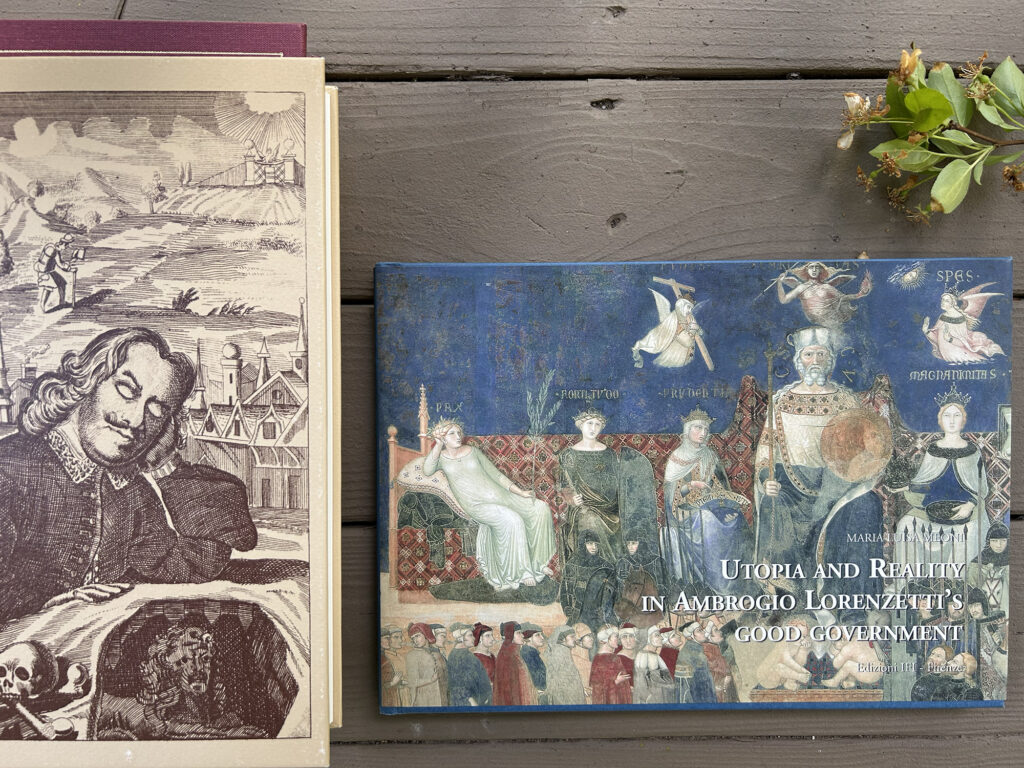
Allegory has always been a powerful way to express abstract ideas. From Isaiah’s Song of the Vineyard, to Ambrogio Lorenzetti’s Allegory of Good and Bad Government, to John Bunyan’s Pilgrim’s Progress, allegory shows us how invisible ideas are dynamically related by pointing us to familiar phenomena that we see in the world every day.
Charlotte Mason herself began Ourselves with the allegory of Mansoul, which has captured the imagination of countless readers of all ages. There is something about contemplating the soul as a kingdom which makes self-reverence, self-knowledge, and self-control more inviting and more profitable to contemplate.
In 1917 Elsie Kitching wanted to express how the ideas of her mentor and teacher fit within the broader history of thought. She could have chosen an essay format, and with careful definitions and transitions have given us an academic and analytical exposition. Instead, she chose allegory. The result is a contextualization of Miss Mason’s ideas unlike anything you’ve ever seen before.
Kitching’s piece is highly unusual and as a team we discussed whether our audience would even appreciate her allegorical approach. But Kitching’s use of allegory places her in good company. And if you’re following us here, you’re probably just the kind of person who could find something inspiring and intriguing in Kitching’s one-of-a-kind presentation. So today it’s on the internet for the very first time, and you can read or hear it here.
@artmiddlekauff