CMP Review 2026-09-13
The year 1778 saw the posthumous publication of a major work by Samuel Reimarus. Originally entitled An Apology for the Rational Worshippers of God, it “argued that Jesus had nothing divine about him; his activity would have been simply that of a political messiah, a kind of patriot leader who wanted to free the Jews from Roman rule. When he died, his disciples refused to accept the facts, … and went on to invent the news that he had risen.”
According to Barbara Frale (2011), the publication of Reimarus’s book “marks the start of the ‘quest for the historical Jesus,’” the beginning of “what used to be called ‘rational Christianity,’ which substantially denied the divinity of the Christ to assert the existence of a single and sole creator God, the rational principle of absolute goodness and the origin of all things.”
By the time of Charlotte Mason, “rational Christianity” had metastasized and was taking hold of thinkers and theologians everywhere she looked. Respectable leaders even within her own Church were saying that Jesus was just a model — and that to do good and to serve others is all that it really means to be a Christian.
Mason did not have theological degrees and academic titles. But she did have a Bible. And in the Gospels, she saw the Jesus who is Christ. No mere political messiah or patriot leader. He came to His Father’s house, and anger burned in His eyes. In today’s poem, Mason bears witness to the Man who was King. She issues her poetical call to all believers everywhere to purge their hearts of false conceptions and make room for Messiah’s reign. Find it here.
@artmiddlekauff
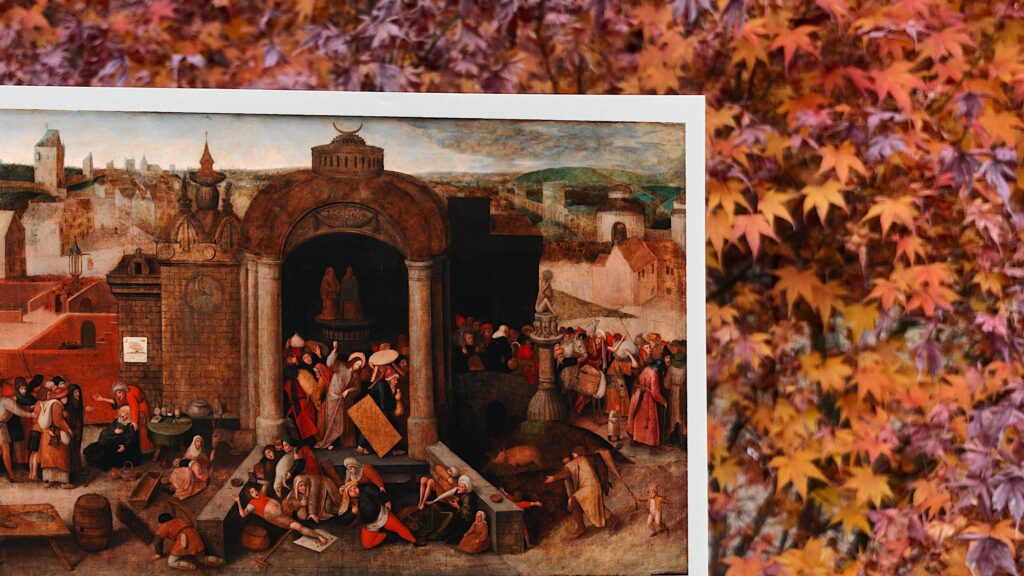
🖼️: Christ Driving the Traders from the Temple by Pieter Brueghel the Elder