The CMP Review — Week of December 15
December 15, 2025

“Every Babe bears an Evangel.—For the little child is the true St Christopher: in him is the light and life of Christ; and every birth is a message of salvation, and a reminder that we, too, must humble ourselves and become as little children. This is, perhaps, the real secret of the world’s progress—that every babe comes into the world with an evangel, which witnesses of necessity to his parents’ hearts. That we, too, are children, the children of God, that He would have us be as children, is the message that the newborn child never fails to bear, however little we heed, or however soon we forget. It is well that parents should ponder these things, for the child’s estate is a holy one, and it is given to his parents to safeguard the little heir of blessedness.” (Vol. 2 pp. 281-282)
⠀⠀⠀⠀⠀⠀⠀⠀⠀
@tessakeath
December 16, 2025

Daisy Golding was a teacher who described her situation in the book In Memoriam:
Our school is situated in an urban industrial district: a large majority of the children are from homes where the father and the mother, too, work in a boot factory when employment can be obtained at all. With one or two rare exceptions, our girls do not belong to the company of favoured children whose parents are able to take an intelligent interest in them. English, as it should be spoken, does not exist for them in their home life, and their vocabulary is sadly limited.
Into this environment Golding introduced the Charlotte Mason method in 1918. Two years later she was a featured speaker at Mason’s children’s gathering in Whitby. Essex Cholmondeley, Mason’s biographer, was present, and wrote that “Miss Golding read a splendidly direct paper on the true meaning of the work of the P.N.E.U., and gave us her experience of it in elementary school work.”
Golding’s paper provided a wonderful picture of how the method was implemented during Mason’s own lifetime. Golding even proposed a customization which was “sanctioned” by Miss Mason herself. This “splendidly direct paper” has been hidden away in a handful of libraries for a hundred years. Until today. Read or hear it here.
@artmiddlekauff
December 17, 2025
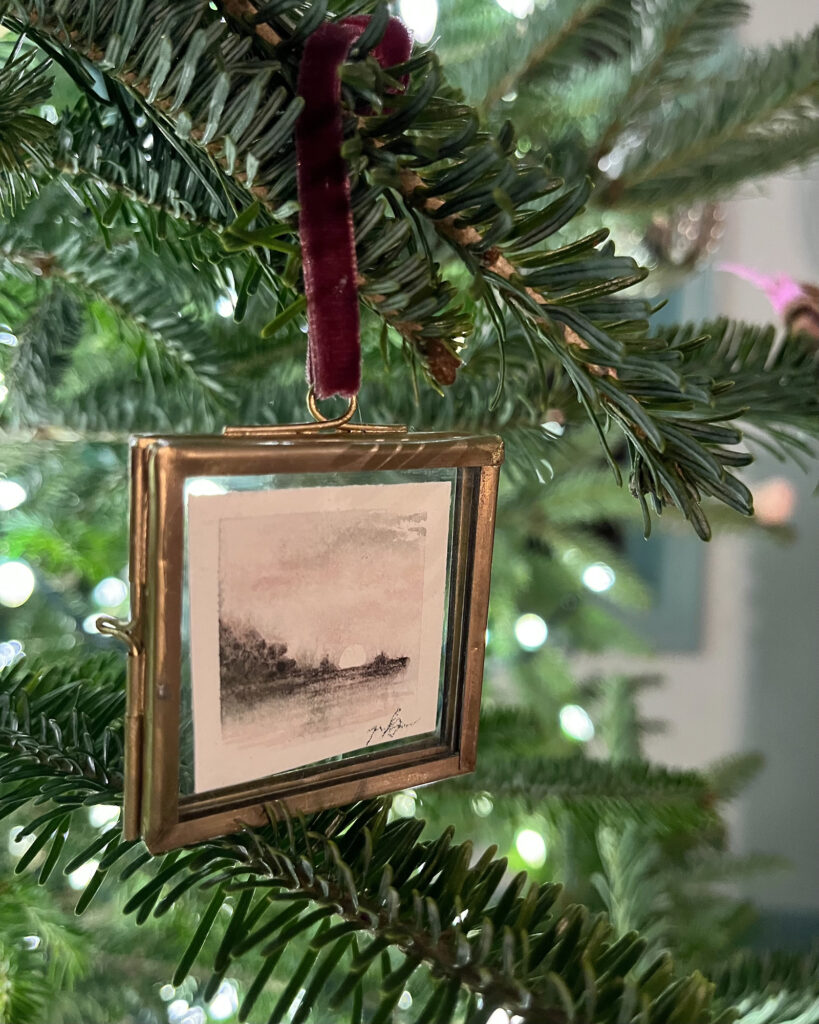
Do you have a homemade Christmas?
Ours is a mix of handmade items as well as sentimental things. This year, the elves in our home have designed t-shirts and foraged pigments, while other projects are nearing completion. Baking is next on the list.
@rbaburina
December 18, 2025

“I think a child should be able to receive anything that’s true in art or in life,” said Jean Rondeau. “We like to hide things from a child because we think they will be too much for them… But I think hiding stuff is one of the first [offenses] against a child.”
Rondeau, born in 1991, heard the sound of a harpsichord on the radio when he was five years old. “Without knowing who was playing, what was being played, or even what the instrument was,” he pleaded with his parents to let him learn how to play it.
Amazingly, he was taken on as a student by one of France’s leading harpsichordists. But she was no ordinary teacher. Instead of focusing on mechanics and drills, she focused on music.
“I think she realised that I was not there for words, that I had this extreme, passionate fire for the music,” Rondeau recalled. “I would spend the week practising in order to be able to play a piece, not studies or anything, and her teaching was to listen. She wouldn’t talk much, and sometimes we would just play two harpsichords together… [She] taught me that music was always there for me in my desire.”
Nancy Kelly wrote a classic article entitled “The Thing is the Thing.” Whether “the thing” is a harpsichord or a harp or a history or a hymn, it’s full of life for the child. Let’s not obscure it behind a cloud. After all, the science of relations always begins with an introduction.
@artmiddlekauff
Source: Gramophone, November 2025
December 19, 2025

“Science, Art and Poetry ‘by the Spirit.’—But it is not only with high themes of science, art and poetry that the divine Spirit concerns Himself. It sometimes occurs to one to wonder who invented, in the first place, the way of using the most elemental necessaries of life. Who first discovered the means of producing fire, of joining wood, of smelting ores, of sowing seed, of grinding corn?
Ideas of Common Things.—We cannot think of ourselves as living without knowing these things; and yet each one must have been a great idea when it first made a stir in the mind of the man who conceived it. Where did he get his first idea? Happily, we are told, in a case so typical that it is a key to all the rest:—
’Doth the plowman plow all day to sow? doth he open and break the clods of his ground? When he hath made plain the face thereof, doth he not cast abroad the fitches and scatter the cummin, and cast in the principal wheat and the appointed barley and the rie in their place? For his God doth instruct him to discretion, and doth teach him. … This also cometh forth from the Lord of Hosts, which is wonderful in counsel, and excellent in working.’—Isa. xxviii. 24, etc.
‘God doth Instruct.’—In the things of science, in the things of art, in the things of practical everyday life, his God doth instruct him and doth teach him, her God doth instruct her and doth teach her. Let this be the mother’s key to the whole of the education of each boy and each girl; not of her children; the divine Spirit does not work with nouns of multitude, but with each single child. Because He is infinite, the whole world is not too great a school for this indefatigable Teacher, and because He is infinite, He is able to give the whole of his infinite attention for the whole time to each one of his multitudinous pupils. We do not sufficiently rejoice in the wealth that the infinite nature of our God brings to each of us.”
@antonella.f.greco
December 20, 2025

Have you celebrated Jane Austen’s 250th anniversary this year? Her actual birthday was this past week, on December 16th.
If you’re looking for a way to pay homage to the beloved author, we invite you to enjoy our Jane Austen offerings. These include an article written by Charlotte Mason herself and a celebratory audio recording featuring a dozen different voices reading from Miss Austen’s works.
Find them all in our Topical Index under the heading of “Literature.”
@rbaburina
December 21, 2025
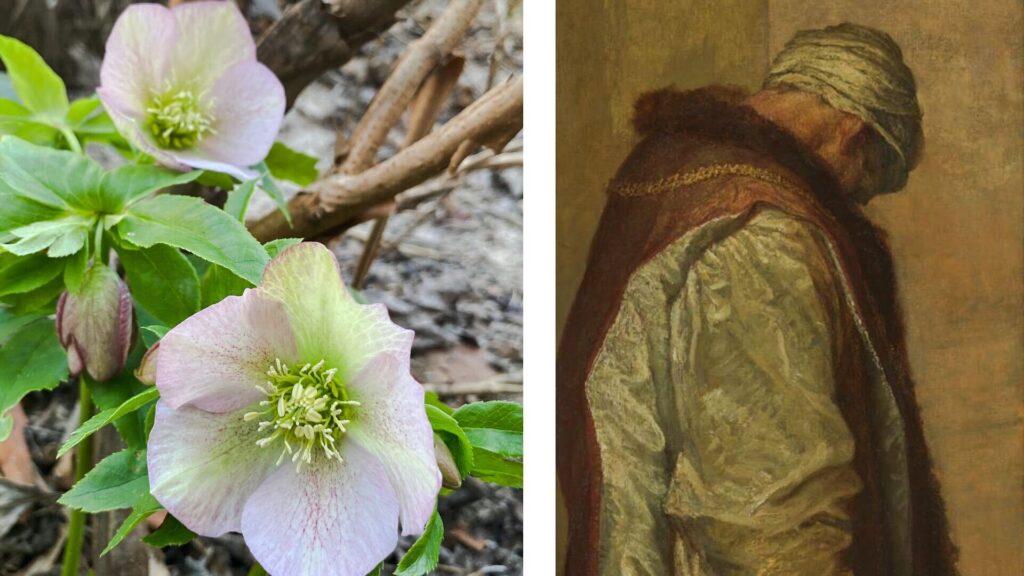
The Gospel of Luke tells about a ruler who came to Jesus. This young man was very rich, but he went away sorrowful.
In his book Pastor Pastorum, Henry Latham contemplates the scene: “The Apostles are ‘astonished exceedingly’ at our Lord’s severity, they had perhaps been pleased at the prospect of the accession to their community of a man who was rich and high in station and well spoken of on all sides.”
This explanation of the disciples’ reaction was new to me. But in Charlotte Mason’s poetic reflection on the passage, she too considers that the disciples may have thought that a rich young ruler would have been a prestigious addition to their company.
Latham also offers a thoughtful interpretation of our Lord’s response: “From this interview our Lord draws the moral, ‘How hardly shall they that have riches enter into the Kingdom of God;’ this is not a denunciation of the rich but rather a commiseration of them, owing to the peculiar and insidious temptations to which they are unceasingly exposed.”
Mason too does not wish to condemn the rich but rather show compassion to all persons who are created for eternal life. Read or hear her poem here.
@artmiddlekauff
🖼️: For He Had Great Possessions by George Frederic Watts