The CMP Review — Week of April 27
April 27, 2026
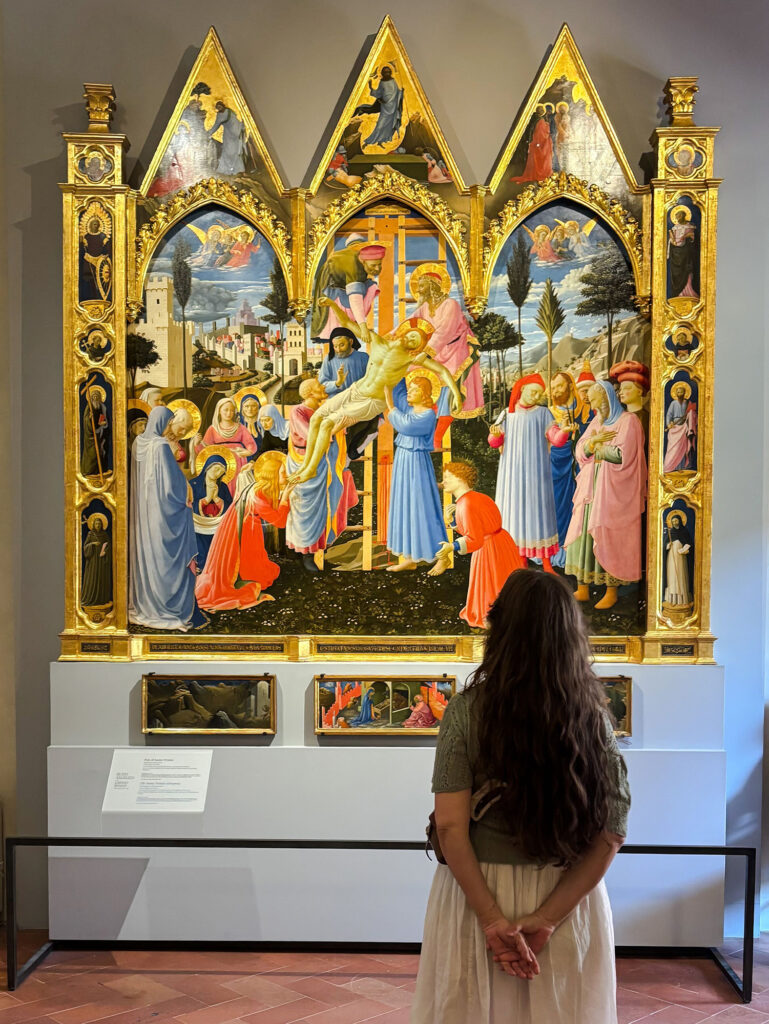
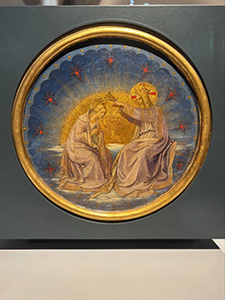
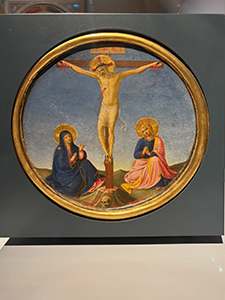
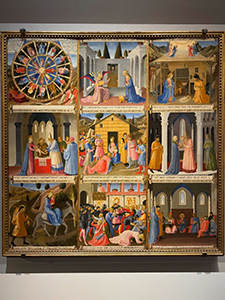
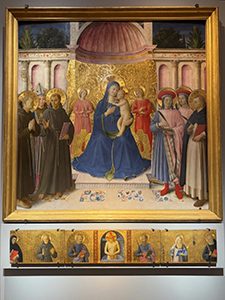
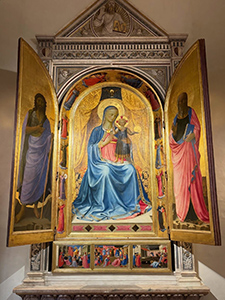
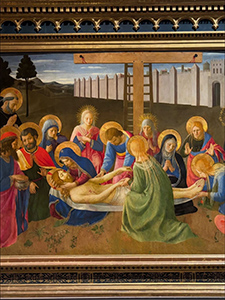
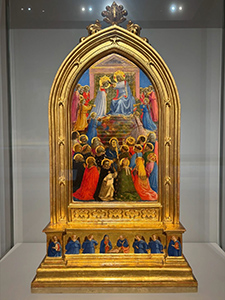
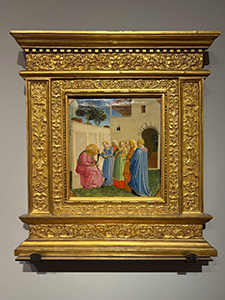
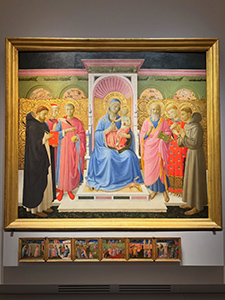
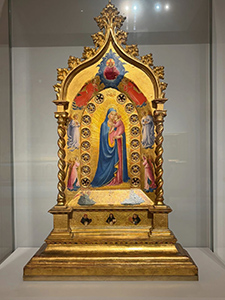
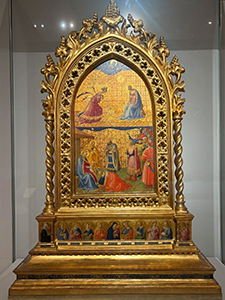
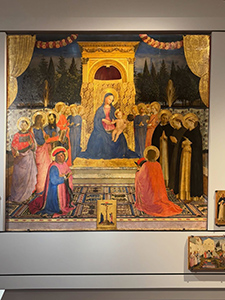
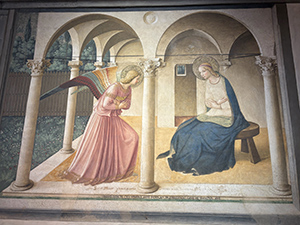
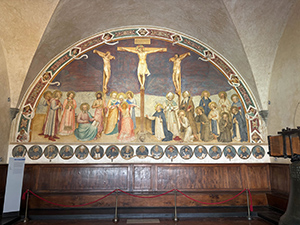
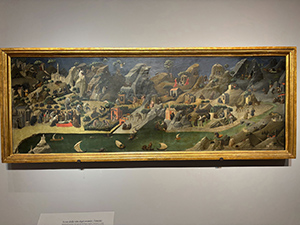
“We do not know when he first became known as Beato Angelico. Certainly, a divine spark seemed to illuminate his personality and was reflected in his paintings. It matters not whether he was first and foremost a man of God or an artist; these two aspects of his character were closely intermingled; he drew inspiration from the faith that meant everything to him. He painted for the glorification of God, thereby expressing the very real genius with which he was endowed.
“… Fra Angelico is perhaps too widely famed for his hosts of angels, radiant with gold, serene in their unworldly beauty. But he was no dreamy sentimentalist. That he could face life’s sterner realities is shown by a number of his lesser-known pictures in which he was not afraid to depict the suffering of the body and the spirit—blood and tears.
“… Children will love the rainbow colours, some glowing like jewels, others pastel-tinted and delicate like mother of pearl. In some ways Fra Angelico is a children’s artist. His work has simplicity, freshness and innocence. He himself was humble and sought no honours. He used his gifts to bring people nearer to God and help them to understand Christ’s message to mankind. No poet could have expressed himself with a more lyrical approach. The gory details he did, at times, introduce, were intended to convey a mystic rather than a realistic significance. No other artist passed by ‘trailing clouds of glory’ as did the blessed angelic one—Beato Angelico.” (“Fra Angelico” by Rosemary Wilkinson, PR70)
@tessakeath
April 28, 2026

In the Charlotte Mason method, many lessons in vintage and modern time tables are scheduled to last 20 minutes. Many others are scheduled for 30 minutes. We all know that several things have to happen during those time blocks — at a minimum, a reading and a narration. But how is that time block to be divided? It’s a practical question that I’ve had as a home educator: when should the reading end and the narration begin?
Last week we shared Mason’s first 1917 letter to The Times on the theme of “A Liberal Education for All.” Her letter must have created a stir, as it provoked at least one critical response and one positive response, both of which were apparently published in The Times. Mason was not passive in the face of criticism; she believed strongly that her method provided children with what they needed, and she was not shy about defending it.
Fortunately for us, Mason is a writer whose point-by-point refutations invariably turn into positive presentations about her method. Her second 1917 letter to The Times is no exception. I am grateful for the critic’s letter, because it prompted Mason to share testimonies and anecdotes about her philosophy in practice that we wouldn’t otherwise have.
And as a special bonus, one of those testimonies answers the question I’ve had for so many years: how do you break up those 20-minute or 30-minute time blocks into reading and narration? Follow this link and see.
@artmiddlekauff
April 29, 2026
This little beauty has a wild defense mechanism.
The Apheloria virginiensis, also known as the Virginia cherry millipede, secretes a cyanide-based compound that smells like either cherry cola or almonds. While not lethal, you should wash your hands after handling to prevent irritation.
Tip: Always roll logs toward you when looking for little critters. This will act as a protective barrier between both you and a startled snake or spider.
@rbaburina
April 30, 2026
Not every kid in the co-op makes it to every class. Not everyone makes time for everything. But there is one class that no one misses. Every one of every eligible age is there. No one is late. No one is inattentive. From the youngest to oldest, everyone has something to narrate. Everyone has something to take away.
I listened with fascination this past weekend at the Natural State Charlotte Mason Retreat. What was this prince of offerings that was the highpoint of the children’s day? Shakespeare perhaps? Or some exciting traveler’s tale?
Plutarch.
The attendees at the breakout session all breathed a collective gasp of disbelief. Plutarch was to be feared, to be endured, to be overcome. Was it too hard for some? No, said our teacher. Was it difficult to generate interest? No. Do you live in some different world? No, I’m right here with you.
“The father of Plutarch had him learn his Homer that he might get heroic ideas of life,” wrote Charlotte Mason. “Had the boy been put through his Homer as a classical grind, as a machine for the development of faculty, a pedant would have come out, and not a man of the world in touch with life at many points, capable of bringing men and affairs to the touchstone of a sane and generous mind.”
How interesting. If we make Plutarch some kind of grind, what do you think we will get out? But what if Plutarch is a door to heroic ideas of life? Why then, there is standing room only.
Our breakout session teacher was Dr. Larry Hunt. I wish I could sit in on one of his classes at the co-op. I need heroic ideas of life too.
@artmiddlekauff
Dr. Hunt’s Conversations on Character Plutarch Courses are available at Simply Charlotte Mason.
May 1, 2026
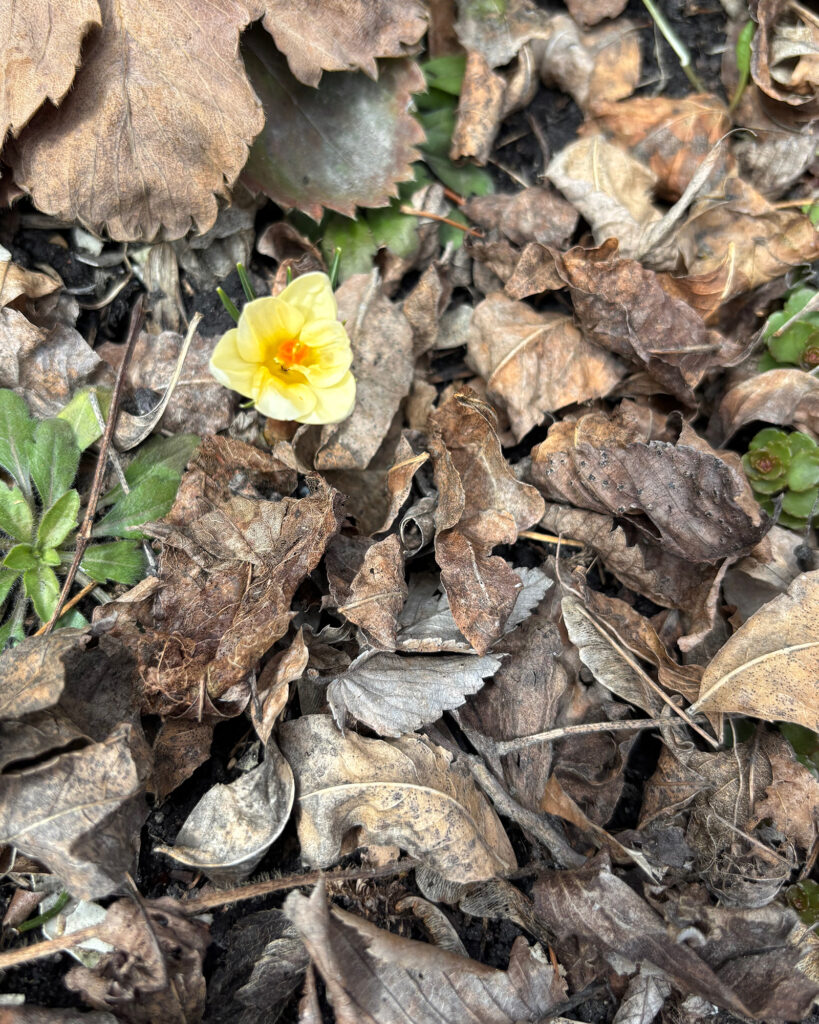
One of my little neighbourhood friends excitedly brought me over to her family’s backyard garden to show me this precious first crocus!
Spring is springing! 🙏 💕
What’s your favourite spring flower?
@antonella.f.greco
May 2, 2026

The Canada Geese do insist on nesting in the most conspicuous spots!
We saw this by the parking lot, while we were walking back to our car from a huge used book sale at the mall. Some kind person had even put out a bowl with water (not pictured).
Used books and Goose eggs in a nest!
What more can one ask for from life?!?
@antonella.f.greco
May 3, 2026

When Craig S. Keener reached verse 2:14 in his 1997 IVP commentary on the Gospel of Matthew, he wrote this heading: “Jesus Is a Refugee, a Model for Suffering.” He was referring, of course, to the flight into Egypt.
“If we read 2:13–14 in the context of Matthew’s Gospel,” he explained, “we realize that even in his childhood the Son of Man already lacked a place to lay his head… Jesus and his family survived, but they survived as refugees, abandoning any livelihood Joseph may have developed in Bethlehem and undoubtedly traveling lightly… many Judeans had traditionally regarded refuge in Egypt as a last resort.”
In his commentary on these verses he elaborated: “Of the millions of refugees and other impoverished people throughout the world… some are our brothers and sisters in Christ; many others have never yet heard how much he loves them… Many could resonate with the story of Jesus the refugee who identified with their suffering.”
Charlotte Mason’s poetic reflection entitled “The Flight into Egypt” also gravitates to the theme of suffering, the theme of a Saviour who was “a man of sorrows, and acquainted with grief.” It is a poem to read when your heart is ready to pray. Or listen to the lovely reading by @antonella.f.greco and let her voice lead you to the shadow of the cross. Find it here.
@artmiddlekauff
🖼️: The Flight into Egypt by Albrecht Dürer