CMP Review 2026-06-07
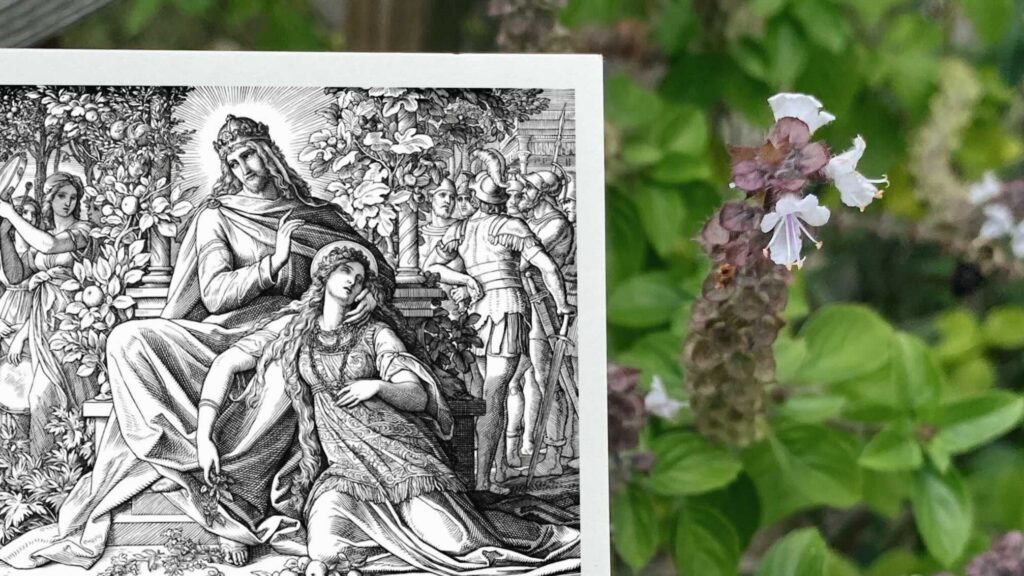
“The Christological dogma … is a product of the spirit of Hellenism on the soil of the Gospel.” Or so claimed Adolf von Harnack.
It’s a view that has been held by thinkers other than Harnack. And it’s a view that one scholar spent a lifetime refuting. That scholar is Oskar Skarsaune, professor of church history in Oslo, Norway.
Skarsaune’s powerful case may be found in his 2008 magnum opus entitled In the Shadow of the Temple. In this critically acclaimed book he examines, among other topics, the Christology of the Nicene Creed. And after presenting his mass of evidence, he states categorically, “It goes without saying that a Christology like this could only arise in a Jewish setting among disciples steeped in the Old Testament and Jewish categories of thought.”
How can this be? “Let us begin with an observation on the typical Hellenistic reaction to the dogma of the incarnate Son of God,” he writes. “The available evidence shows … that most Hellenists reacted with disgust and contempt at the very idea of a divine incarnation… And that means that the Christian doctrine of the incarnation can hardly be the product of a milieu—the Hellenistic—that regarded this doctrine as a philosophical and theological monstrosity.”
On the contrary, Skarsaune shows that the only thought-pattern for orthodox Christology is found in the Old Testament. Specifically, the Wisdom tradition of Proverbs 8. “If we take a new look at the creed of Nicaea,” he writes, “we observe that … the creed is a simple paraphrase of biblical sayings about Jesus as Wisdom. When … the Nicene Creed says that the Son is born from the Father ‘before the ages,’ that is an encapsulated version of Proverbs 8:22–31.”
Charlotte Mason knew her Bible and she knew this truth. In today’s poem she did not look to the spirit of Hellenism to explain the God who was man. Rather, she elaborated the Hebrew poetry of Proverbs 8. And she mentioned only one other verse: 1 Corinthians 1:24; “unto the Greeks foolishness; But unto them which are called, … Christ the power of God, and the wisdom of God.”
Read or listen to the poem at the link that unites Creed and Scripture, Old Testament and New. Find it here.
@artmiddlekauff
🖼️: Solomon and Lady Wisdom by Julius Schnorr von Carolsfeld