Reflections on The Saviour of the World Volume 1
Book I Poem I
We recently spent the season of Christmas celebrating the birth of Jesus Christ. But the Gospel of John opens with a prologue that reminds us that the Son of God did not come into existence at his incarnation. Rather, He was in existence before the beginning of time. Today we begin a new journey through Charlotte Mason’s seven volumes of poems entitled “The Saviour of the World.” In the opening poem of her series, she praises the One who was with God from all time: the Word who enlightens “every man who comes into the world.” May your heart be enlightened as you praise Him too. Read or hear it here.
@artmiddlekauff
📷: @aolander
Book I Poem II
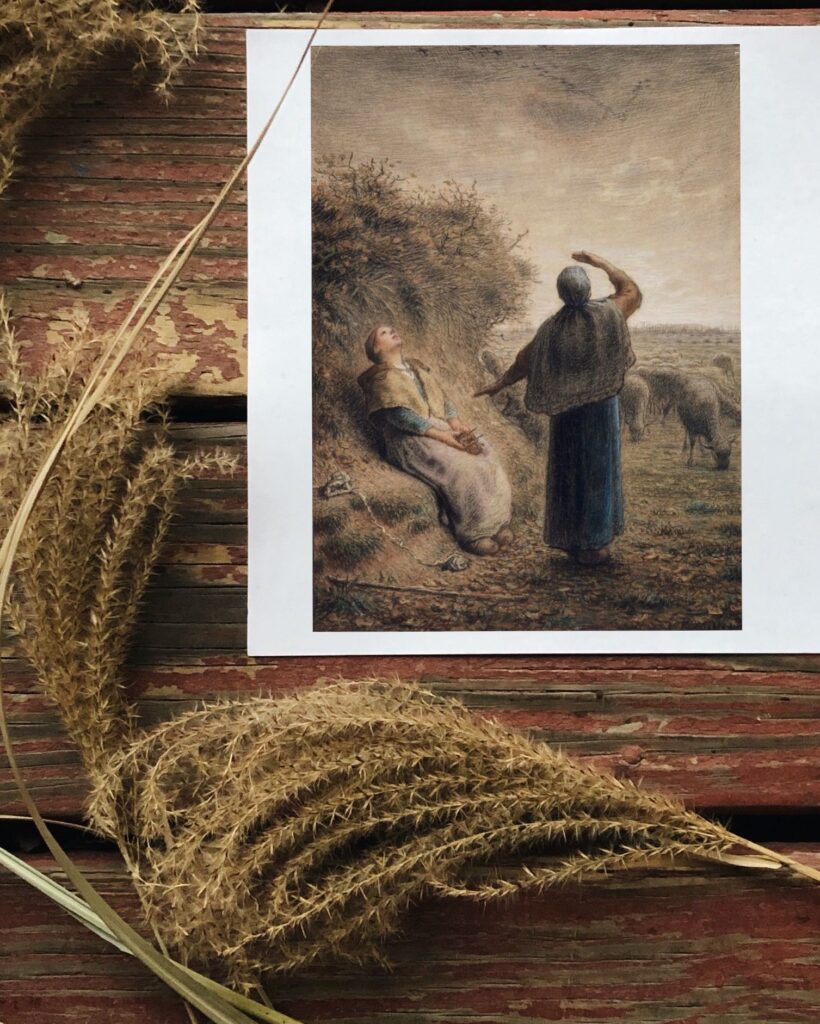
In 1943, Dietrich Bonhoeffer was held captive in Tegel military prison. On November 21 he wrote a letter to his student Eberhard Bethge. “Today is Remembrance Sunday. … Then comes Advent, a time during which we share so many beautiful memories.” He went on: “By the way, a prison cell like this is a good analogy for Advent; one waits, hopes, does this or that—ultimately negligible things—the door is locked and can only be opened from the outside.”
Two millennia before the world was held in a prison cell. It was “a period of such inconceivable oppression,” writes Charlotte Mason, that it “naturally raised in men’s minds a certainty of deliverance… Predictions were rife, omens were in the air, men were aware of an expectation which they could not define.”
The door was locked and it could only be opened from outside. The world watched and waited. Enter the mystery today with Charlotte Mason’s poem of expectation. Find it here.
@artmiddlekauff
Book I Poem III
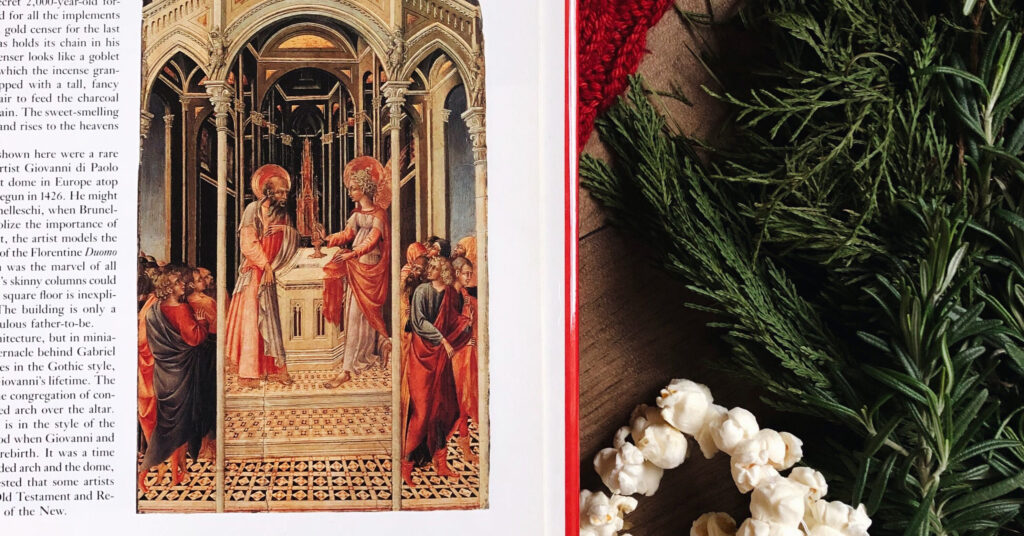
“The rise of Christianity was preceded by a long period of four hundred years, during which prophecy was silent,” writes J. R. Dummelow. “The advent of Christ was heralded by a great revival of prophecy, and by the restoration of direct communications from God to man through supernatural agency, as in the cases of Zacharias, Joseph, Mary, Elisabeth, Simeon, Anna, the shepherds, the Magi, and, in particular, John the Baptist, who, though he left no written prophecies, and worked no miracle, was declared by our Lord to be the greatest of the prophets, yea, and more than a prophet.”
Charlotte Mason highlighted the angelic encounter with Zechariah. She comments that “Zacharias met with grave rebuke, and a punishment was inflicted upon him, a punishment which gave pause to his thoughts and afforded him, we may believe, a time for blesséd contemplation.”
Let the story of Zechariah touch your heart through Charlotte Mason’s poetry. May it lead you to your own “time for blesséd contemplation.” Find it here.
@artmiddlekauf
Book I Poem IV
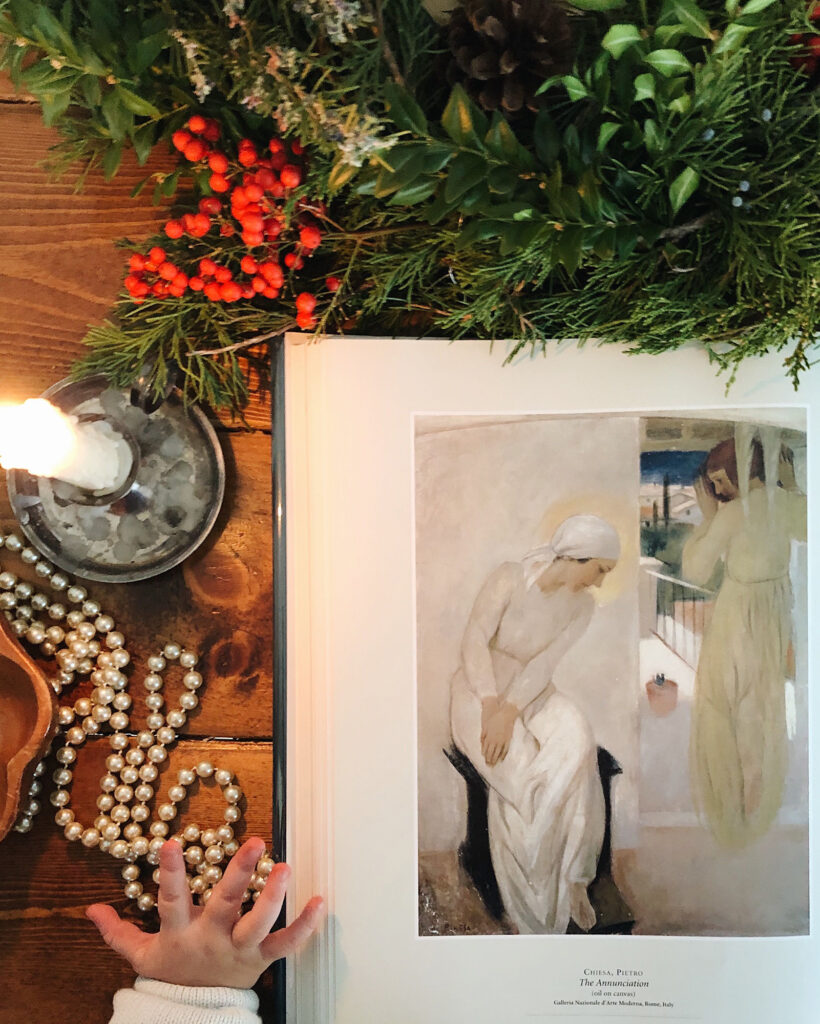
“Dare we venture to let our feeble thought attempt to search matters which the angels desired to look into?” So asks Charlotte Mason, before envisioning a scene in the throne room of heaven. “Perhaps we may, because it is the purpose of our God to reveal Himself to men, and it is only to open minds and willing hearts that such revelation is possible.”
A medieval mystic also envisioned a scene, in which God speaks to humanity: “I want you to realize, my children, that by Adam’s sinful disobedience the road was so broken up that no one could reach everlasting life… This sin sprouted thorns and troublesome vexations. My creatures found rebellion within themselves, for as soon as they rebelled against me, they became rebels against themselves… With sin there came at once the flood of a stormy river that beat against them constantly with its waves, bringing weariness and troubles from themselves as well as from the devil and the world. You were all drowning, because not one of you, for all your righteousness, could reach eternal life.”
All humanity was drowning, but voices were crying out for help. One tireless voice in particular “wearieth heaven with importunity.” In Mason’s vision, this voice is heard in the heavenly council. God and the angels discourse, and the result is the greatest announcement ever made. Read or hear the poem here.
@artmiddlekauff
Book I Poem V
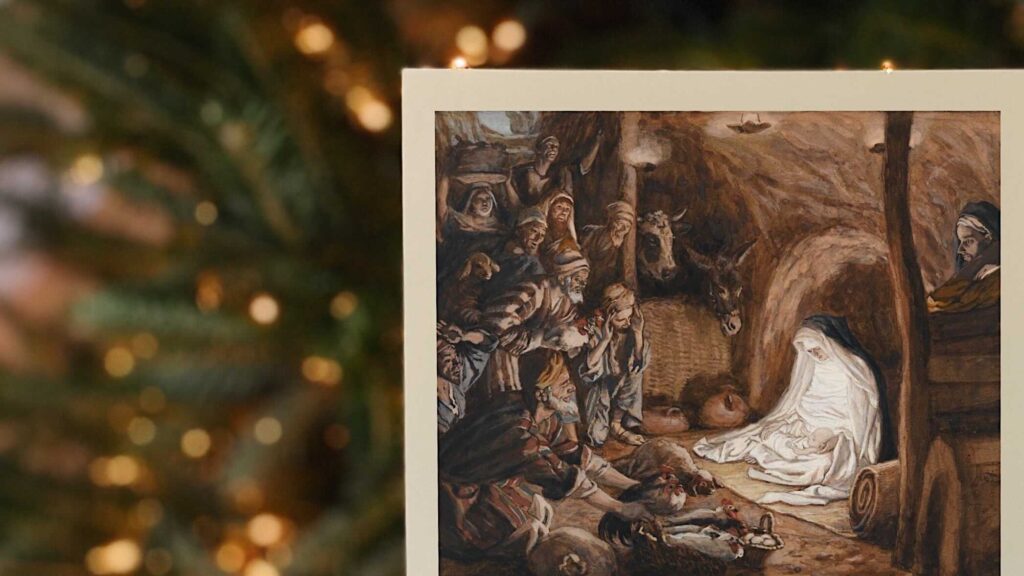
“God is the God of all flesh and does not leave Himself without a witness anywhere,” writes Charlotte Mason. These words in Ourselves Book II find dramatic expression in her fifth poem in The Saviour of the World. As we read the poem, we find familiar prophets — Isaiah, Haggai, Daniel, and Micah. But then we also find some very surprising ones. Read or hear Charlotte Mason’s thought-provoking poem here.
@artmiddlekauff
Book I Poem VI
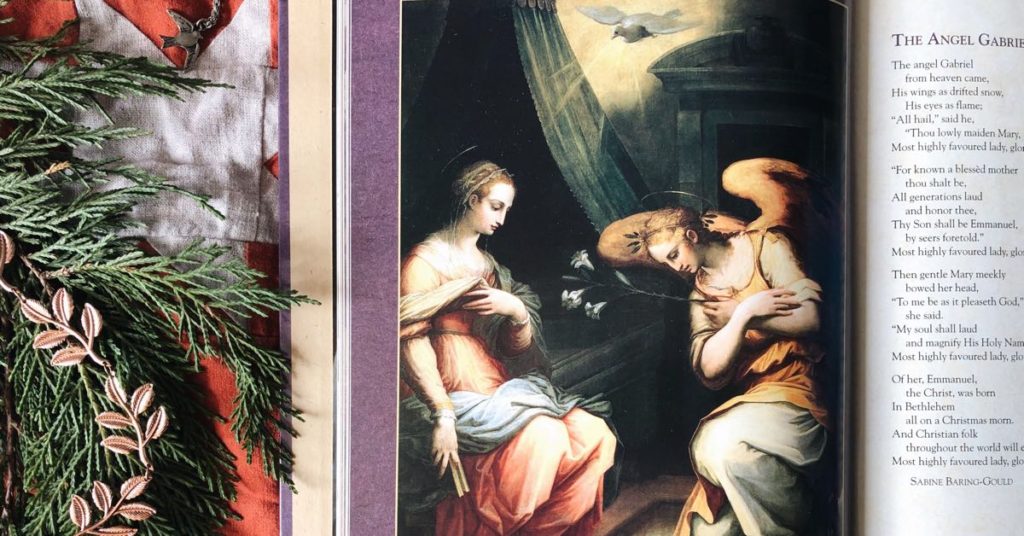
After delivering his message to Zechariah, “the angel Gabriel went forth once more on that high errand: came to Nazareth.” We call that second errand “The Annunciation,” and that is the name Charlotte Mason chose for her beautiful poetic reflection on the angelic visit.
Millennia before, “Adam and Eve, with their ‘no’ to God’s will, had closed [the world’s] door” to God. But “Mary said ‘yes’ to this divine will; she placed herself within this will, placed her whole life with a great ‘yes’ within God’s will, and thus opened the world’s door to God” (Benedict XVI).
What happens when a child of God says, “Be it to me according to thy word”? Charlotte Mason’s poetry invites you to consider the mystery. Find it here.
@artmiddlekauff
Book I Poem VII
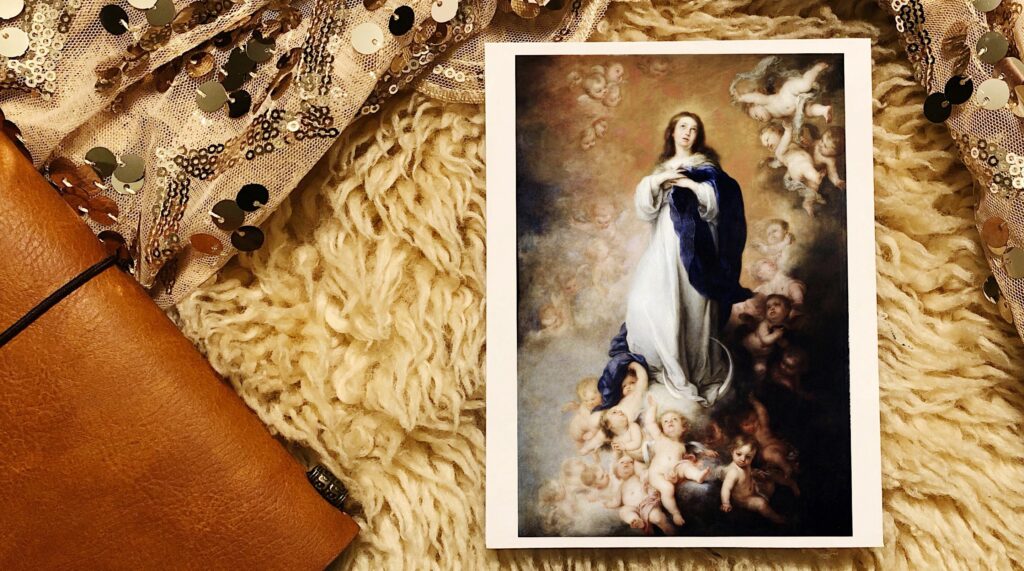
Year after year as a young woman and through the rest of her life, Charlotte Mason would hear these words: “Almighty God, who hast given us thy only begotten Son, to take our nature upon him, and … to be born of a pure Virgin…” This prayer, first arranged by Thomas Cranmer for the 1549 Book of Common Prayer, blesses the Anglican liturgy to this day. But what do these words mean, “born of a pure Virgin”?
Some notions are difficult to explore or express in prose; it seems that the highest truths often reach us through art, whether poem, painting, or performance. One image in particular touched Mason deeply when she was not yet thirty years old. Art brought forth art and she penned verses to express the ideas forming in her heart.
When it became time to explore the Advent mystery in her Saviour of the World volumes, Mason lingered after the Annunciation. She reached back to that poem from her earlier days, that poem written “on a picture.” But it was not until two years after the poem was published that she gave another glimpse into how this poem was to be understood. Writing in “The Nativity” in the 1910 Parents’ Review, she explained: “Born of a pure Virgin.—Perhaps here, too, the painters are the best helpers to our meditative thought…”
Born of a pure Virgin. Perhaps it’s an idea that cannot be reduced to catechism or creed. It leaves the heart hungry for more. At least it did for Charlotte Mason. And so from the liturgy to the canvas, Mason contemplated the great mystery of the woman whose womb the Son of God would take for a home.
Find Charlotte Mason’s poem here.
@artmiddlekauff
Book I Poem VIII
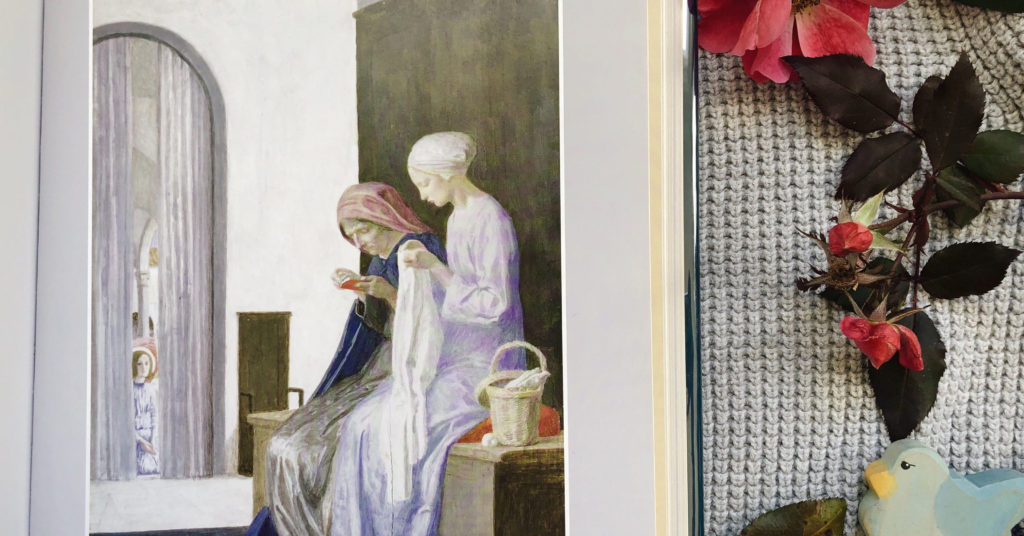
In Luke 1:39-55 we find the sacred account of the Visitation. Mary found herself in miraculous circumstances the world could never understand. Where could she go? She sought another woman who had also experienced the supernatural power of God. In one of my favorite poems by Charlotte Mason, the emotions of Mary are sketched with a reverent and sober hand. What follows is the Magnificat, a rare occurrence of poetry in the Greek New Testament, transformed here into English poetry with meter and rhyme. In words like music, “His secret—now, He maketh known.” Find it here.
@artmiddlekauff
Book I Poem IX
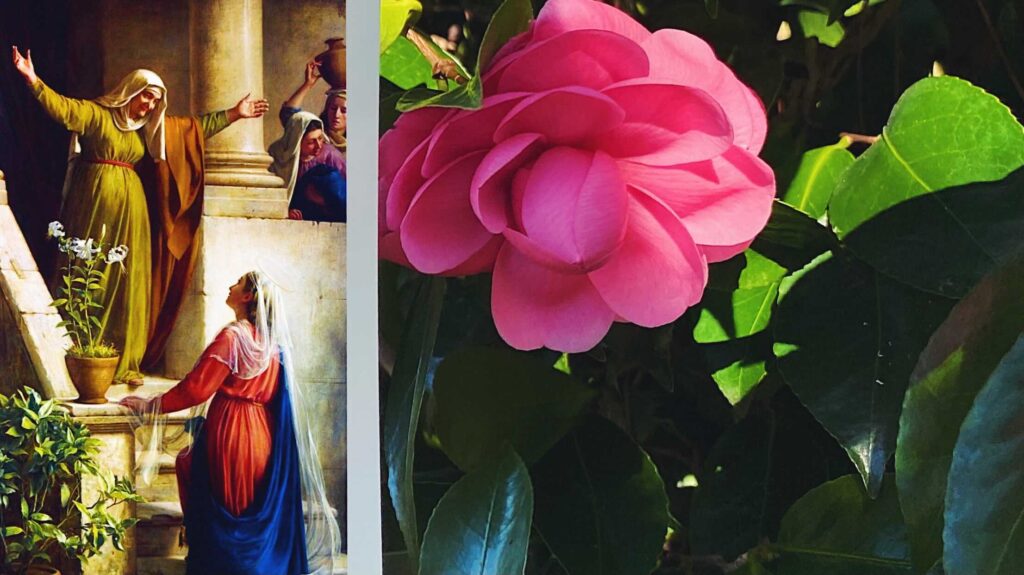
In 1908, Charlotte Mason lamented the state of Bible study in her day: “We have analysed until the mind turns in weariness from the broken fragments; we have criticised until there remains no new standpoint for the critic.” If that was the situation then, how is it now, a century later? Richard John Neuhaus recently lamented “the slide of biblical scholarship into hyper-specialized critical studies of ancient texts in remote historical context.” It seems that the broken fragments just keep getting smaller.
Mason aimed to reverse that trend by writing a “synthetic study of the life and teaching of Christ.” She believed that “if we could only get a whole conception of Christ’s life among men, and of the philosophic method of His teaching, His own word should be fulfilled, and the Son of Man, lifted up, would draw all men unto Himself.”
In her study, she assumed by faith that the entirety of Scripture — Old and New Testament — provide a unified witness to coherent theological truth. Therefore in her meditation on any particular passage of Scripture, she saw and contemplated the links from the part to the whole.
Today’s poem is a wonderful example of this Christ-centered contemplation. In studying Mary’s three-month visit to Elizabeth, the critic would have us analyze the syntax and grammar of 13 Greek words. Mason would have us take a tour of the Psalms and the Prophets. Read the poem here.
@artmiddlekauff
Book I Poem X
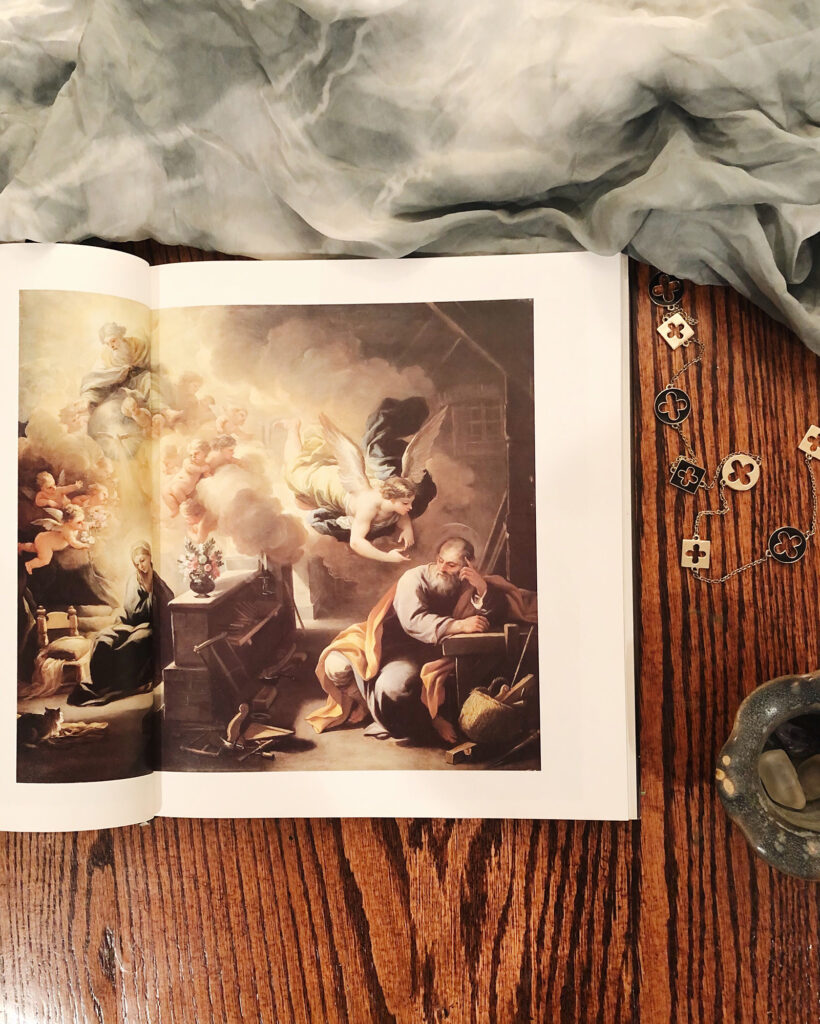
On page 166 of Charlotte Mason’s monumental Towards a Philosophy of Education, we are greeted with this quotation:
We are at present in a phase of religious thought, Christian and pseudo-Christian, when a synthetic study of the life and teaching of Christ may well be of use. We have analysed until the mind turns in weariness from the broken fragments; we have criticised until there remains no new standpoint for the critic; but if we could only get a whole conception of Christ’s life among men and of the philosophic method of His teaching, His own words should be fulfilled and the Son of Man lifted up, would draw all men unto Himself.
Here Mason is quoting from the Preface of her own The Saviour of the World. In those poetry volumes she truly attempted to portray “a whole conception of Christ’s life.” Nowhere is that better exemplified than in today’s poem. What does the heartwarming tale of the Nativity have to do with the heartbreaking account of the Cross? To the man who analyzes only the fragments, perhaps nothing. But to the man who surveys with the eye of synthesis, he sees that the story is one.
I invite you to contemplate the poem that contemplates Christ’s entrance into the world with a view towards His departure. Find it here.
@artmiddlekauff
Book I Poem XI
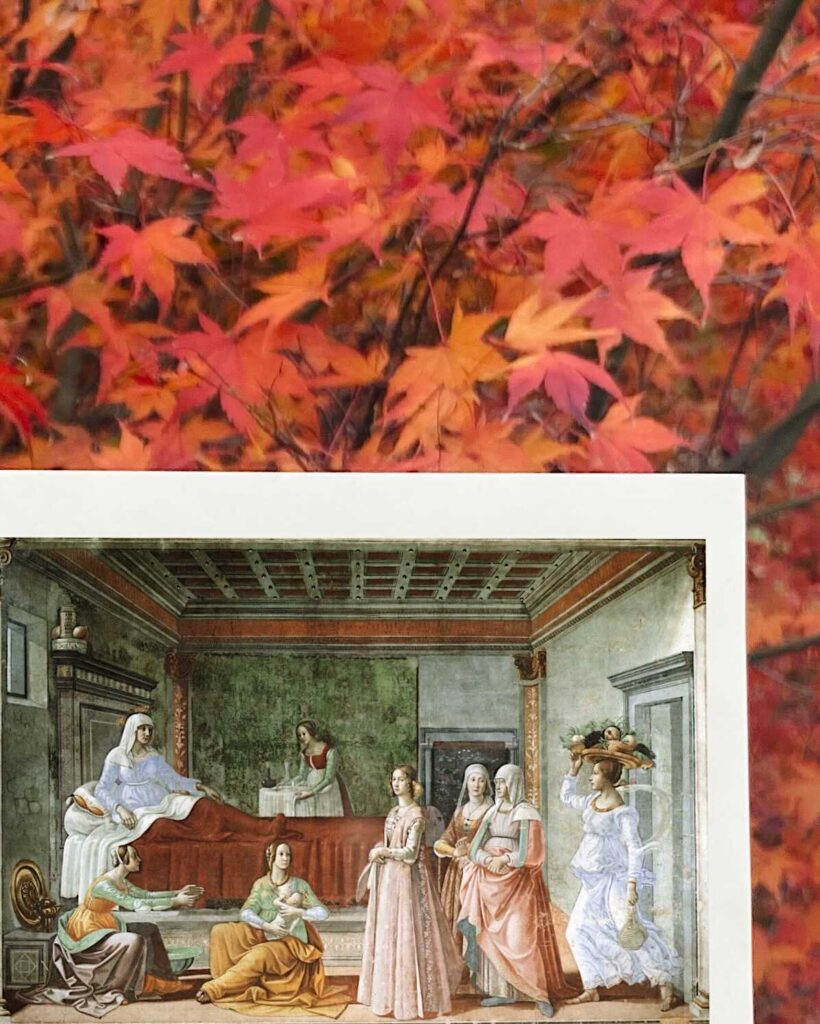
The Gospel of Luke includes three songs. One is the prophecy of Zechariah, the father of John the Baptist, sung at the time of his son’s birth. When this song was translated from Greek to Latin for the Vulgate, the first line read, “Benedictus Dominus Deus Israel” (“Blessed be the Lord God of Israel”). Because of this, the hymn (Luke 1:68–79) has been known as the Benedictus.
According to J.H. Blunt, “This prophetic hymn of Zacharias has been used as a responsory canticle to the Gospel Lessons from very ancient times, being spoken of as so used by Amalarius [a.d. 820]; and perhaps by St. Benedict, nearly three centuries earlier, since he speaks of a Canticum de Evangelio occurring here in Mattins.”
Blunt goes on: “The position of this Canticle makes its ritual meaning self-evident. It is a thanksgiving to Almighty God for His mercy as exhibited towards mankind in the Incarnation of our Lord, whereof the Gospel speaks, and in the foundation of the Church in His blood, as recorded in the Acts of the Holy Apostles. It is the last prophecy of the Old Dispensation, and the first of the New, and furnishes a kind of key to the Evangelical interpretation of all prophecies under the one by which they are connected with the other.”
It is poetry indeed, but its poetic character is not very evident in our English translations. Charlotte Mason recast this ancient liturgical song, this connection between testaments old and new, with the meter and rhyme that we associate with traditional English verse. Mason’s poem has found new life in a recording by Antonella Greco. Take a moment to listen here.
@artmiddlekauff