Reflections on The Saviour of the World Volume 2
Book I Poem I
From 1960 to 2015, only one biography of Charlotte Mason was available, the classic by Essex Cholmondeley. Reprinted by two different publishers, it remains a favorite today.
In 2015, however, a second biography was introduced, this one by Margaret Coombs. Packed with facts and interpretations, it challenged much of what we’d read before.
For example, on p. 216 we read, “Miss Mason sensibly refuted belief in original sin by stating that children are ‘not born either good or bad but with possibilities for good or evil’.”
Did she really? Many follow Coombs on this line of interpretation, but I wonder if those who hold to this view have ever read Charlotte Mason’s poetry.
Consider today’s poem, “Christ heals the Nobleman’s Son,” where we find these words:
The Saviour of the World, in casual way,
Drops words of our Salvation, links of chain
Let down to draw us from that nether hell
Which is but our own self to itself left
Such statements are incomprehensible without the framework of the Articles of Religion to which Charlotte Mason subscribed. Article IX states that “man is very far gone from original righteousness, and is of his own nature inclined to evil.” That is why, according to Miss Mason, “Nature, left to herself, produces a waste” (vol. 5, p. 24).
Mason’s poems in The Saviour of the World are valuable resources for spiritual reflection and development. But they also provide us with the deepest insight into Mason’s theology. They help us move past appearances and get to truth. Read or hear the poem here.
@artmiddlekauff
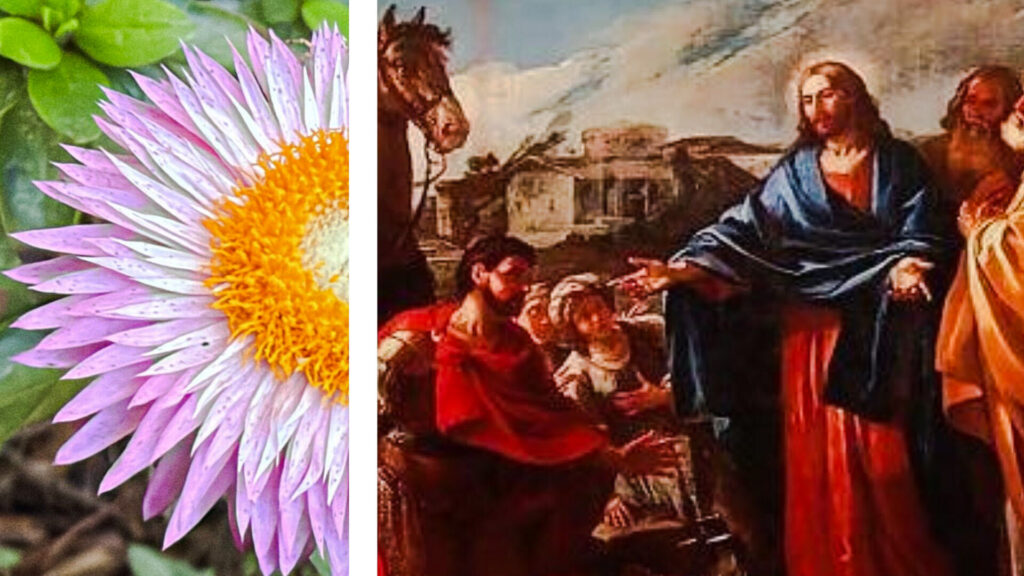
🖼️: Healing the Royal Official’s Son by Joseph-Marie Vien
Book I Poem II
In 2010, Professor Stephanie Spencer of the University of Winchester wrote a study of Charlotte Mason’s philosophy of education entitled “Knowledge as the Necessary Food of the Mind.” In it she wrote:
In Mason’s writing, the frequent use of the metaphor of food and feeding for intellectual as well as spiritual appetites is notable. This metaphor draws on both the expected female role of nurturer, and biblical references to the role of God in feeding spiritual hunger.
Where did Miss Mason get such an idea? In her poetical reflection on Luke 4:14–30, she gives us a hint:
Not eye
Fed on the pride of life, nor greedy mouth,
Nor grasping hands all covetous of good:—
The ear shall carry healing for our hurt
The ear carries healing because by it we receive the word. Read or hear about how “Hunger, agape, was filled with words of life” in the poem here.
@artmiddlekauff
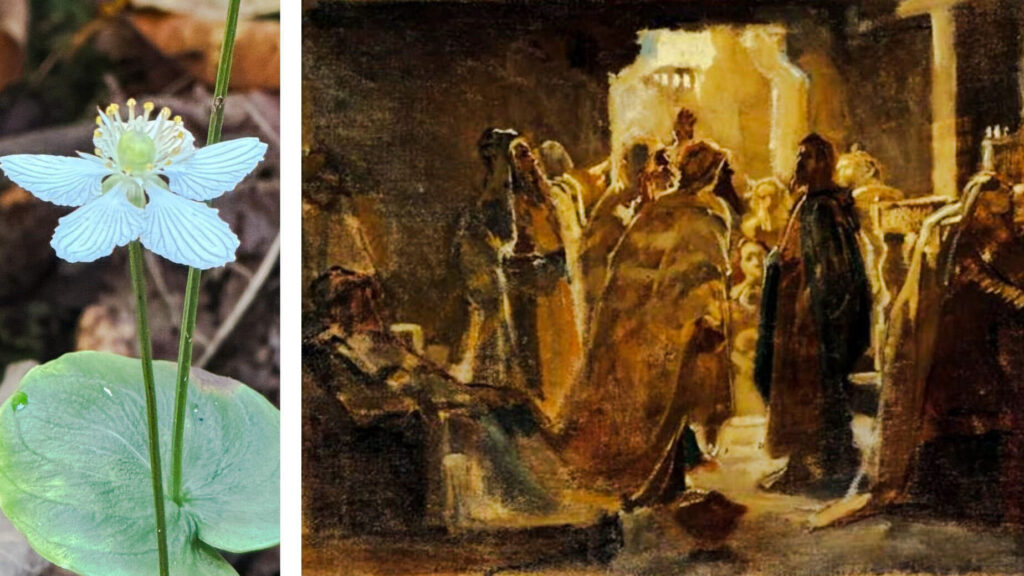
🖼️: “Christ in the Synagogue” by Nikolai Ge