The CMP Review — Week of March 23
March 23, 2026
“Parents should trust themselves more. Everything is not done by restless endeavour. The mere blessed fact of the parental relationship and of that authority which belongs to it, by right and by nature, acts upon the children as do sunshine and shower on a seed in good soil.” (Vol. 3, p. 29)@tessakeath
March 24, 2026
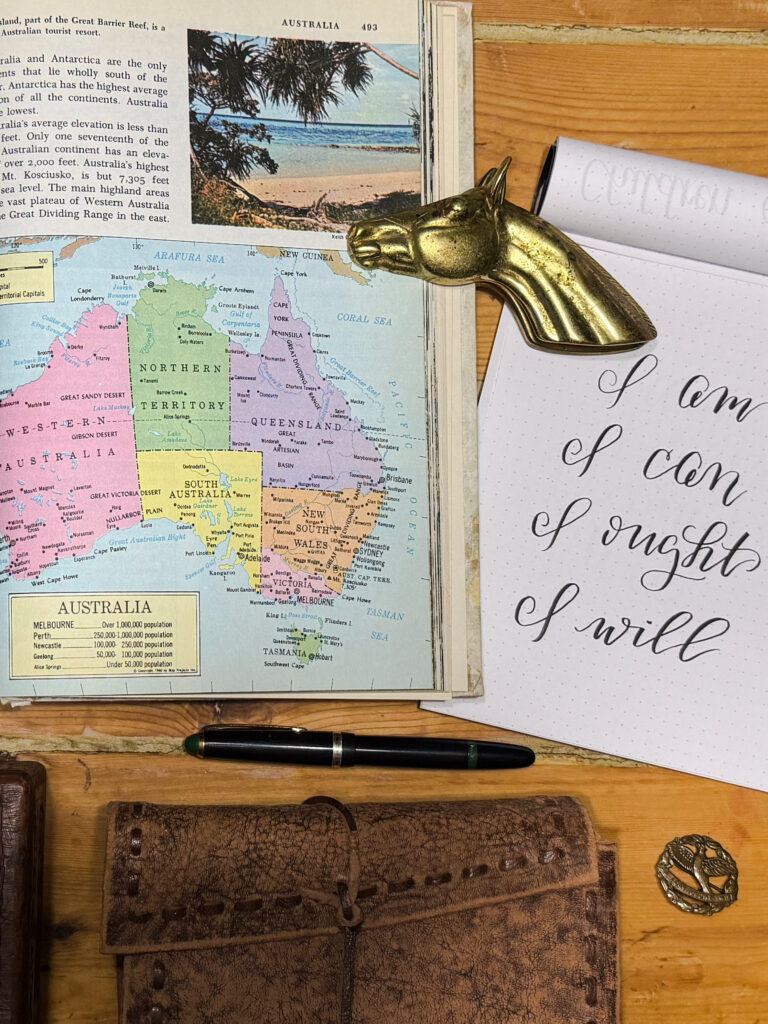
“I am an enthusiast for the P.N.E.U. I am an enthusiast because I believe that we of the P.N.E.U. really have the one thing to offer which the whole world needs—an absolutely effective system of education covering the whole life of the child—the whole life of man.”
These words were uttered not by an educationalist or a professional teacher but by an ordinary mother. A resident of Melbourne, Australia in the early 1900s, she chanced upon some copies of The Parents’ Review, and the ideas she found in the pages of that journal would change her life.
Sixteen years later she spoke about the impact of these ideas on her family. Her paper was published in the 1921 Parents’ Review, with the thought that people would be interested to know that it was written by an Australian. Today we bring her inspiring paper back to life. Listen to the expressive reading by Lisa Joss of Australia and feel the inspiration yourself. Find it here.
@artmiddlekauff
March 25, 2026
“…only one vase of flowers was allowed in each bedroom. This seemed unreasonable at first, for the countryside was full of flowers; surely everyone was free to pick them. Gradually the value of space became apparent and we realized the telling effect of a few flowers or twigs rightly placed in a room.”
Essex Cholmondeley, The Story of Charlotte Mason
@rbaburina
March 26, 2026
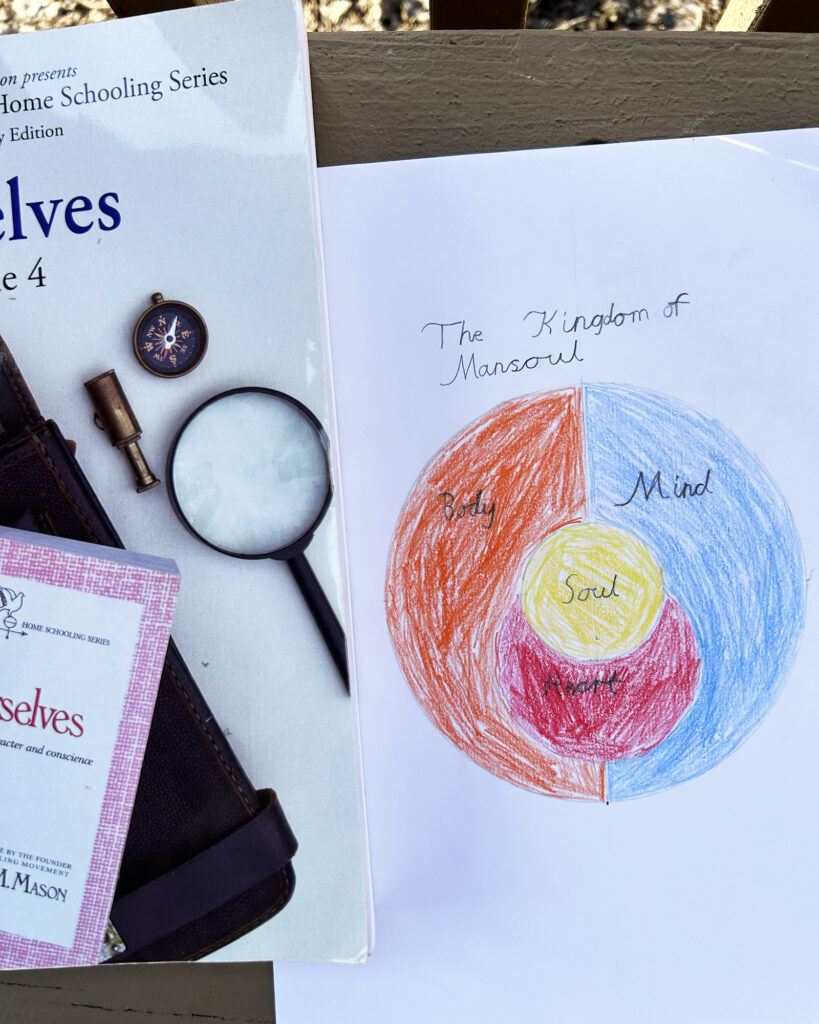
Something about Charlotte Mason’s Ourselves invites a pictorial response. I have seen many drawings of Mansoul, each emphasizing some different aspect of Mason’s powerful allegory. Here is one depiction, expressing this idea:
These various Ministers we may conceive as sitting each in the House with the ordering of whose affairs he is concerned. These Houses are, the House of Body, the House of Mind, the House of Heart, and the House of Soul.
You must not understand that all these are different parts of a person; but that they are different powers which every person has, and which every person must exercise, in order to make the most of that great inheritance which he is born to as a human being. (Ourselves, Book I, p. 10)
Have you our your children drawn illustrations inspired by Ourselves? What are your favorite aspects of those pictures?
@artmiddlekauff
March 27, 2026
In March
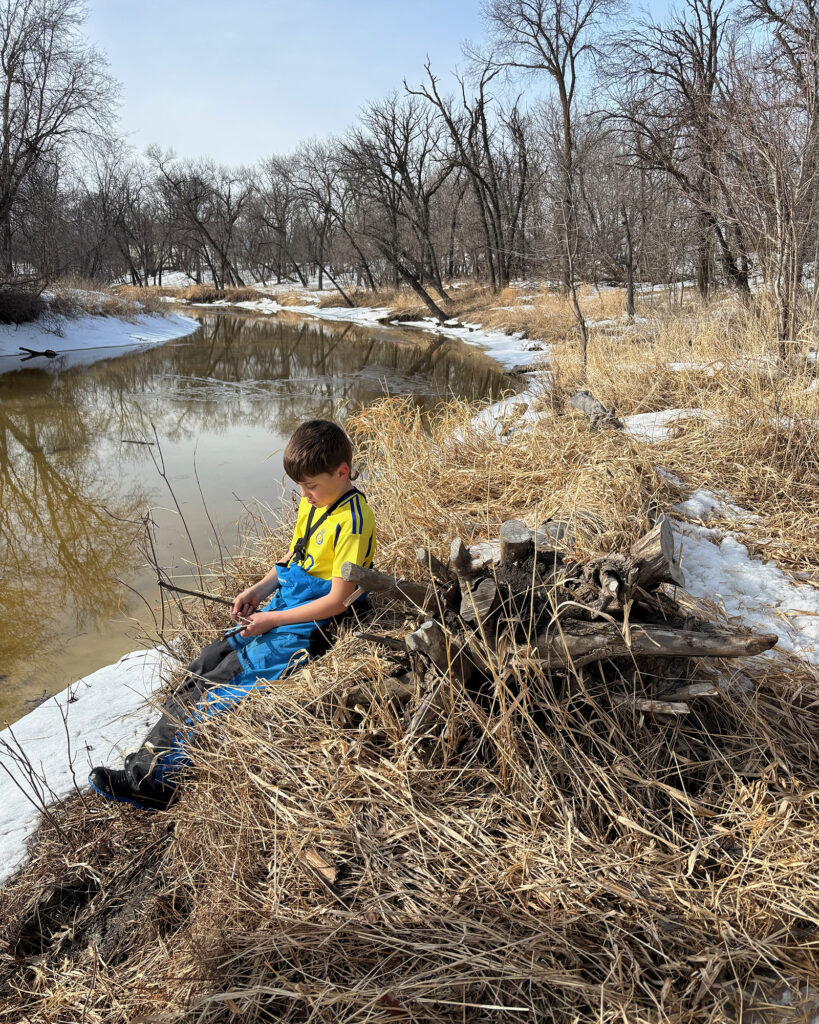
The sun falls warm: the southern winds awake:The air seethes upward with a steamy shiver:Each dip of the road is now a crystal lake,And every rut a little dancing river.Through great soft clouds that sunder overheadThe deep sky breaks as pearly blue as summer:Out of a cleft beside the river’s bedFlaps the black crow, the first demure newcomer.The last seared drifts are eating fast awayWith glassy tinkle into glittering laces:Dogs lie asleep, and little children playWith tops and marbles in the sunbare places;And I that stroll with many a thoughtful pauseAlmost forget that winter ever was.
Archibald Lampman (1899, Ottawa, Canada)
@antonella.f.greco
March 28, 2026
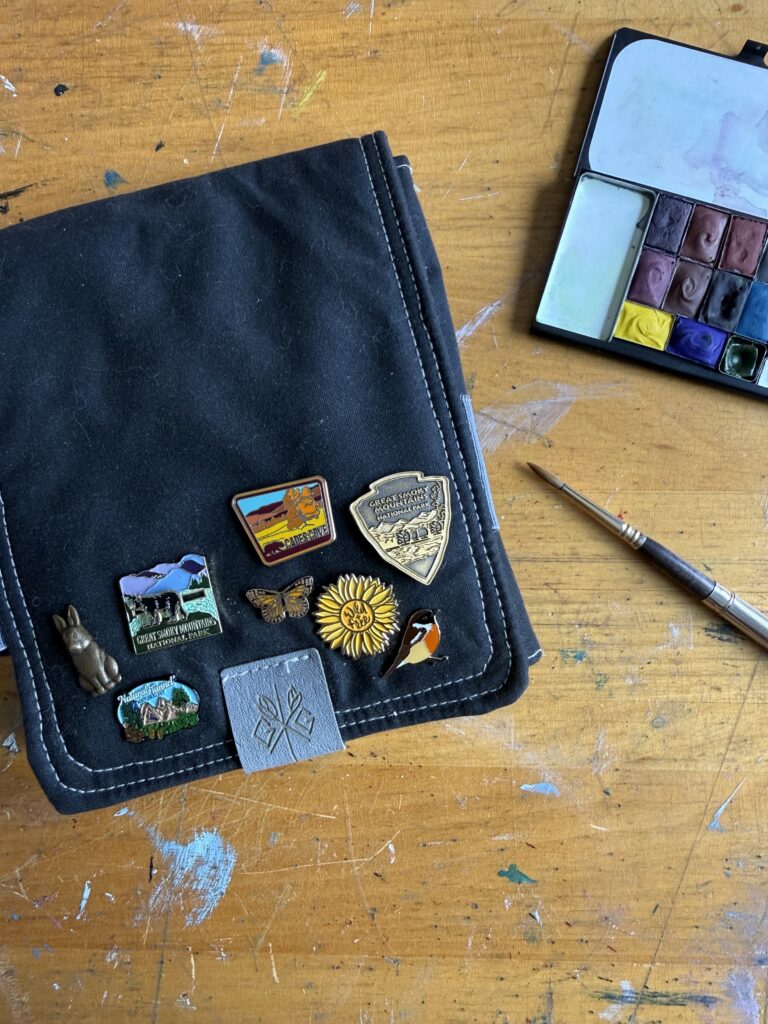
The bird pin on the lower right was a gift from a dear friend, placed on my watercolor field kit a few years ago. Since then, my collection has grown—each pin carrying its own memories and stories.
@rbaburina
March 29, 2026
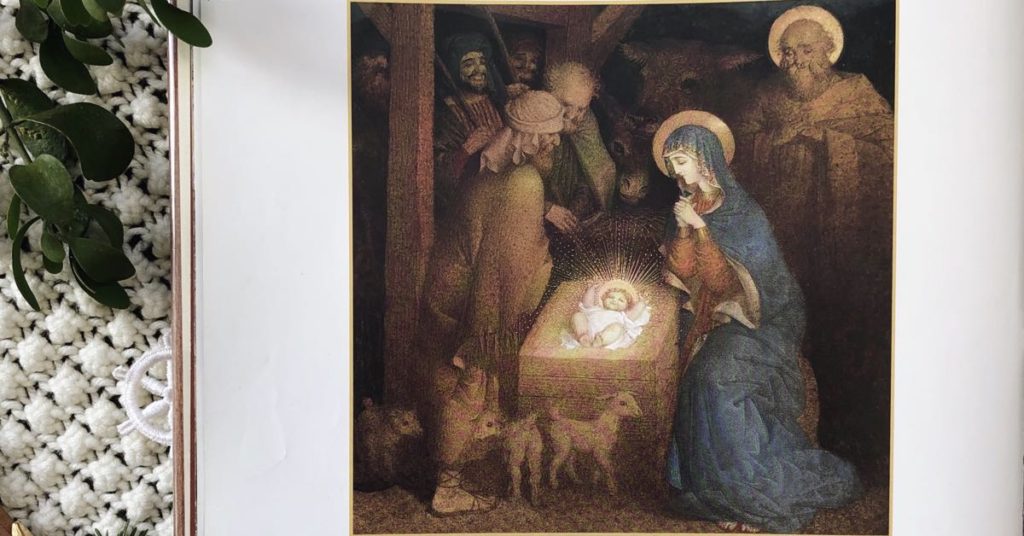
Whenever I visit the National Gallery of Art in Washington, DC, I almost always take a moment to look again at a special painting by Duccio di Buoninsegna (c. 1260–1319). One of the great painters of the Middle Ages, he was also one of the greatest painters of Siena.
The painting I seek out is The Nativity. Charlotte Mason describes the piece this way: “We know Duccio’s curiously primitive and wonderfully revealing portrayal of the rude cattle-shed with the angels crowding to look in, because, there, beneath, is the Saviour of the World with ox and ass almost touching Him as they lift their heads into the manger; and the blessèd Virgin there lies on rude couch of straw beside her child.”
Mason chose this painting to accompany her poem entitled “The Nativity.” It’s a beautiful poem which reminds me of the words of another medieval Sienese: “So that I, then, with my littleness, would be able to see your greatness, you made yourself a little one, wrapping up the greatness of your Godhead in the littleness of our humanity.”
Read or hear Charlotte Mason’s poem that explores this mystery. Find it here.
@artmiddlekauff