The CMP Review — Week of May 25
May 25, 2026
“Let us keep adverse winds from the saplings in the nursery until such time as they can be planted out to become noble and fruitful trees in the orchard or the forest. Let us surround them with some little halo of the romance that was ours once. Let us give them that insight which, once acquired as children, will last them till they are old and grey, by fencing them in unconsciously with the poetic fairy tales which have been woven through countless centuries.” (“Fairy Tales”, S. Douglas Wilson, PR13)@tessakeath
May 26, 2026
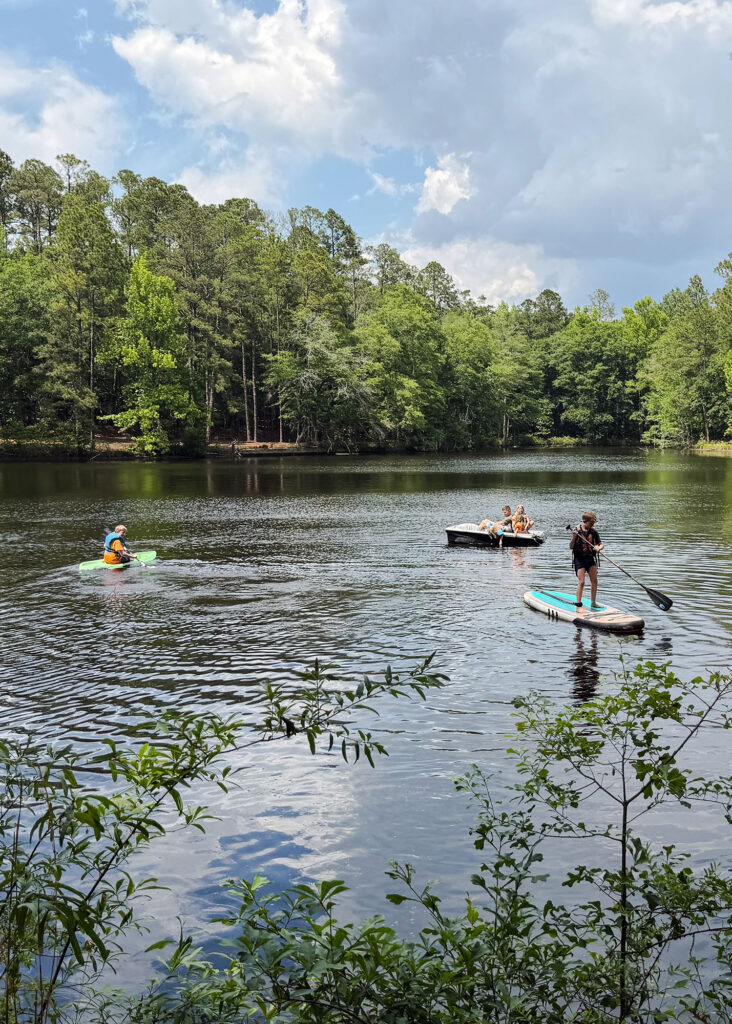
As summer approaches and many families and schools are wrapping up their spring terms, the perennial question arises: what does it mean to spend the summer “the Charlotte Mason way”? Which elements of her philosophy of education, if any, apply to the weeks and months of the holidays?
This was the question contemplated by a school headmistress in 1917. A dedicated student of Miss Mason’s volumes, she asked herself how “atmosphere, discipline, and life” apply to the summer months. Her carefully thought-out paper rings true and offers food for thought for families and educators of our day. First published in the 1917 Parents’ Review, we revive it for you today. Find it here.
@artmiddlekauff
May 27, 2026
Emeline Steinthal first introduced the watercolor technique of “brush drawing” to Charlotte Mason. Simple enough for the youngest learner yet powerful enough to nurture an artist’s hand and eye, this style of nature journaling was shaped by a Japanese form of ink painting called sumi-e.
The two share both common ground and meaningful differences. In brush drawing we use watercolor in a range of hues, while sumi-e traditionally works only in gradations of black, ground from an ink stick on an inkstone with water. We also paint from living specimens, each one unique, rather than from a more stylized interpretation of a plant or flower.
The similarities run deeper than you might expect. Brush drawing borrows a sumi-e technique called Mokkotsu, meaning “boneless”—so named because strokes are made without outlines. It also adopts the practice of holding the brush upright and perpendicular to the paper in order to move through each stroke with fluid, deliberate motions.
Perhaps sumi-e’s greatest gift to brush drawing is this: that a few simple strokes, combined in endless variation, can capture the essence of a plant or flower.
Follow along for more brush drawing inspiration and nature journaling tips.
@rbaburina
May 28, 2026
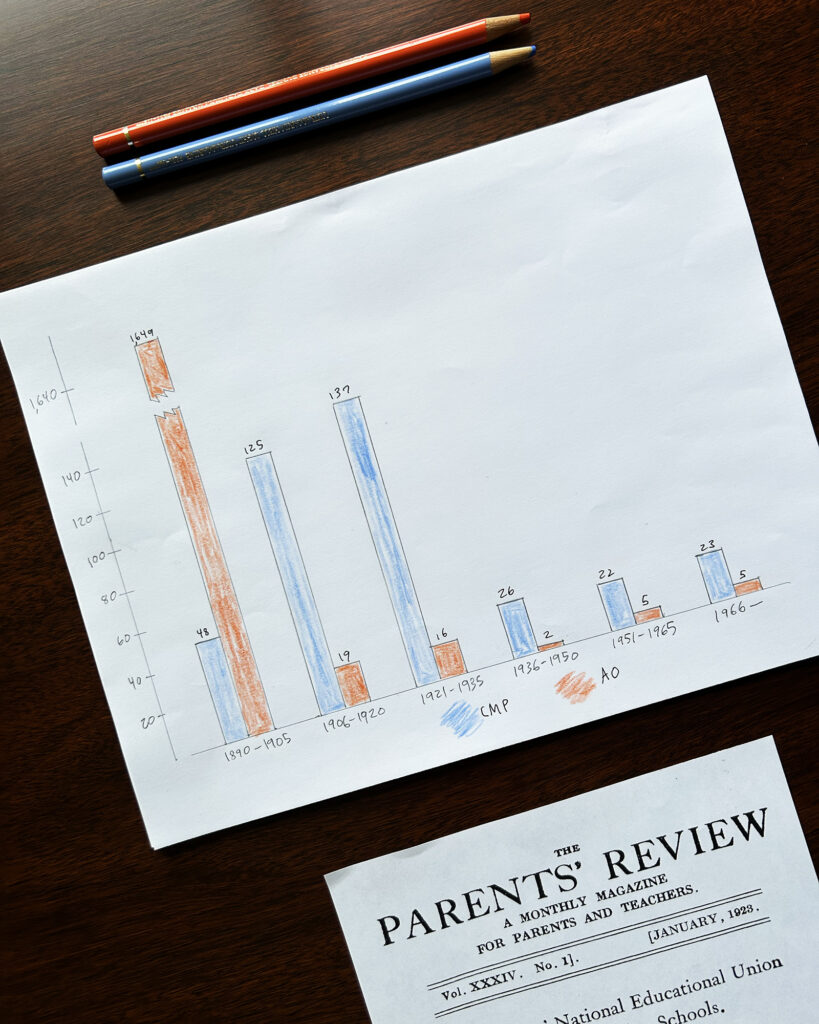
Where should you go if you’re looking for a Parents’ Review article? The answer will largely depend on when the article was first published. AmblesideOnline hosts a vast collection of transcribed articles, 97% of which are from the first fifteen years of the Parents’ Review (1890 to 1905). Most of these articles may also be found in facsimile form in the Charlotte Mason Digital Collection on archive.org. Both are wonderful resources.
But the Parents’ Review continued to thrive for many years after 1905. The journal continued under Charlotte Mason’s leadership until 1923, then under Elsie Kitching until 1949, and then under Elizabeth and Joan Molyneux. Where can one find articles from these many important years in the history of Charlotte Mason and the PNEU?
One of the aims of the Charlotte Mason Poetry team is to track down Parents’ Review articles from after 1905, and then to transcribe and record them for you. This is an all-volunteer project where we share the results of our work for free. Thanks to the hard work of many homeschooling mothers and fathers we now have hundreds of articles online from these important years.
It’s clear that Charlotte Mason valued the Parents’ Review from 1890 until her passing. She often reprinted older articles and included later articles in her volumes. She also believed the journal would have a bright future even after she moved on to her eternal home. We can all benefit from reading or hearing Parents’ Review articles from all the years of its history.
So are you looking for a Parents’ Review article? Most likely your first question should be “when,” and that should help answer the “where.”
@artmiddlekauff
May 29, 2026
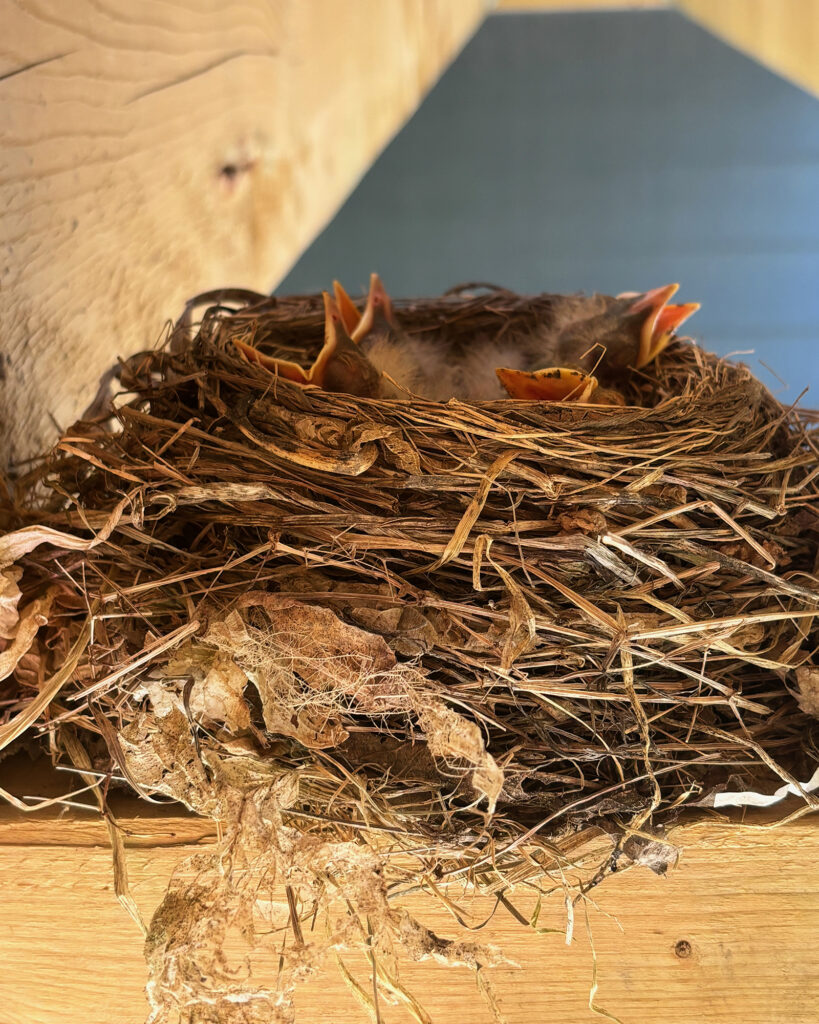
All four baby robins hatched!
@antonella.f.greco
May 30, 2026
This pileated woodpecker didn’t mind that I stood nearby observing him for ten minutes. It was not at all skittish.
If they weren’t so funny looking, their size really would make them look quite formidable!
@antonella.f.greco
May 31, 2026
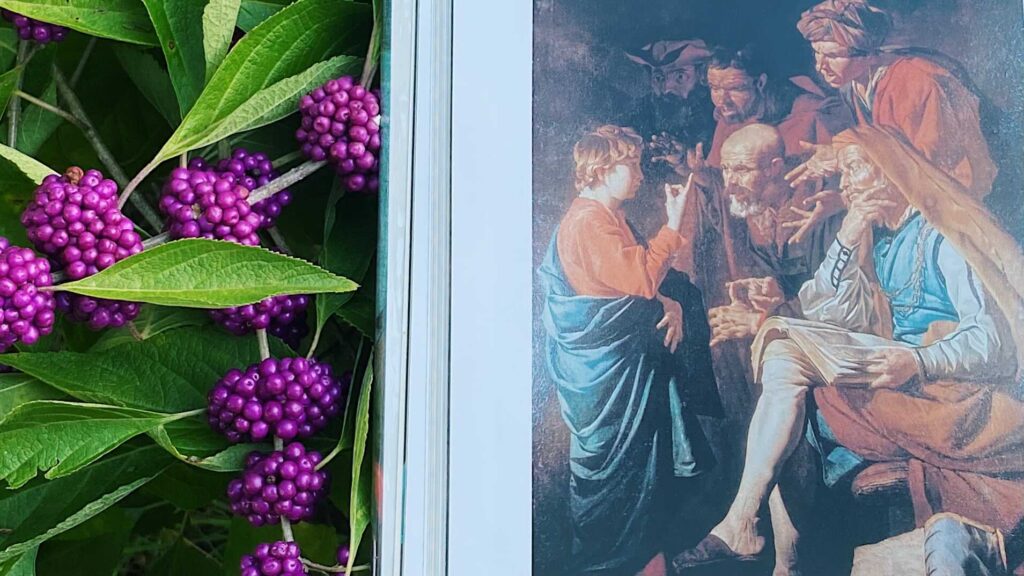
With the exception of St. Luke’s account of Jesus in the temple, the Gospels are virtually silent about the childhood of our Saviour. This has prompted many of the faithful across the centuries to contemplate what the boyhood of our Lord might have been like. Charlotte Mason is among those who have pondered.
How did Jesus learn to read and write? How did He relate to other children? How did He respond to adults, and how did He view the Holy Scriptures? Mason contemplates these and similar questions in her poem “Christ grows up in Galilee.”
In one sense, “no royal road To manhood’s slow experience eased His way,” she writes. And yet in another sense, His youth was unlike any other. For He was not only the Saviour of the world He was also its Creator. Ponder with Charlotte Mason as you read or hear her devotional poem, and imagine the eyes of the Man who “would look on these with Artist’s eye As on the finished picture wrought by Him!” Find it here.
@artmiddlekauff
🖼️: Christ Among the Doctors by Matthias Stomer