The CMP Review — Week of November 16
November 16, 2026
“Then some fresh handicraft may be taken up during the winter holidays. Elementary bookbinding seems to me one of the most delightful, and requires more care and patience than any great skill. Of course, a training in Cardboard Sloyd is an invaluable help towards clean and neat work in bookbinding, and where that is not given in school it should be given as a preparatory course during some holidays.” (PR14, “Suggestions for Holiday Amusements” by E.A. Parish)
@tessakeath
November 17, 2026
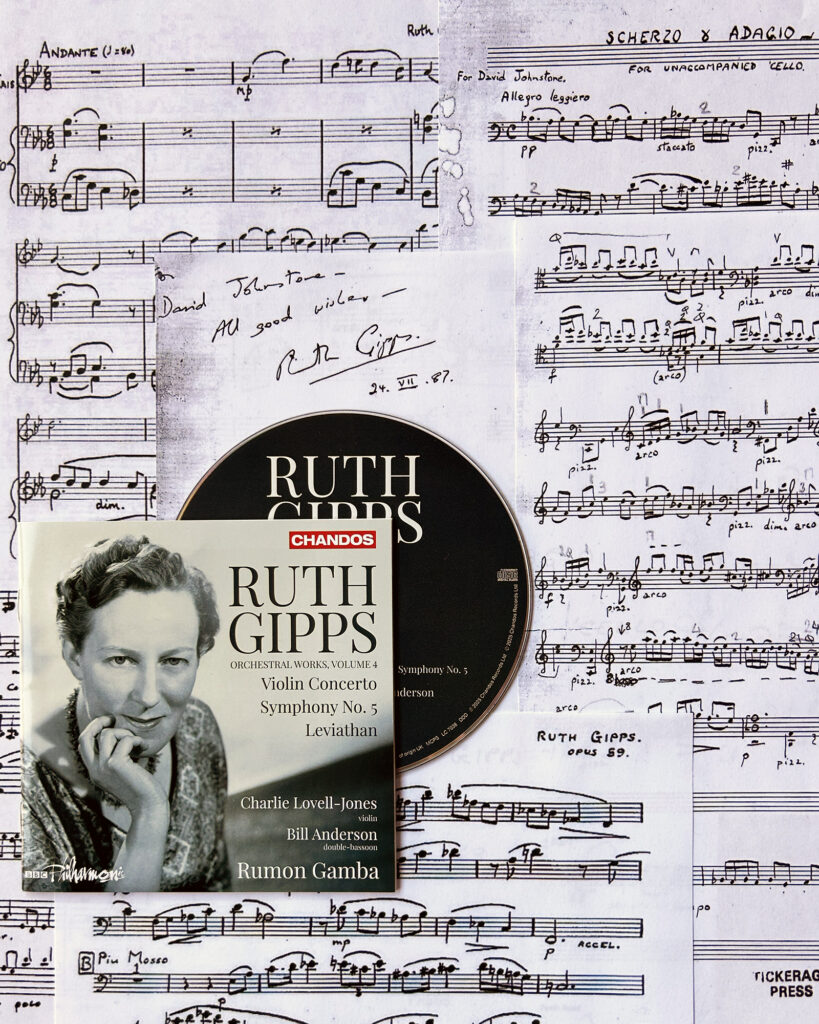
For several decades beginning as early as 1908, the PNEU assigned a composer each term for music appreciation. With three terms per year, this provided ample space for a great variety of music to be explored, from early composers such as Giovanni Pierluigi da Palestrina (1525–1594) to then-living composers such as Ralph Vaughan Williams (1872–1958). Each term a Parents’ Review article would announce the term’s music with biographical information on the composer and a list of compositions to be heard and studied.
Modern Charlotte Mason educators can still benefit from these vintage articles and music selections. The music of the great composers still speaks to us today. However, the story of music did not end with the passing of Ralph Vaughan Williams or the demise of the PNEU. Gifted musicians emerged in the 20th century and continue to emerge today. To encourage the community to embrace the music of more recent composers, I have written an original piece in the tradition of Ella Glover, Cedric Glover, and The Term’s Music.
Designed expressly for use by families and schools for music appreciation, my article describes the life, work, and music of Ruth Gipps (1921–1999). It also introduces and lists music for the term. I hope the music highlighted and explained here will bring as much joy to you and your students as it has brought to me. Find the article here.
@artmiddlekauff
November 18, 2026
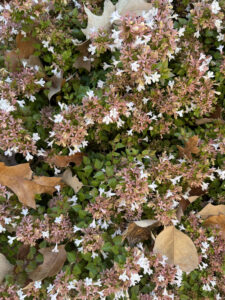
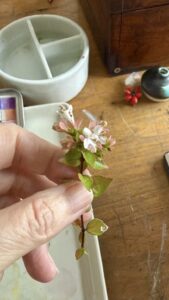
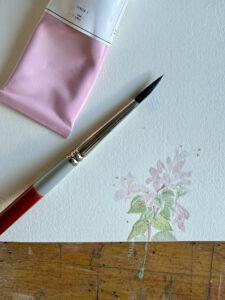
Plant ID help:
This bush is located within steps of my front door here in NE Tennessee, but I’ve had no luck with its identification. It was quite warm last week, which gave us both second-blooms of the season along with causing other species—like dandelions, violets, and dogwood—to bloom out of season. I’m not sure if this is the former or latter.
@rbaburina
November 19, 2026
In the ninth issue of The Parents’ Review (November 1890), Charlotte Mason wrote about “Parents as Inspirers” (which became chapter 3 of Parents and Children). She included two lengthy quotations from Henry Maudsley’s 1877 Physiology of Mind. The quotations were more than 300 pages apart from each other, suggesting that Mason had read most or all of his book.
These are her only references to Maudsley and were made four years after the publication of Home Education, in which Miss Mason put forward her “rut” theory of the brain — that every thought leaves a trace of some kind in the “physical tissue” of the brain. She was probably delighted then to read Dr. Maudsley state that “every cerebral action which passes into muscular movement, leaves behind it some modification of the nerve elements concerned in its function, some after-effect, or, so to speak, memory of itself in them which renders its reproduction an easier matter, the more easy the more often it has been repeated, and makes it impossible to say that, however trivial, it shall not under some circumstances recur.”
Mason had developed her “rut” theory after reading William Carpenter’s Principles of Mental Physiology, a book that profoundly impacted the course of her life. Maudley’s book was the first of many confirmations to follow.
In 2016, Dr. Michelle Pearce wrote, “our thoughts aren’t abstract, amorphous things floating around in our heads. Instead, thoughts are made up of real, physical matter… Mental activity, such as our thoughts, beliefs, and expectations, play an important role in changing the structure and function of our brains on a cellular, neural, and molecular level. For example, the more we have a particular thought, the stronger that neural network becomes; the less we have it, the weaker it becomes.”
These words sound like they were written by Mason herself. That’s because the rut theory is true. And it’s wise to incorporate it in our theory and practice of education.
@artmiddlekauff
November 20, 2026
I have never seen such a choosy chickadee.
There was something with most of my black oil sunflower seeds that he just didn’t like. He has rather refined tastes.
Such a funny little black capped chickadee!
@antonella.f.greco
November 21, 2026

How well do you know your paints?
Make the most out of your paintbox by making an old-fashioned color wheel and swatching & mixing your paints.
This can be done during scheduled art lessons or on a rainy day. Either way, it’s fun to really get to know your colors & turn color theory into application.
@rbaburina
Image by @aolander
November 22, 2026
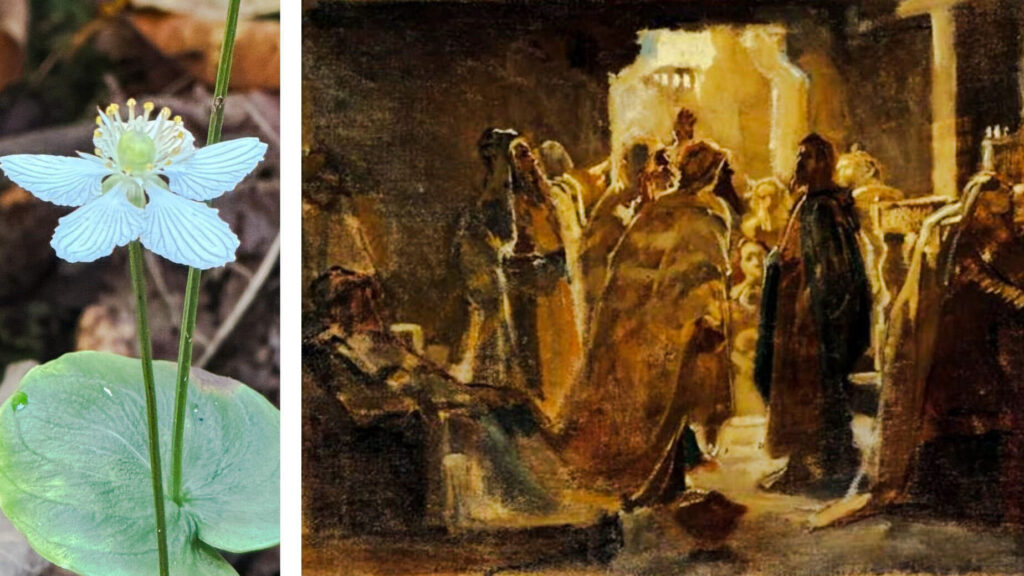
In 2010, Professor Stephanie Spencer of the University of Winchester wrote a study of Charlotte Mason’s philosophy of education entitled “Knowledge as the Necessary Food of the Mind.” In it she wrote:
In Mason’s writing, the frequent use of the metaphor of food and feeding for intellectual as well as spiritual appetites is notable. This metaphor draws on both the expected female role of nurturer, and biblical references to the role of God in feeding spiritual hunger.
Where did Miss Mason get such an idea? In her poetical reflection on Luke 4:14–30, she gives us a hint:
Not eye
Fed on the pride of life, nor greedy mouth,
Nor grasping hands all covetous of good:—
The ear shall carry healing for our hurt
The ear carries healing because by it we receive the word. Read or hear about how “Hunger, agape, was filled with words of life” in the poem here.
@artmiddlekauff
🖼️: “Christ in the Synagogue” by Nikolai Ge