The CMP Review — Week of October 19
October 19, 2026
This year at our CMP retreat, we made pocket notebooks. We’ve made them in previous years, and it always seems to happen that the notebooks we make and use throughout the year have only a handful of blank pages remaining by the time we gather to make new ones.
I like to add a few new elements each year, building on the skills learned in previous sessions. This year, everyone had the option of adding a corner pocket, an accordion pocket, or both to the inside covers of their notebooks.
We used Kraft-Tex for the covers, a durable, paper-like material made with cellulose fibers that can be washed, sewn, and worked much like fabric. It has a lovely leather-like quality and should soften and develop a beautiful patina with use over time.
I also offered several options for the interior pages, including Tomoe River paper, which is my personal favorite and what I’m using in the notebook in this video. It’s remarkably thin and lightweight while still being a pleasure to write on, even with fountain pens, allowing us to fit plenty of pages into a small notebook.
It’s always fun to see how everyone makes their notebook their own and the pride they take in completing a project that may be unfamiliar or a little outside their comfort zone. All the notebooks turned out beautifully, and I was quite proud of my fellow team members!
@tessakeath
October 20, 2026
In his 1981 classic Norms & Nobility, David Hicks describes a revival of classical education that “reemphasizes the role of the teacher” (p. 147). He begins with the ancient model and then observes: “Students become the disciples of their teacher, so to speak… Teachers then exercised such a profound influence over their students that the charge against Socrates of corrupting youth was not at all an uncommon one” (p 41).
Two decades before that, Essex Cholmondeley wrote her own classic, The Story of Charlotte Mason. She wrote it after a lifetime of involvement with Mason and the PNEU. But Cholmondeley had a story too, and she herself was once a student at Charlotte Mason’s House of Education.
In 1919, Cholmondeley and other students at the House of Education were invited “to write an essay on some subject suggested by the volumes of the ‘Home Education Series.’” Young Miss Cholmondeley’s chosen topic was “The Personality of the Teacher.” If there was ever an opportunity for her to stress the teacher’s “profound influence over their students,” this was it.
But Cholmondeley’s essay took a radically different turn. As such, it remains one of the great statements on the role of the teacher in the Charlotte Mason philosophy. A statement that must be read or heard to be believed. Find it here.
@artmiddlekauff
October 21, 2026
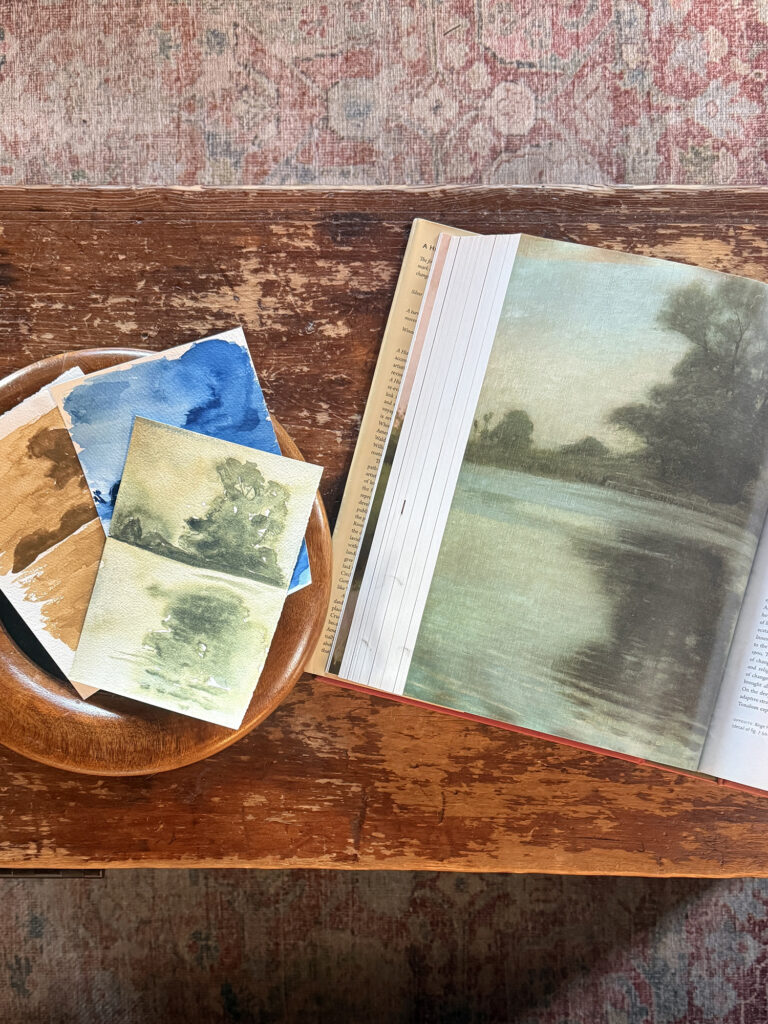
Each year at our team retreat, we look ahead at which new Charlotte Mason resources to bring to you. But we also take turns as teacher and student in Composer Study, Handicrafts, Hymn Study, and Picture Study to experience the lessons ourselves.
This year, we explored American Tonalism through Birge Harrison’s Silence, comparing the movement’s approach to landscape with that of the European Romantics and the Hudson River School.
Then we made quick, monochromatic watercolor sketches of Harrison’s painting, focusing on value (lightness & darkness of color). Rather than reproducing or laboring over every detail, this simple exercise revealed how the artist used value to create tonal harmony and unified the composition as a whole.
A few minutes of looking and painting can reveal so much about the artistic choices behind a work of art.
@rbaburina
October 22, 2026
“It is sadly true that many people look upon any form of Nature study as ‘something for the babies’ which is outgrown, of course, by noble people in their teens,” lamented Rose Amy Pennethorne in the 1935 Parents’ Review.
But what about people who are parents of teens?
At the annual Charlotte Mason Poetry team retreat, nature study is a fixture. This year we had an especially rich time, and I learned about the blood red russula, the orange bonnet, the tawny grisette, and the purple-gilled deceiver. I don’t recall ever seeing so many colors of fungi in Michigan! We also spotted an unusual acorn cluster (I didn’t know there was such a thing) which became the subject of my brush drawing.
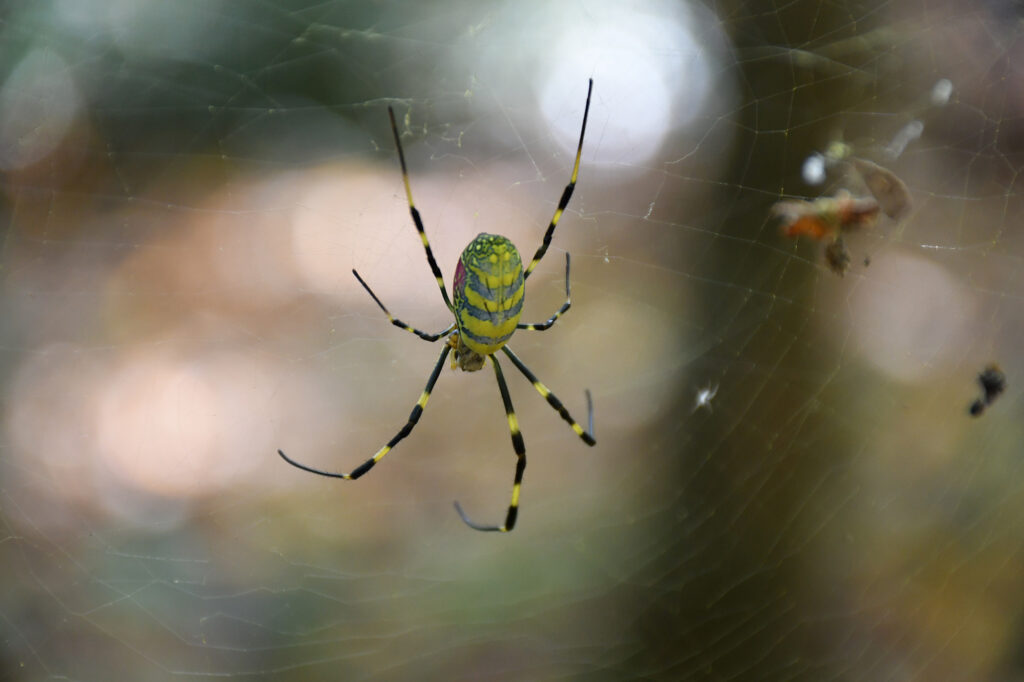
The highlight for me, however, was spotting this large and vibrant spider. I was instantly reminded of one of my favorite quotes from Jean-Jeacques Rousseau, about the importance of maintaining equilibrium in life: “Let us measure the radius of our sphere and stay in the center like the insect in the middle of his web.”
It was a potent reminder that nature evokes lines of poetry and literature. And nature evokes lessons for life.
@artmiddlekauff
October 23, 2026
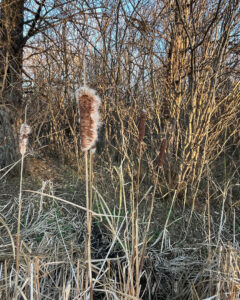
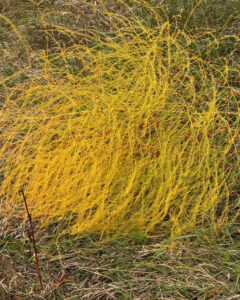
I went for a short walk and I came upon these cattails in various states of fluffiness!
And this asparagus in all its frond-sy glory. This is just one spear, which was so heavy under its feathers and berries that it fell right over.
Are you seeing any fuzzy, fluffy, or frond-sy things on your walks these days?
@antonella.f.greco
October 24, 2026
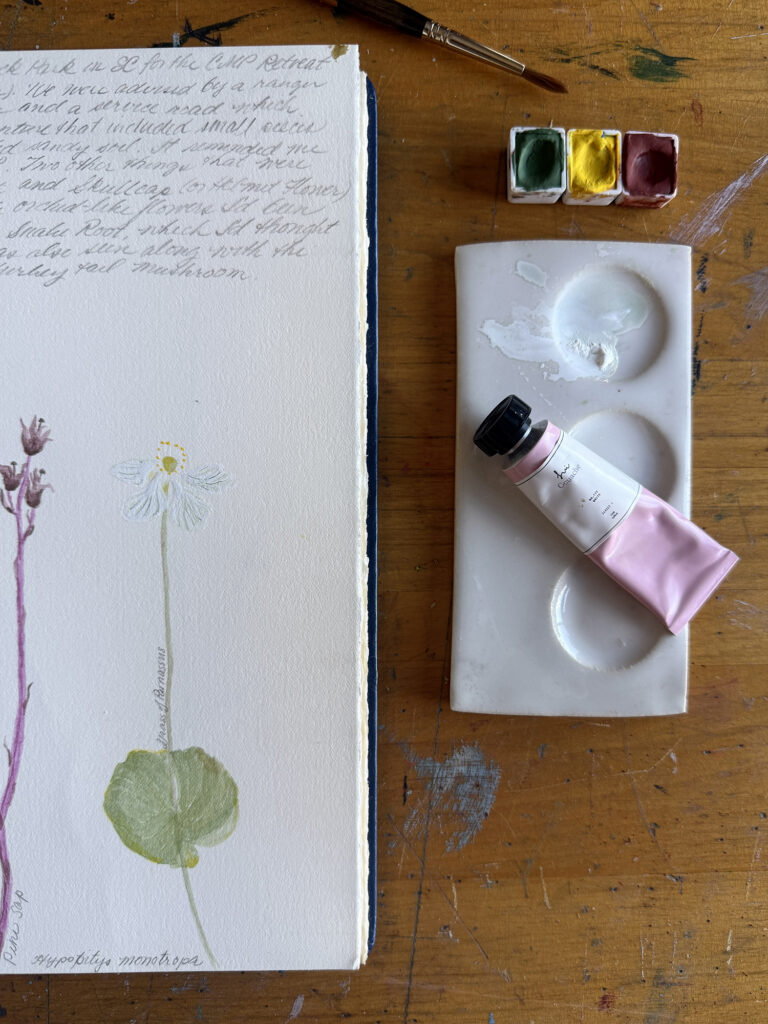
This Appalachian grass-of-Parnassus was such a thrilling find! While not considered rare here, it is quite uncommon, growing beside a mountain seep in Northern Georgia. I’d personally never seen one and it is was beautiful. The white petals reminded me of an etching with the green veins carved in, so I used a thick layer of gouache to try to capture its essence.
Have you ever seen this exquisite wildflower?
@rbaburina
October 25, 2026
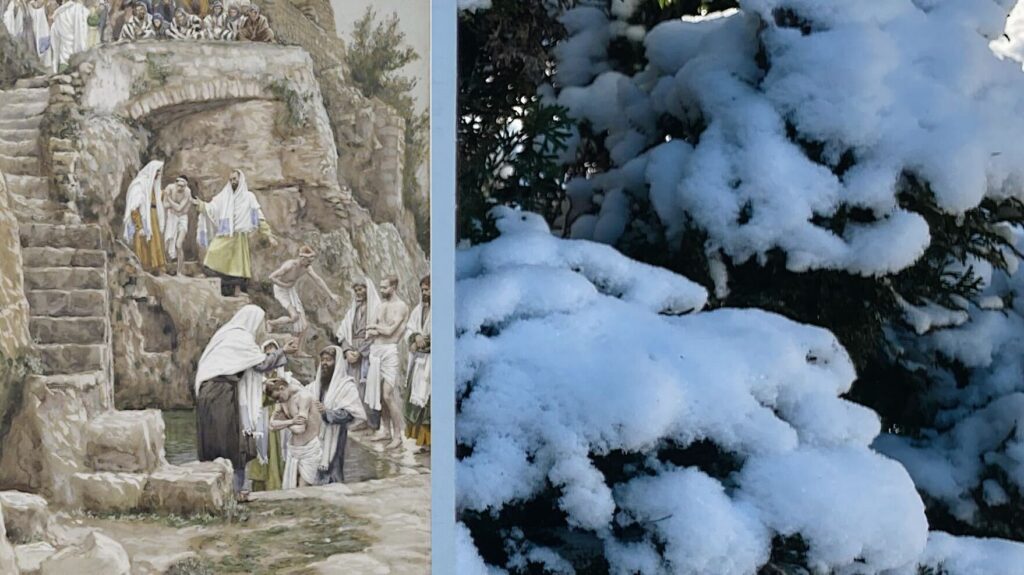
In Towards a Philosophy of Education, Charlotte Mason hints at what may have been one of the inspirations for her poetry volumes entitled The Saviour of the World. She was apparently struck by the beauty of a few lines from Shakespeare’s Henry IV Part 1:
Those holy fields
Over whose acres walked those blessed feet
Which fourteen hundred years ago were nailed
For our advantage to the bitter cross.
The lines evoke the sentiment of a pilgrim who would visit the Holy Land to see the ground our Saviour walked on. Mason comments, “If Shakespeare had given us the whole how rich should we be! Every line of verse dealing directly with Our Lord from the standpoint of His personality is greatly treasured.”
Sadly, Shakespeare did not give us the whole. But Mason was not afraid to fill in the gap, in her own manner and in her original way. In today’s poem, however, she visits the theme of fragment she treasured from The Bard. She contemplates the paths on which our Saviour trod, and the pilgrims who long to find this path for their own feet. Find it here.
@artmiddlekauff
🖼️: The Disciples of Jesus Baptize by James Tissot