The CMP Review — Week of October 5
October 5, 2026

“I said that children were always growing and that, compared with them, we had stopped growing, and that was why we were called ‘grown-ups.’ Now then, I’m going to take some of that back. We can still grow. But if we want to have a happy creative relationship with children we must ‘grow down’ rather than ‘up.’ And by that I mean we must send our roots deeper into life, and tap the sources of patience, tolerance, generosity and affection.” (“Children in the House”, PR 51)
@tessakeath
October 6, 2026

For this special episode we gathered together several members of our core and volunteer teams to have a roundtable discussion about the podcast. How did it start? How did these key volunteers get involved? What were some major events along the way? (And what were some humorous ones?) And what does the future hold?
Don’t miss this heart-warming and inspiring discussion with Richele Baburina, Greg Rolling, Haley Struecker, Michael Walkup, Lanaya Gore, Michelle Kimmel, Dawn Tull, Barbara Middlekauff, and me. The lively behind-the-scenes stories will draw you in, and ultimately leave you with a deeper appreciation of Charlotte Mason and her legacy for our time. Find it here.
@artmiddlekauff
October 7, 2026
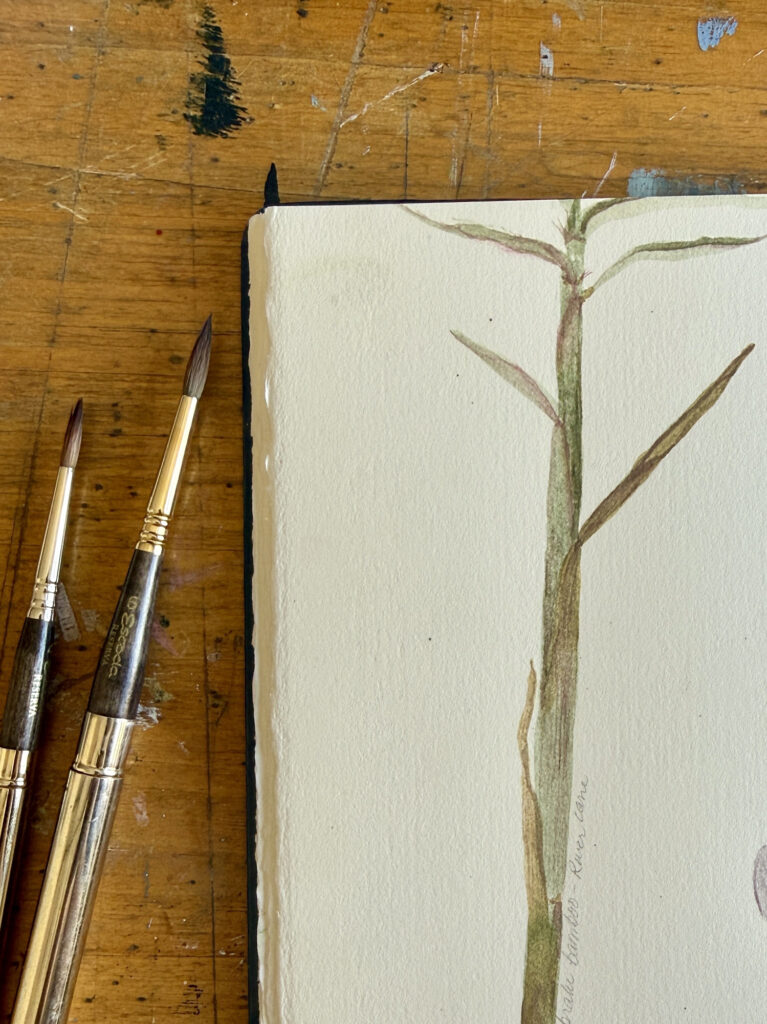
“I envy the Japanese the extreme clarity that everything in their work has. Their work is as simple as breathing, and they do a figure with a few confident strokes with the same ease as if it was as simple as buttoning your waistcoat.”
~Vincent VanGogh
One can certainly see the influence of Japanese sumi-e in Charlotte Mason’s preferred technique of nature journaling: brush drawing. A few confident strokes, thoughtfully placed, can express so much.
If you’d like to learn more about brush drawing, visit our new and vintage nature journaling articles as well as our brush drawing resource page.
@rbaburina
October 8, 2026
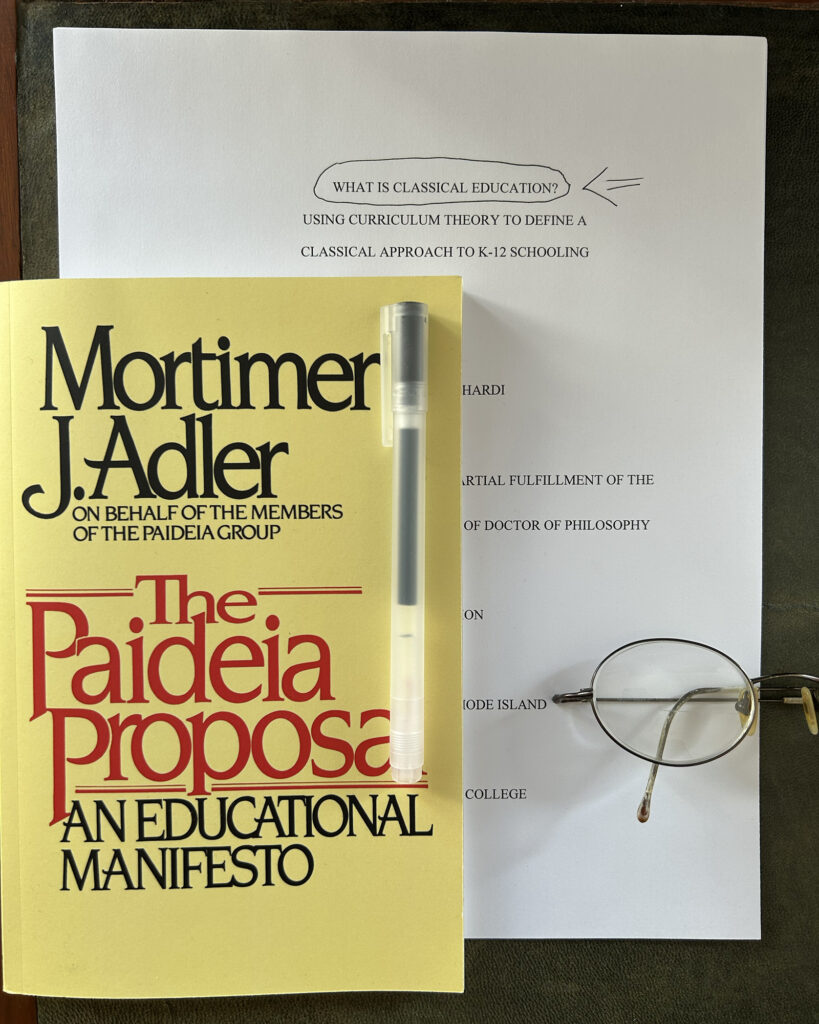
In 1982, Mortimer Adler published his groundbreaking Paideia Proposal, an educational manifesto promoting the “Great Books” of the Western tradition, taught via didactic instruction and Socratic questioning.
According to Gene Veith and Andrew Kern, it’s classical education. In their 2015 book they state that Adler and his colleague Robert Hutchins are the two men “most responsible for the revival of classical education in this century.”
But is Adler’s method really classical education? With a name like Paideia, it certainly sounds like it is. But Dr. Jessica Richardi, in her masterful 2022 paper “What Is Classical Education?” has a different take:
It is this researcher’s opinion that the Paideia Method … is a unique approach to K-12 education and ought to be differentiated from classical approaches which tend to emphasize different forms of knowledge, different methods and goals, and appear less concerned about curricular access.
But who cares whether we call it classical?
One may rightly ask why Paideia’s classification is important, and to whom,” she writes. “In a sense, it seems unjust to force a label upon the product of Mortimer Adler’s life’s work. Having passed in 2001, Adler no longer has the ability to voice his opposition to Paideia’s identification as a classical approach… A fanciful sentiment, perhaps, but it feels as though someone ought to defend Adler’s expressed intent and vision of his own work. Given my current expanded understanding of classical education and Paideia’s relationship to it, I take on that responsibility.
I admire Dr. Richardi for her bold defense of the uniqueness of a method whose originator can no longer speak for himself.
Richardi’s example encourages me to do the same for Charlotte Mason. “The ‘Mason Method,’” she wrote, “involves a whole new scheme of educational thought.” Someone has to say it’s not classical education. I take on that responsibility.
@artmiddlekauff
October 9, 2026
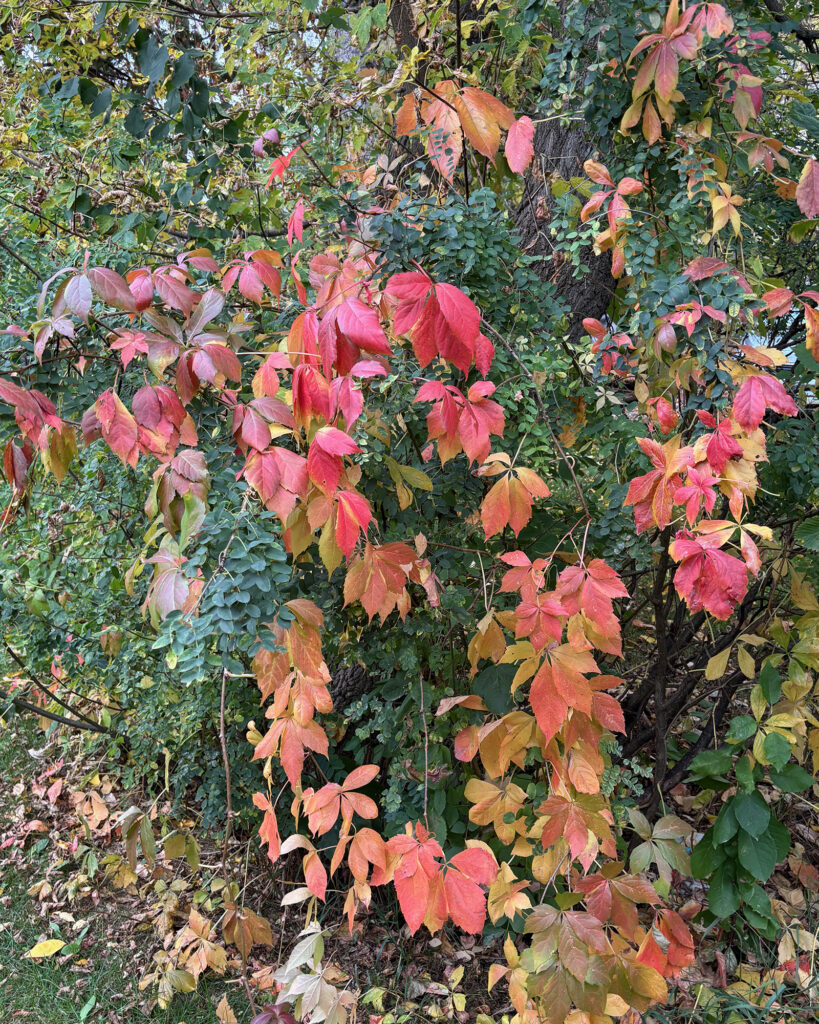
I’ve lived in Manitoba for almost two decades, but one of the things I really miss about the southern Ontario of my childhood is the red of the maple trees in autumn!
And so I’m very thankful for the splashes of red that appear here and there from the virginia creeper vines. (And also from the poison ivy. I guess it is good that it is so easy to spot. Find it in autumn, and then you know where to watch out for it in spring and summer.)
Are you seeing reds right now?
@antonella.f.greco
October 10, 2026

Student set-up for today’s in-person brush drawing class in my home.
@rbaburina
October 11, 2026

It is surely one of the most famous verses in the Bible:
For God so loved the world, that he gave his only begotten Son, that whosoever believeth in him should not perish, but have everlasting life.
It is John 3:16, a verse that has been translated into hundreds of languages and is recognizable around the world. The verse immediately follows John’s account of the iconic meeting between Christ and Nicodemus, and is most likely the opening line of the Apostle’s reflections on our Lord’s words at the meeting.
A lot has been said about this verse, called by some “the gospel in a nutshell.” But what did Charlotte Mason say about it? Click here to find out.
@artmiddlekauff
🖼️: Saint John the Evangelist by School of Rembrandt